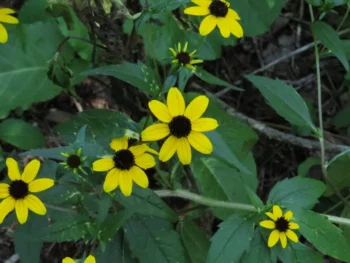
Browneyed Susan: A Cheerful Late-Season Native Wildflower
If you’re looking for a native wildflower that brings sunshine to your garden when many other plants are winding down, meet browneyed Susan (Rudbeckia triloba). This delightful perennial member of the sunflower family is like that friend who always shows up with a smile just when you need it most – blooming prolifically from late summer into fall when your garden could use a pick-me-up.
What Makes Browneyed Susan Special?
Browneyed Susan is a true American native, calling much of the eastern and central United States home. You’ll find this cheerful wildflower growing naturally across an impressive range of states, from Alabama and Arkansas in the south, all the way up to Minnesota and Wisconsin in the north, and from the Atlantic coast to the Great Plains states like Kansas and Nebraska.
- Species observed
- No observations
Unlike its more famous cousin, the black-eyed Susan, browneyed Susan produces masses of smaller flowers – each about an inch across – creating a cloud-like effect of golden yellow blooms with dark chocolate-brown centers. The plant grows as a forb, meaning it’s an herbaceous perennial without woody stems, typically reaching 2-4 feet tall and spreading 1-3 feet wide.
Why Your Garden (and Local Wildlife) Will Love It
Browneyed Susan is practically a one-stop shop for supporting local ecosystems. The abundant flowers are magnets for:
- Native bees seeking late-season nectar
- Butterflies refueling for migration
- Birds that feast on the seeds throughout fall and winter
- Other beneficial insects that help keep garden pests in check
From a design perspective, this plant is incredibly versatile. It works beautifully in prairie gardens, cottage garden borders, naturalized meadow areas, and pollinator gardens. Its airy growth habit and profuse blooms make it an excellent choice for filling in gaps between more structured plantings or for creating that coveted wild look that appears effortless but supports wildlife.
Growing Browneyed Susan Successfully
One of the best things about browneyed Susan is how easygoing it is. This plant thrives in USDA hardiness zones 3-9, making it suitable for most of the continental United States. Here’s what it needs to flourish:
Light Requirements: Browneyed Susan performs best in full sun but will tolerate partial shade, though you might see fewer flowers in shadier spots.
Soil Preferences: This adaptable native isn’t picky about soil type and can handle everything from clay to sandy soils. It prefers well-draining conditions but, according to its wetland status as Facultative Upland, it usually grows in non-wetland areas while occasionally tolerating wetter conditions.
Water Needs: Once established, browneyed Susan is quite drought tolerant, making it perfect for low-maintenance gardens and water-wise landscaping.
Planting and Care Tips
Getting browneyed Susan established in your garden is refreshingly straightforward:
- Planting: Spring is the ideal time to plant, allowing the root system to establish before the growing season hits full swing
- Spacing: Give plants about 18-24 inches between centers to allow for their natural spread
- Maintenance: This is a genuinely low-maintenance plant – just ensure adequate water during the first growing season
- Self-seeding: Be aware that browneyed Susan self-seeds readily, which can be wonderful for naturalizing but might require management in more formal garden settings
A Word About Self-Seeding
Here’s where browneyed Susan shows its wild side – it’s an enthusiastic self-seeder. In the right conditions, you might find it popping up in unexpected places around your garden. For many gardeners, this is a feature, not a bug, especially if you’re creating a naturalized area or prairie garden. However, if you prefer more control over where your plants grow, simply deadhead spent flowers before they set seed.
The Bottom Line
Browneyed Susan is one of those plants that gives back far more than it asks for. It’s native, supports wildlife, requires minimal care once established, and provides months of cheerful blooms when many other plants are calling it quits for the season. Whether you’re a beginning gardener looking for foolproof natives or an experienced gardener wanting to support local ecosystems, browneyed Susan deserves a spot in your landscape.
Plus, there’s something deeply satisfying about growing a plant that’s been brightening American landscapes for centuries – you’re not just adding beauty to your garden, you’re participating in a botanical tradition that connects your little patch of earth to the greater web of native plant communities across the continent.