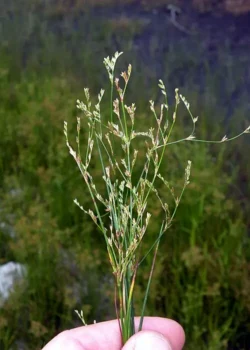
Brownfruit Rush: A Native Wetland Wonder for Your Garden
If you’re looking to add authentic native character to wet areas of your landscape, brownfruit rush (Juncus pelocarpus) might just be the unsung hero your garden needs. This modest perennial grass-like plant may not win any beauty contests, but it’s a hardworking native that brings both ecological value and practical benefits to the right garden setting.
What is Brownfruit Rush?
Brownfruit rush is a perennial member of the rush family (Juncaceae), giving it that distinctive grass-like appearance that’s both familiar and subtly different from true grasses. Don’t let its humble looks fool you—this little plant is a wetland specialist with some seriously impressive credentials.
As its common name suggests, this rush produces small, brownish fruits that give it its distinctive identity. The plant forms neat, compact clumps with slender, upright stems that sway gently in the breeze, creating a naturalistic texture that’s perfect for informal garden settings.
Where Does Brownfruit Rush Call Home?
This is where brownfruit rush really shines in the good native plant citizen department. It’s native to an impressively large swath of North America, including Canada and much of the United States. You’ll find it naturally occurring from the Atlantic Coast to scattered populations in the Pacific Northwest, spanning states like Maine, Florida, Michigan, Minnesota, and even reaching British Columbia and Washington.
- Species observed
- No observations
This extensive native range means there’s a good chance brownfruit rush has been quietly doing its wetland work in your region for thousands of years, making it an excellent choice for gardeners wanting to support local ecosystems.
Why Your Garden Might Love Brownfruit Rush
Here’s where this unassuming plant becomes genuinely exciting for the right gardener:
- Wetland superstar: Brownfruit rush has Obligate Wetland status across all regions, meaning it almost always occurs in wetlands—perfect for those soggy spots in your yard
- Low maintenance: Once established in suitable conditions, it requires minimal care
- Authentic native appeal: Adds genuine local character to naturalized landscapes
- Rain garden champion: Excellent for managing stormwater runoff
- Wildlife habitat: Provides cover and nesting material for small wildlife
Perfect Garden Scenarios for Brownfruit Rush
Brownfruit rush isn’t going to work in every garden situation, but when the conditions are right, it’s absolutely perfect:
- Rain gardens: Thrives in areas designed to capture and filter stormwater
- Pond margins: Creates natural-looking edges around water features
- Bog gardens: Essential for authentic wetland garden designs
- Naturalized landscapes: Adds subtle texture to informal, meadow-like settings
- Restoration projects: Ideal for wetland restoration and conservation efforts
Growing Brownfruit Rush Successfully
The key to brownfruit rush happiness is simple: think wetland. This plant has very specific needs, but when you meet them, it’s remarkably easy to grow.
Growing Conditions
- Light: Full sun to partial shade (full sun preferred in consistently moist conditions)
- Soil: Consistently moist to wet soils; adaptable to various soil types as long as moisture is adequate
- pH: Acidic to neutral soil (pH 5.0-7.0)
- Hardiness: USDA zones 3-8
- Water: Requires constant moisture—this is not a plant for dry conditions
Planting and Care Tips
- Timing: Plant in spring when soil can be worked
- Spacing: Allow 6-12 inches between plants for natural spread
- Establishment: Keep soil consistently moist during the first growing season
- Propagation: Divide clumps in spring or allow natural self-seeding
- Maintenance: Minimal once established—just ensure adequate moisture
Is Brownfruit Rush Right for Your Garden?
Brownfruit rush is definitely a specialist plant. If you have a consistently wet area in your landscape—whether from natural conditions, poor drainage, or intentional water features—this native rush could be exactly what you need. It’s particularly valuable for gardeners interested in:
- Creating authentic native plant communities
- Managing stormwater naturally
- Supporting local wildlife and ecosystems
- Adding subtle texture to informal landscapes
However, if your garden conditions are typically dry or you’re looking for showy ornamental appeal, brownfruit rush probably isn’t your best choice. This is a plant that rewards gardeners who appreciate subtle beauty and ecological function over flashy flowers.
The Bottom Line
Brownfruit rush may not be the star of your garden show, but it’s the kind of reliable, native supporting player that makes the whole ecosystem work better. For the right garden conditions and the right gardener—someone who values native authenticity and ecological benefits—this humble rush can be a genuine treasure. Just make sure you can keep its feet wet, and it’ll reward you with years of low-maintenance, authentic native beauty.