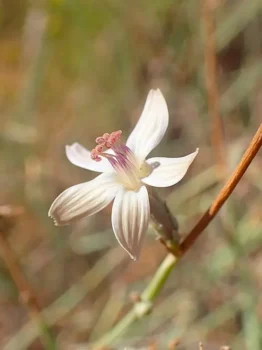
Brownplume Wirelettuce: A Delicate Native Wildflower for Water-Wise Gardens
If you’re looking for a native wildflower that brings ethereal beauty to your garden without demanding much attention, brownplume wirelettuce (Stephanomeria pauciflora) might just be your new favorite discovery. This charming perennial forb proves that sometimes the most understated plants make the biggest impact in naturalistic landscapes.
What is Brownplume Wirelettuce?
Brownplume wirelettuce is a native perennial herb that belongs to the sunflower family. Don’t let the lettuce in its name fool you – this isn’t something for your salad bowl! Instead, it’s a delicate wildflower that gets its common name from its wispy, wire-like stems and the brownish plumes of its seed heads after flowering.
As a forb, this plant lacks significant woody tissue and maintains its perennating buds at or below ground level, allowing it to return year after year in suitable conditions.
Where Does It Naturally Grow?
This resilient native calls the western and southwestern United States home, thriving across ten states: Arizona, California, Colorado, Kansas, Nevada, New Mexico, Oklahoma, Texas, Utah, and Wyoming. Its wide distribution speaks to its adaptability across various arid and semi-arid environments.
- Species observed
- No observations
Why Grow Brownplume Wirelettuce?
There are several compelling reasons to consider adding this native beauty to your landscape:
- Water-wise choice: Once established, it’s extremely drought tolerant, perfect for xeriscaping
- Pollinator magnet: The delicate flowers attract butterflies, native bees, and other beneficial insects
- Low maintenance: Requires minimal care once settled in
- Unique texture: Adds an airy, delicate texture that contrasts beautifully with more substantial plants
- Native plant benefits: Supports local ecosystems and wildlife
Garden Design and Landscape Uses
Brownplume wirelettuce shines in several garden styles:
- Xeriscapes and desert gardens: Perfect companion to cacti and other drought-tolerant plants
- Native plant gardens: Essential for authentic regional landscapes
- Wildflower meadows: Adds delicate texture among more robust wildflowers
- Rock gardens: Thrives in the well-draining conditions rock gardens provide
Use it as an accent plant rather than a focal point – its subtle beauty works best when woven throughout other plantings or massed in drifts for greater visual impact.
Growing Conditions and Care
The secret to success with brownplume wirelettuce lies in mimicking its natural habitat:
- Sunlight: Full sun is essential for healthy growth and flowering
- Soil: Well-draining sandy or rocky soils are ideal; heavy clay spells trouble
- Water: Drought tolerant once established, but avoid overwatering at all costs
- USDA Hardiness Zones: Suitable for zones 4-9
Planting and Care Tips
Getting brownplume wirelettuce established successfully requires attention to a few key details:
- Soil preparation: Ensure excellent drainage – amend heavy soils with sand or gravel
- Watering: Water regularly during establishment, then reduce to minimal supplemental watering
- Spacing: Give plants room to spread naturally without crowding
- Maintenance: Very low maintenance once established; avoid fertilizing as it prefers lean soils
The biggest mistake gardeners make with this plant is treating it like a typical garden perennial with regular watering and rich soil. Remember – this is a desert native that thrives on neglect!
Is Brownplume Wirelettuce Right for Your Garden?
Consider brownplume wirelettuce if you’re creating a water-wise landscape, want to support native pollinators, or enjoy subtle, naturalistic beauty. It’s particularly valuable for gardeners in its native range who want to create authentic regional landscapes.
However, if you prefer bold, showy flowers or don’t have well-draining soil, you might want to look elsewhere. This plant rewards patience and restraint rather than fussing and fertilizing.
With its delicate charm and ecological benefits, brownplume wirelettuce offers a wonderful way to connect your garden to the natural landscapes of the American West while creating habitat for native wildlife. Sometimes the most beautiful gardens are built on the quiet confidence of plants like this unassuming native wildflower.