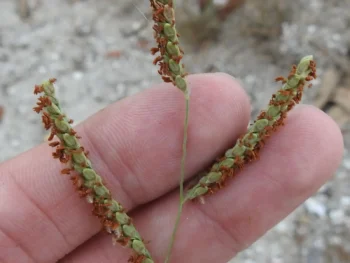
Brownseed Paspalum: A Native Southern Grass Worth Considering
If you’re looking to add authentic native character to your Southern landscape, brownseed paspalum (Paspalum plicatulum) might just be the unsung hero your garden needs. This perennial bunch grass may not win any beauty contests, but it brings something special to the table: genuine regional authenticity and low-maintenance charm.
What is Brownseed Paspalum?
Brownseed paspalum is a native perennial grass that forms neat clumps rather than spreading aggressively like some of its grass cousins. Growing to a modest height of about 3.3 feet, this fine-textured grass maintains an upright, erect form that adds vertical interest without overwhelming smaller plants nearby.
You might occasionally see this plant listed under its synonym Paspalum texanum, but rest assured – they’re the same reliable native grass.
Where Does It Call Home?
This grass is a true Southerner, naturally occurring across Alabama, Florida, Georgia, Louisiana, Mississippi, South Carolina, and Texas. It also extends its range to Puerto Rico and the U.S. Virgin Islands, showing its adaptability to warm, humid climates.
- Species observed
- No observations
Why Consider Brownseed Paspalum?
Let’s be honest – brownseed paspalum won’t stop traffic with showy flowers or dramatic foliage. Its green flowers are inconspicuous, and its yellow-brown seeds blend into the background. But sometimes, that’s exactly what you want in a landscape plant.
Here’s what makes this grass worth your attention:
- True native credentials: Supporting local ecosystems with authentic regional plants
- Low maintenance: Moderate growth rate means less frequent trimming
- Versatile moisture tolerance: Facultative wetland status means it handles both wet and dry conditions
- Fine texture: Creates a soft, naturalistic backdrop for showier plants
- Bunch growth form: Stays put without aggressive spreading
Growing Conditions and Care
Brownseed paspalum is refreshingly undemanding once you understand its preferences. This grass thrives in acidic soils with a pH between 4.0 and 6.5 – perfect for many Southern gardens where alkaline-loving plants struggle.
Soil Requirements:
- Prefers coarse or medium-textured soils (avoid heavy clay)
- Low fertility requirements – no need for heavy fertilization
- Moderate tolerance for calcium carbonate
Water and Climate Needs:
- Low drought tolerance, so provide supplemental water during dry spells
- Needs at least 230 frost-free days
- Requires 34-59 inches of annual precipitation
- Hardy to temperatures as low as 7°F
Light Requirements:
This adaptable grass handles intermediate shade, making it useful for partially shaded areas where many grasses struggle.
Planting and Propagation
Getting brownseed paspalum established requires a bit of planning, as it’s typically only available through specialty native plant contractors rather than your local garden center.
The grass can be propagated by seed or sprigs. With approximately 282,000 seeds per pound, a little goes a long way. Seeds are produced from summer through fall, and the plant has moderate seedling vigor, so be patient during establishment.
Plant spacing can range from 1-4 plants per square foot, depending on how quickly you want coverage. The vegetative spread rate is slow, so closer spacing creates faster results.
Landscape Uses
Brownseed paspalum works best as a supporting player rather than a star performer. Consider it for:
- Rain gardens: Its facultative wetland status makes it perfect for areas with variable moisture
- Native plant gardens: Provides authentic regional character
- Naturalistic landscapes: Creates soft, informal texture
- Erosion control: Bunch growth form helps stabilize soil
- Wildlife habitats: Native grasses support more insects and birds than non-natives
The Bottom Line
Brownseed paspalum isn’t flashy, but it’s genuine – and sometimes that’s exactly what a landscape needs. If you’re creating a native plant garden, working on a rain garden, or simply want to support local ecosystems with authentic regional plants, this modest grass deserves consideration.
Just remember that patience is key with this slow-growing native. Give it the acidic, well-draining soil it prefers, ensure adequate moisture, and let it quietly do its job of adding authentic Southern character to your landscape.