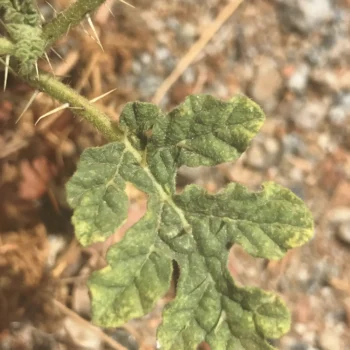
Buffalobur Nightshade: A Prickly Native with Surprising Benefits
Meet buffalobur nightshade (Solanum rostratum), a plant that perfectly embodies the saying beauty and the beast. This spiny annual native might not win any garden beauty contests, but it plays an important role in North American ecosystems and has some surprising qualities that might make you think twice before dismissing it entirely.
What Exactly Is Buffalobur Nightshade?
Buffalobur nightshade is an annual forb – essentially a non-woody plant that completes its entire life cycle in one growing season. Don’t let the nightshade name alarm you; while it’s part of the same family as tomatoes and potatoes, this particular species is more of a wild cousin that prefers life on the range rather than in your vegetable garden.
The plant gets its common name from its association with buffalo grazing areas and its distinctively spiny, bur-like seed pods. You might also see it listed under the botanical synonyms Androcera rostrata or sometimes incorrectly as Solanum cornutum.
Where Does It Call Home?
This hardy native has quite an impressive range! Originally from the Great Plains and southwestern United States, buffalobur nightshade now grows across most of the lower 48 states and has even made its way into several Canadian provinces as a non-persistent introduction. From Alabama to Wyoming, and from coast to coast, you’ll find this adaptable plant making itself at home in disturbed soils, roadsides, and open fields.
- Species observed
- No observations
The Good, The Bad, and The Spiny
Let’s be honest – buffalobur nightshade isn’t going to win any prettiest garden plant awards. The entire plant is covered in sharp, yellow spines that make handling it a rather prickly proposition. Its growth habit is somewhat scraggly and weedy-looking, which explains why it’s often considered more of a wildland plant than a garden specimen.
However, those bright yellow, five-petaled flowers are actually quite cheerful, blooming from summer into fall. The flowers have prominent stamens and can add a wild, natural look to prairie gardens or naturalized areas.
Wildlife Value: More Than Meets the Eye
Here’s where buffalobur nightshade really shines! Despite its somewhat intimidating appearance, this plant serves as an important food source for wildlife:
- Terrestrial birds rely on it for 5-10% of their diet, particularly enjoying the seeds
- The flowers attract various pollinators, including native bees and butterflies
- Its presence in disturbed areas helps stabilize soil and provides habitat structure
Growing Conditions and Care
If you’re considering adding buffalobur nightshade to your landscape (and we’ll discuss whether you should in a moment), it’s refreshingly low-maintenance. This tough annual thrives in:
- Full sun conditions
- Poor to moderate soils
- Disturbed or previously cultivated areas
- Drought conditions once established
The plant readily self-seeds, so once you have it, you’re likely to see it return year after year. It typically grows 1-3 feet tall and equally wide, forming a somewhat bushy, sprawling form.
Should You Plant It?
This is where things get interesting. While buffalobur nightshade is indeed native and provides ecological benefits, it’s not a plant for every garden or every gardener. Here are some considerations:
Consider planting it if:
- You’re creating a prairie restoration or wildland garden
- You want to support native birds and pollinators
- You have disturbed areas that need stabilizing vegetation
- You don’t mind (or actually enjoy) a more wild aesthetic
Skip it if:
- You have small children who play in the garden (those spines are no joke!)
- You prefer formal or highly maintained landscapes
- You’re looking for showy ornamental plants
- You have pets that might get into it
Better Native Alternatives
If you love the idea of supporting native wildlife but want something more garden-friendly, consider these native alternatives that offer similar benefits without the aggressive spines:
- Black-eyed Susan (Rudbeckia species) for bright yellow flowers
- Native sunflowers (Helianthus species) for bird food
- Wild bergamot (Monarda fistulosa) for pollinator support
- Purple prairie clover (Dalea purpurea) for wildlife habitat
The Bottom Line
Buffalobur nightshade is a fascinating example of how native plants don’t always fit our conventional ideas of garden beauty. While it may not be suitable for most traditional landscapes due to its spiny nature and weedy appearance, it plays a valuable role in supporting native wildlife and maintaining ecosystem health in appropriate settings.
If you do decide to grow it, remember that a little goes a long way – this annual self-seeds readily and can spread if conditions are right. Always wear thick gloves when handling, and consider it more of a wildland restoration plant than a typical garden specimen.
Sometimes the most valuable native plants are the ones that challenge our preconceptions about what belongs in our landscapes. Buffalobur nightshade might just be one of those plants that deserves a second look – from a safe, spine-free distance!