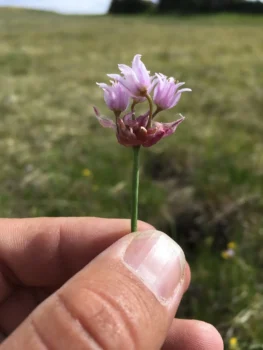
Bulbil Onion: A Hidden Gem for Your Native Garden
If you’re looking to add some understated elegance to your native garden while supporting local wildlife, let me introduce you to the bulbil onion (Allium geyeri var. tenerum). This charming little wildflower might not win any flashy beauty contests, but it’s got character, resilience, and a whole lot of ecological value packed into its modest frame.
What Exactly Is Bulbil Onion?
Bulbil onion is a perennial forb native to both Canada and the lower 48 United States. As a member of the onion family, it shares that characteristic onion scent when crushed, but don’t let that fool you into thinking it’s just another garden vegetable gone wild. This little guy is all about subtle beauty and native plant power.
Being a forb means it’s an herbaceous plant without woody stems – think of it as the prairie’s version of a delicate wildflower that comes back year after year. It grows from small bulbs underground, sending up grass-like leaves and delicate flower clusters that dance in the breeze.
Where Does It Call Home?
This adaptable native has quite the impressive range across western North America. You’ll find bulbil onion thriving in Alberta, British Columbia, Arizona, Colorado, Idaho, Montana, Nevada, New Mexico, Oregon, Utah, Washington, and Wyoming. That’s a pretty impressive resume for such a modest-looking plant!
- Species observed
- No observations
Why Your Garden (and Local Wildlife) Will Love It
Here’s where bulbil onion really shines – it’s a pollinator magnet! Those small white to pinkish flowers arranged in neat little umbrella-shaped clusters (called umbels) are like tiny landing pads for bees, butterflies, and other beneficial insects. Native bees especially appreciate this reliable nectar source.
From a design perspective, bulbil onion is perfect for gardeners who appreciate subtle, naturalistic beauty. It’s not going to scream for attention like a bold dahlia, but it adds texture, movement, and that prairie wildflower vibe that makes a landscape feel authentic and peaceful.
Perfect Garden Companions
Bulbil onion is tailor-made for several garden styles:
- Rock gardens – Its compact size and drought tolerance make it ideal for tucking between stones
- Native plant gardens – Obviously! It pairs beautifully with other western natives
- Xeriscaping projects – Once established, it’s remarkably drought-tolerant
- Prairie restorations – Helps recreate authentic grassland ecosystems
- Naturalized areas – Perfect for that wild meadow look
Growing Conditions: Keep It Simple
One of the best things about bulbil onion is that it’s refreshingly low-maintenance. This plant has adapted to some pretty tough conditions in the wild, so it’s not going to be fussy in your garden.
It thrives in USDA hardiness zones 3-8, which covers a huge swath of North America. Give it well-draining soil (this is crucial – soggy roots are its nemesis), and a spot with full sun to partial shade. Once established, it’s impressively drought-tolerant, making it perfect for water-wise gardening.
Planting and Care Tips
Getting bulbil onion established in your garden is pretty straightforward:
- Plant bulbs in fall – This gives them time to establish before spring growth
- Choose well-draining soil – Sandy or rocky soil is actually preferable to heavy clay
- Go easy on the water – Once established, natural rainfall is usually sufficient
- Let it go dormant naturally – Don’t cut back the foliage until it yellows and dies back on its own
- Be patient – Like many natives, it may take a season or two to really get established
The Bottom Line
Bulbil onion might not be the showiest plant in your garden, but it’s exactly the kind of reliable, beneficial native that forms the backbone of truly sustainable landscaping. It supports pollinators, requires minimal care once established, and adds authentic regional character to your outdoor space.
If you’re building a native garden, restoring prairie habitat, or just want to add some low-maintenance native charm to your landscape, bulbil onion deserves a spot on your plant list. Sometimes the most valuable garden residents are the ones that quietly do their job without demanding constant attention – and this little onion relative is exactly that kind of garden hero.