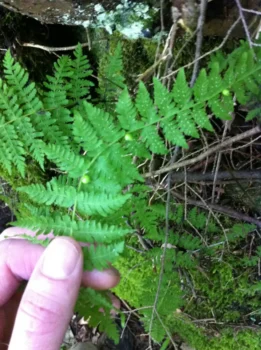
Bulblet Bladderfern: A Charming Native Fern with a Unique Twist
Meet the bulblet bladderfern (Cystopteris bulbifera), a delightful native fern that’s like nature’s own little propagation machine! This charming perennial brings an elegant, woodland feel to shady spots while offering something truly special that sets it apart from other ferns – tiny bulblets that sprout right along its fronds.
What Makes Bulblet Bladderfern Special?
The bulblet bladderfern is a true native treasure, naturally occurring across a vast range from southeastern Canada down through much of the United States. You’ll find this adaptable fern thriving from Maine to Georgia and stretching west into the Great Plains, making it at home in an impressive variety of climates and conditions.
What really makes this fern stand out is its unique reproductive strategy. Along the underside of its delicate, lacy fronds, you’ll discover small bulblets – tiny plantlets that eventually drop off to start new colonies. It’s like having a built-in nursery right on the plant!
- Species observed
- No observations
Identifying Bulblet Bladderfern
This graceful fern is easy to spot once you know what to look for:
- Delicate, finely divided fronds that arch gracefully outward
- Distinctive small bulblets along the leaf stems (rachis)
- Light to medium green coloration
- Typically grows 1-3 feet tall and wide
- Fronds have a lacy, almost feathery appearance
Where Does It Thrive?
Bulblet bladderfern is quite the accommodating plant when it comes to moisture levels. Depending on your region, it can handle everything from consistently moist conditions to occasional dry spells. In some areas, it’s perfectly happy in wetland settings, while in others, it thrives in well-draining woodland soils.
This adaptable nature makes it a fantastic choice for gardeners dealing with varying moisture conditions throughout the seasons.
Is Bulblet Bladderfern Right for Your Garden?
If you’re looking to create a native woodland garden or add some delicate texture to shady areas, bulblet bladderfern could be perfect for you! Here’s why gardeners love it:
- Native plant that supports local ecosystems
- Low maintenance once established
- Interesting propagation method with bulblets
- Adaptable to various moisture levels
- Adds fine texture and movement to shade gardens
Growing Bulblet Bladderfern Successfully
While this fern can handle a range of conditions, it’s happiest in partial to full shade with moist, well-draining soil. It particularly loves rocky areas and can be stunning tucked into stone walls or rock gardens where it can spread naturally.
Hardy in USDA zones 3-8, this fern is quite forgiving and doesn’t require much fuss. Just plant it in spring, give it some organic matter to start with, and let it do its thing. The bulblets will eventually create new plants nearby, slowly naturalizing the area.
Design Ideas and Garden Companions
Bulblet bladderfern shines in woodland settings, shade gardens, and naturalized landscapes. It pairs beautifully with other native shade lovers like wild ginger, trilliums, and woodland phlox. Use it as an understory accent where its delicate fronds can provide soft contrast to bolder foliage plants.
Rock gardens are another perfect home for this fern – it loves to nestle into crevices and rocky spots where its roots can find cool, moist conditions while its fronds cascade gracefully over stones.
A Living Piece of Natural History
By choosing bulblet bladderfern for your garden, you’re not just adding a beautiful plant – you’re welcoming a piece of North America’s natural heritage into your landscape. This native fern has been gracing woodland floors and rocky outcrops for countless generations, and now it can bring that same timeless beauty to your own outdoor space.
Whether you’re a seasoned native plant gardener or just beginning to explore the wonderful world of indigenous flora, bulblet bladderfern offers an easy, rewarding way to connect with your local ecosystem while creating a truly enchanting garden display.