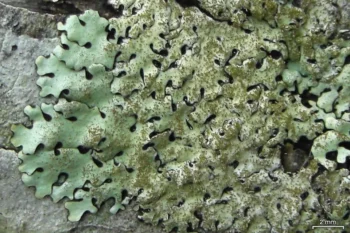
Bulbothrix Lichen: The Quiet Garden Guardian You Never Knew You Had
If you’ve ever wondered about those grayish-green patches quietly adorning the bark of your mature trees, you might be looking at bulbothrix lichen (Bulbothrix laevigatula). This fascinating organism isn’t actually a plant at all—it’s a lichen, which makes it one of nature’s most interesting partnerships living right in your backyard.
What Exactly Is Bulbothrix Lichen?
Here’s where things get wonderfully weird: bulbothrix lichen isn’t one organism, but two living together in perfect harmony. It’s a partnership between a fungus and an algae, working together to create something neither could achieve alone. The fungus provides structure and protection, while the algae produces food through photosynthesis. It’s like having the ultimate roommate situation that’s been working out for millions of years!
Also known by its scientific synonym Parmelia laevigatula, this North American native has been quietly doing its job long before we started paying attention to sustainable gardening practices.
Where You’ll Find This Garden Helper
Bulbothrix laevigatula calls eastern and southeastern North America home, thriving in the humid, forested regions where it can find the perfect balance of moisture and clean air. You’ll typically spot it growing on tree bark and occasionally on rocks, forming those distinctive grayish-green to bluish-gray patches that might have caught your eye.
Is Bulbothrix Lichen Good for Your Garden?
Absolutely! While you can’t exactly plant bulbothrix lichen (more on that in a moment), having it appear naturally in your garden is actually a fantastic sign. Here’s why this quiet resident is worth celebrating:
- Air quality indicator: Lichens are incredibly sensitive to air pollution, so their presence means you have clean, healthy air in your garden
- Ecosystem support: While not a major pollinator magnet, lichens do support various small insects and contribute to the overall biodiversity of your space
- Natural character: They add authentic, weathered beauty to mature trees without causing any harm to the bark
- Low maintenance: They require absolutely zero care from you while providing ecological benefits
How to Identify Bulbothrix Lichen
Spotting bulbothrix lichen is easier than you might think once you know what to look for:
- Color: Look for grayish-green to bluish-gray patches
- Texture: Forms crusty or slightly leafy (foliose) growths on surfaces
- Location: Primarily found on tree bark, occasionally on rocks
- Size: Typically forms patches several inches across
- Habitat: Prefers partially shaded areas with good air circulation and moderate to high humidity
The Growing Reality: Why You Can’t Plant Lichens
Here’s the thing that surprises many gardeners: you can’t actually plant or cultivate lichens like traditional plants. Bulbothrix lichen will only appear in your garden when conditions are just right, including clean air, appropriate humidity levels, and suitable surfaces. Think of it as nature’s way of giving your garden a gold star for environmental health!
If you want to encourage lichens in your garden, focus on:
- Maintaining mature trees with textured bark
- Avoiding air pollution and chemical sprays
- Preserving natural humidity levels
- Creating partially shaded woodland-style garden areas
Perfect for Naturalistic Gardens
Bulbothrix lichen fits beautifully into naturalistic and woodland garden designs. It thrives in USDA hardiness zones 5-9 throughout its native range, adding that authentic aged forest look that many gardeners try to achieve artificially. If you’re developing a native plant garden or working on forest restoration, the natural appearance of lichens like bulbothrix signals that you’re on the right track.
Rather than trying to introduce lichens, focus on creating the conditions they love: preserve existing mature trees, maintain natural moisture levels, and keep your garden chemical-free. If bulbothrix lichen decides to make your garden home, consider it a compliment to your environmental stewardship!