Bulbous Adderstongue: A Tiny Native Fern with Big Character
Meet the bulbous adderstongue (Ophioglossum crotalophoroides), one of nature’s more understated performers. This little native fern might not win any beauty contests, but it’s got personality in spades and plays an important role in our southeastern ecosystems.
What Exactly Is Bulbous Adderstongue?
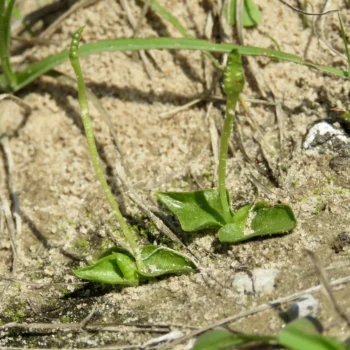
The bulbous adderstongue is a perennial fern that’s quite different from the lacy, frilly ferns you might picture in your mind. Instead of the typical feathery fronds, this little guy sports a simple, oval-shaped sterile leaf and a distinctive fertile spike that looks remarkably like a tiny snake’s tongue – hence the adderstongue name. The bulbous part refers to the small underground bulblets that help the plant spread and survive.
This native forb lacks significant woody tissue and keeps its growing points at or below ground level, making it well-adapted to survive seasonal changes and occasional disturbances.
Where You’ll Find This Native Gem
Bulbous adderstongue is proudly native to the lower 48 states, with a range that spans across the southeastern and south-central regions. You can find it growing naturally in Alabama, Arkansas, Florida, Georgia, Louisiana, Mississippi, Missouri, North Carolina, Oklahoma, South Carolina, Tennessee, and Texas.
- Species observed
- No observations
The plant shows some interesting preferences depending on where it grows. In most of its range – including the Atlantic and Gulf Coastal Plains, Eastern Mountains and Piedmont, and Great Plains regions – it’s quite flexible about moisture, happily growing in both wetland and upland areas. However, in the Midwest, it strongly prefers drier, upland sites.
Is It Right for Your Garden?
Here’s the thing about bulbous adderstongue – it’s not going to be the star of your flower border, and that’s perfectly okay. This little fern thrives in USDA hardiness zones 6-10 and serves a different purpose entirely:
- Perfect for woodland gardens and naturalized areas
- Excellent choice for native plant restoration projects
- Great for gardeners who want to support local ecosystems
- Ideal if you’re looking for low-maintenance, drought-tolerant ground cover
It prefers partial to full shade and moist, well-draining soil, though it’s surprisingly adaptable to various soil types once established. The plant spreads slowly through those underground bulblets, so you won’t have to worry about it taking over your garden.
How to Spot Bulbous Adderstongue
Identifying this fern is easier than you might think, once you know what to look for:
- Simple, oval to lance-shaped sterile frond (not divided like typical ferns)
- Distinctive fertile spike rising from the base of the sterile frond
- Small size – typically just a few inches tall
- Often grows in small colonies
- Appears in spring and may go dormant during hot, dry periods
Benefits for Your Garden Ecosystem
While bulbous adderstongue won’t attract butterflies with showy flowers (it reproduces via spores, not blooms), it still contributes to garden biodiversity. As a native species, it provides habitat for small soil-dwelling creatures and helps maintain the natural plant communities that local wildlife depends on.
This unassuming little fern represents the kind of quiet, steady presence that keeps ecosystems functioning. It may not be flashy, but for gardeners interested in creating authentic native habitats or supporting local plant communities, bulbous adderstongue deserves a spot in the conversation.
The Bottom Line
Bulbous adderstongue isn’t for everyone – and that’s part of its charm. If you’re drawn to dramatic garden showstoppers, you might want to look elsewhere. But if you’re fascinated by native plants, interested in supporting local ecosystems, or simply appreciate the subtle beauty of nature’s more modest offerings, this little fern might just win you over.
It’s low-maintenance, authentically native, and perfectly content to quietly go about its business in your woodland garden or naturalized area. Sometimes, that’s exactly what a garden needs.