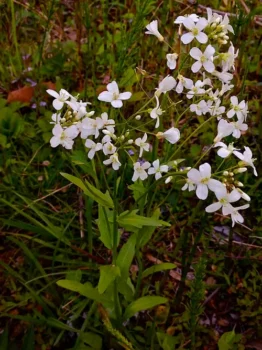
Bulbous Bittercress: A Native Spring Gem for Wet Spots
If you’ve got a soggy corner of your garden that makes you scratch your head every spring, let me introduce you to a delightful native solution: bulbous bittercress (Cardamine bulbosa). This unassuming little perennial might not win any beauty contests, but it’s exactly what your wet, shady spots have been crying out for.
What is Bulbous Bittercress?
Bulbous bittercress is a native North American perennial forb that belongs to the mustard family. Don’t let the name fool you – while it’s called bittercress, it’s not particularly bitter, and it’s definitely not a weed you need to worry about. This charming little plant reaches about 1.4 feet tall and produces clusters of small, white, four-petaled flowers that appear in mid-spring when your garden is just waking up from winter’s nap.
The plant gets its bulbous name from small bulb-like structures at the base of the stem, which help it survive in its preferred wet conditions. Its leaves are typically heart-shaped to rounded, creating a soft, medium-textured appearance that complements other woodland plants beautifully.
Where Does It Come From?
This native beauty has quite an impressive range across North America. You’ll find bulbous bittercress naturally growing from Canada down through most of the eastern and central United States, including Alabama, Arkansas, Connecticut, Florida, Illinois, Minnesota, Texas, and many states in between. It’s truly a continental native that has adapted to a wide variety of climates and conditions.
- Species observed
- No observations
Why Your Garden (Might) Need Bulbous Bittercress
Here’s where things get interesting – bulbous bittercress is what we call an obligate wetland plant. This means it almost always occurs in wetlands and really, truly loves having its feet wet. If you have:
- A rain garden that stays soggy
- Low-lying areas that collect water
- Boggy spots that other plants refuse to tolerate
- Areas near streams, ponds, or drainage areas
Then bulbous bittercress might be your new best friend. It’s also shade tolerant, making it perfect for those challenging spots under trees where the soil stays moist but the light is limited.
The Early Bird Gets the Nectar
One of the best reasons to consider bulbous bittercress is its timing. This plant blooms in mid-spring when early pollinators are desperately searching for nectar sources. Small bees, flies, and other beneficial insects will thank you for providing this early-season buffet. Plus, since it’s a rapid grower with high seed production, it can help establish itself and provide consistent blooms year after year.
Growing Conditions: What Makes It Happy
Bulbous bittercress is surprisingly particular about its growing conditions, but once you understand what it wants, it’s quite low-maintenance:
- Moisture: Consistently moist to wet soil – this is non-negotiable
- Soil type: Prefers fine to medium-textured soils; skip the sandy spots
- pH: Slightly acidic conditions (5.0 to 6.8)
- Light: Shade tolerant, perfect for woodland settings
- Temperature: Hardy in USDA zones 3-8, tolerating temperatures down to -33°F
- Drainage: Medium anaerobic tolerance (can handle some standing water)
Planting and Care Tips
The good news? Once established, bulbous bittercress is fairly hands-off. Here’s how to get started:
Getting Started: You can propagate this plant from seed or bulbs. Seeds have high abundance and moderate spread rate, while the bulb-like structures at the base make division possible. Fair warning – commercial availability is listed as no known source, so you might need to get creative with seed collection from wild populations (where legal and ethical) or plant swaps.
Planting: Plant in spring when soil is workable. Space plants about 2-3 feet apart (that’s roughly 2,700 to 4,800 plants per acre if you’re thinking big). Make sure your site stays consistently moist – drought tolerance is essentially zero with this one.
Ongoing Care: This is where bulbous bittercress really shines. It has a moderate lifespan and slow regrowth after any disturbance, but once established, it pretty much takes care of itself. No need for fertilizers, pest control, or complicated maintenance routines.
Design Ideas and Landscape Role
Bulbous bittercress works beautifully as:
- Ground cover in rain gardens
- Naturalized plantings in wet woodland areas
- Early spring interest in bog gardens
- Companion plantings with other native wetland species
- Erosion control along stream banks or wet slopes
Its erect, single-crown growth form and medium texture make it a great supporting player rather than a showstopper – think of it as the reliable friend who’s always there when you need them.
Is Bulbous Bittercress Right for You?
This native plant is perfect if you have consistently wet, shady areas and want to support early pollinators with a low-maintenance option. However, it’s definitely not the right choice for dry gardens, sunny spots, or anywhere you need drought tolerance.
The fact that it’s native across such a wide range means you’re supporting local ecosystems and providing habitat that local wildlife recognizes and uses. Plus, there are no invasive or noxious concerns – this is a well-behaved native that stays where you put it.
So if you’ve been staring at that perpetually soggy spot in your shade garden wondering what on earth will grow there, bulbous bittercress might just be your answer. It’s not flashy, but it’s reliable, native, and perfectly adapted to those challenging wet conditions that make other plants throw in the towel.