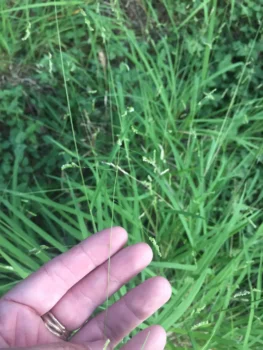
Bunch Cutgrass: A Delicate Native Grass for Wet Gardens
If you’re looking for a graceful native grass that thrives in those soggy spots where other plants struggle, bunch cutgrass (Leersia monandra) might be exactly what your garden needs. This delicate perennial grass brings a naturalistic charm to wetland gardens and rain gardens while supporting local wildlife.
What Makes Bunch Cutgrass Special
Bunch cutgrass is a true native treasure, naturally occurring in Florida, Texas, and Puerto Rico. Also known by its scientific name Leersia monandra (and the synonym Homalocenchrus monandrus), this perennial grass has been quietly beautifying wetland edges and moist areas across the southeastern United States for countless years.
- Species observed
- No observations
What sets bunch cutgrass apart from other ornamental grasses is its fine, delicate texture and its remarkable ability to thrive in consistently moist conditions. While many grasses prefer well-drained soils, this species actually prefers to keep its feet wet, making it perfect for those challenging damp areas in your landscape.
Garden Design and Landscape Role
Bunch cutgrass excels in several garden settings:
- Rain gardens: Its water-loving nature makes it ideal for managing stormwater runoff
- Pond margins: Creates beautiful naturalistic edges around water features
- Wetland gardens: Essential for authentic native wetland restoration projects
- Wildlife habitat areas: Provides cover and nesting material for birds and beneficial insects
- Naturalistic landscapes: Adds movement and texture to informal garden designs
The grass’s airy, fine-textured appearance creates beautiful contrast when planted alongside broader-leaved wetland plants like native sedges or wildflowers. Its gentle movement in the breeze adds life and dynamic interest to static plantings.
Growing Conditions and Care
One of the best things about bunch cutgrass is how easy it is to grow—as long as you can provide the moisture it craves. Here’s what this native grass needs to thrive:
Sunlight: Full sun to partial shade (adaptable to various light conditions)
Soil: Consistently moist to wet soils; tolerates periodic flooding
Hardiness: USDA zones 8-11 (perfect for warm, humid climates)
Maintenance: Very low once established
Planting and Establishment Tips
Getting bunch cutgrass established in your garden is straightforward:
- Plant in spring when soil temperatures are warming
- Choose the wettest spot in your garden—this grass actually prefers boggy conditions
- Space plants appropriately as they can spread by rhizomes over time
- Water regularly until established, then let nature take over
- No fertilization needed—native plants prefer lean conditions
Once established, bunch cutgrass requires minimal care. It’s naturally adapted to your local climate and soil conditions, making it much more resilient than non-native alternatives.
Wildlife Benefits
While bunch cutgrass may not attract pollinators the way flowering plants do (it’s wind-pollinated like most grasses), it provides valuable habitat benefits. Birds use the fine stems and leaves for nesting material, and the grass structure provides cover for small wildlife. The seeds, when produced, can provide food for seed-eating birds.
Is Bunch Cutgrass Right for Your Garden?
Consider bunch cutgrass if you have:
- Consistently moist or wet areas that need planted
- A desire to support native plant communities
- Interest in low-maintenance, drought-resistant plants (once established)
- A naturalistic or wildlife-friendly garden design
- A location in USDA zones 8-11
However, this grass might not be the best choice if you’re looking for a formal lawn substitute or need plants for dry, well-drained areas. Its natural habitat preferences make it quite specific about moisture requirements.
Supporting Native Plant Communities
By choosing bunch cutgrass, you’re not just adding an attractive plant to your garden—you’re helping to preserve and restore native plant communities that have existed in the southeastern United States for thousands of years. Native plants like this one form the foundation of healthy ecosystems and provide irreplaceable habitat for local wildlife.
Whether you’re creating a rain garden, restoring a wetland area, or simply want to add some graceful movement to a moist corner of your yard, bunch cutgrass offers beauty, sustainability, and ecological value all in one delicate package.