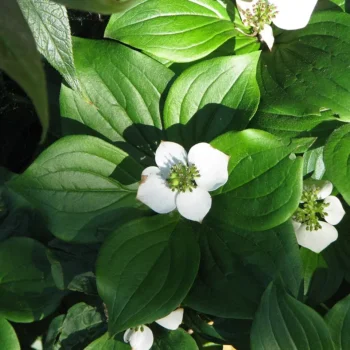
Bunchberry Dogwood: A Charming Native Ground Cover for Cool Gardens
If you’re looking for a unique native ground cover that brings woodland charm to your garden, meet bunchberry dogwood (Cornus canadensis). This delightful little plant might just be the perfect solution for those tricky shaded spots where traditional ground covers struggle to thrive.
What Makes Bunchberry Special?
Bunchberry dogwood is a perennial herb that belongs to the dogwood family, though it looks quite different from its tree cousins. This low-growing native creates a living carpet that rarely exceeds 6 inches tall, making it perfect for areas where you want coverage without height.
The plant gets its common name from its most striking feature – clusters of bright red berries that appear in late summer and fall. But before those berries steal the show, bunchberry produces charming white flowers in late spring, each surrounded by four showy white bracts that many people mistake for petals.
Where Bunchberry Calls Home
This hardy native has an impressive range across North America, thriving naturally from Alaska and Canada south into the northern United States. You’ll find it growing wild in states from Maine to Montana, and from the Pacific Northwest down to Colorado and New Mexico. It’s particularly common in boreal and montane forests, where cool temperatures and moist soils create ideal conditions.
- Species observed
- No observations
Important note for New Jersey gardeners: Bunchberry is listed as rare in New Jersey with a status of S1 (Critically Imperiled). If you’re in the Garden State, only plant bunchberry if you can source it responsibly from reputable native plant nurseries.
Why Choose Bunchberry for Your Garden?
There are several compelling reasons to consider bunchberry dogwood for your landscape:
- Native wildlife magnet: The berries provide food for small mammals and birds, making up 5-10% of some small mammals’ diets and 10-25% of terrestrial birds’ diets
- Unique aesthetic appeal: The distinctive whorled leaves, white flowers, and bright red berries create visual interest through multiple seasons
- Excellent ground cover: Its rhizomatous growth habit allows it to spread and fill in areas naturally
- Low maintenance: Once established, it requires minimal care in the right conditions
- Adaptable moisture tolerance: While it prefers moist conditions, it can handle some variation in wetland to upland sites
Perfect Garden Settings
Bunchberry dogwood shines in several garden situations:
- Woodland gardens and naturalized areas
- Shade gardens under trees
- Native plant gardens
- Cool, moist rock gardens
- Areas that mimic its natural forest floor habitat
Growing Conditions and Care
Success with bunchberry comes down to recreating its preferred natural habitat:
Hardiness: Thrives in USDA zones 2-7, with excellent cold tolerance down to -28°F
Light requirements: Shade tolerant and actually prefers partial to full shade
Soil needs:
- Medium-textured, well-draining soils
- Acidic conditions (pH 5.5-6.9)
- Rich in organic matter
- Consistently moist but not waterlogged
Water requirements: High moisture needs – this isn’t a plant for dry or drought-prone areas
Temperature preferences: Cool climates with at least 100 frost-free days
Planting and Establishment Tips
Getting bunchberry established requires patience, as it’s known for slow growth and low seedling vigor:
- Timing: Plant in spring after the last frost
- Spacing: Plant 2,700-4,800 plants per acre for ground cover establishment
- Soil preparation: Amend soil with organic matter and ensure good drainage
- Watering: Keep consistently moist during establishment
- Mulching: Apply organic mulch to retain moisture and suppress weeds
- Patience: Don’t expect rapid results – bunchberry spreads slowly but steadily via underground rhizomes
Propagation Options
You can propagate bunchberry through several methods:
- Seeds: Require cold stratification and have low germination rates
- Division: Divide established clumps in early spring
- Cuttings: Take softwood cuttings in late spring
- Bare root or container plants: Often the most reliable option for home gardeners
Supporting Pollinators and Wildlife
While bunchberry’s flowers aren’t showy magnets for butterflies, they do attract smaller pollinators including flies, beetles, and native bees. The real wildlife value comes later in the season when those bright red berries provide crucial food for birds and small mammals during fall migration and winter preparation.
Potential Challenges
Bunchberry isn’t the easiest native plant to grow, and there are a few challenges to consider:
- Limited commercial availability (often requires special ordering)
- Slow establishment and spread
- Specific soil and moisture requirements
- Not drought tolerant
- May struggle in areas with hot summers
Is Bunchberry Right for Your Garden?
Bunchberry dogwood is an excellent choice if you have the right conditions and realistic expectations. It’s perfect for gardeners who want to create authentic woodland habitat, support native wildlife, and enjoy a truly unique ground cover that changes with the seasons.
However, if you’re looking for fast results, have hot or dry conditions, or need a low-maintenance option, you might want to consider other native alternatives like wild ginger, wintergreen, or native sedges.
For those willing to work with its specific needs, bunchberry dogwood offers a special piece of North America’s boreal forest that you can enjoy right in your own backyard. Just remember to source your plants responsibly, especially if you’re in areas where it’s rare, and be patient as this woodland gem slowly establishes its charming presence in your garden.