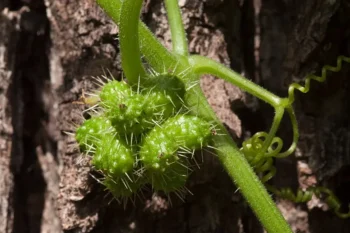
Bur Cucumber: A Native Climbing Vine Worth Considering
If you’re looking for a native plant that brings a touch of wild charm to your garden, meet bur cucumber (Sicyos). This fascinating climbing vine might not be as well-known as other native species, but it has some unique qualities that make it worth considering for the right garden setting.
What Exactly is Bur Cucumber?
Bur cucumber is a native North American forb that grows as both an annual and perennial, depending on the species and growing conditions. Unlike woody vines, this herbaceous climber lacks significant woody tissue and produces its growth from buds at or below ground level each growing season.
The plant gets its common name from its distinctive spiky, bur-like fruits that develop after the small white flowers fade. These unusual seed pods are definitely a conversation starter in any garden!
Where Does Bur Cucumber Grow Naturally?
One of the most impressive things about bur cucumber is its incredible native range. This adaptable plant is native throughout Canada, all of the lower 48 states, and even Hawaii. You’ll find it growing naturally from Alabama to Alaska, and from Maine to New Mexico. Talk about a true North American native!
The extensive distribution across such diverse climates—from Alabama and Arizona to Quebec and North Dakota—speaks to this plant’s remarkable adaptability to different growing conditions.
- Species observed
- No observations
Why Consider Bur Cucumber for Your Garden?
Here are some compelling reasons to give bur cucumber a try:
- Native plant benefits: Support local ecosystems and wildlife with a truly native species
- Unique aesthetic: Heart-shaped leaves, delicate white flowers, and interesting spiky fruits create visual interest
- Pollinator friendly: Small white flowers attract various native pollinators
- Low maintenance: Once established, these hardy natives typically thrive with minimal care
- Climbing habit: Perfect for adding vertical interest to fences, trellises, or naturalistic settings
Best Garden Settings for Bur Cucumber
Bur cucumber works particularly well in:
- Wild or naturalistic gardens
- Cottage garden settings
- Native plant gardens
- Areas where you want seasonal ground cover
- Spots that need a climbing vine with character
This isn’t necessarily the plant for formal, manicured landscapes, but it shines in more relaxed garden settings where its wild nature can be appreciated.
Growing Conditions and Care
Thanks to its wide native distribution, bur cucumber is quite adaptable to various growing conditions. Based on its natural range, it can likely handle USDA hardiness zones 3-10, though specific requirements may vary depending on which species of Sicyos you’re growing.
Generally, bur cucumber prefers:
- Moist, well-draining soils
- Partial shade to full sun exposure
- Some form of support for its climbing habit
- Regular water during establishment
Planting and Care Tips
Growing bur cucumber successfully is fairly straightforward:
- Support structures: Provide a trellis, fence, or other climbing support
- Spacing: Give plants room to spread and climb
- Watering: Keep soil consistently moist but not waterlogged
- Maintenance: Minimal pruning needed; may self-seed readily
Keep in mind that some gardeners find bur cucumber can be quite vigorous and may self-seed enthusiastically. While this isn’t necessarily a problem in naturalistic settings, you might want to deadhead spent flowers if you prefer more control over its spread.
A Word of Caution
Before planting bur cucumber, consider that it can be quite vigorous and may spread more than you initially planned. The spiky fruits, while interesting, can also be somewhat messy as they mature and drop. Make sure this matches your gardening style and maintenance preferences.
The Bottom Line
Bur cucumber offers native plant enthusiasts a chance to grow something truly unique and regionally appropriate. Its extensive native range means you’re likely supporting local ecosystems no matter where you garden in North America. While it may not be the tidiest garden plant, its ecological benefits, pollinator appeal, and distinctive character make it worth considering for the right garden setting.
If you’re drawn to native plants with personality and don’t mind a vine that knows how to make itself at home, bur cucumber might just be the perfect addition to your wild garden or naturalistic landscape.