Eastern Wahoo (Burningbush): A Native Gem for Fall Color and Wildlife
If you’re looking for a native shrub that delivers stunning fall color while supporting local wildlife, let me introduce you to one of North America’s best-kept secrets: the Eastern wahoo, also known as burningbush (Euonymus atropurpureus). Don’t let the intimidating botanical name scare you away – this charming native deserves a spot in more gardens!
What Makes Eastern Wahoo Special?
Eastern wahoo goes by several names, including burningbush and simply wahoo. This perennial shrub is a true North American native, naturally occurring across Canada and throughout most of the lower 48 states. Its wide distribution speaks to its adaptability – a trait that makes it an excellent choice for home gardeners.
This delightful shrub typically grows to about 10 feet tall at maturity, though it can occasionally reach up to 25 feet under ideal conditions. With its multiple stems and erect growth habit, it creates an attractive presence in the landscape without overwhelming smaller spaces.
Where Does Eastern Wahoo Grow Naturally?
Eastern wahoo has an impressive native range, growing naturally in states from Maine to Florida and west to Montana and Texas. You’ll find it thriving in Alabama, Arkansas, Connecticut, Delaware, Florida, Georgia, Illinois, Indiana, Iowa, Kansas, Kentucky, Louisiana, Maine, Maryland, Massachusetts, Michigan, Minnesota, Mississippi, Missouri, Montana, Nebraska, New Hampshire, New Jersey, New York, North Carolina, North Dakota, Ohio, Oklahoma, Pennsylvania, Rhode Island, South Carolina, South Dakota, Tennessee, Texas, Virginia, West Virginia, and Wisconsin, plus Ontario and Quebec in Canada.
- Species observed
- No observations
The Aesthetic Appeal
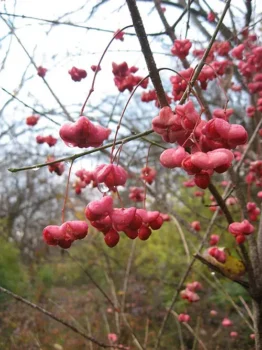
What really sets Eastern wahoo apart is its spectacular fall display. The dark green foliage transforms into brilliant red-purple hues that rival any exotic ornamental. But the real showstopper comes with the fruit – distinctive four-lobed capsules in shades of pink and red that split open to reveal bright orange-red seeds. It’s like nature’s own jewelry box!
The flowers, while small and purple, appear in late spring and attract various pollinators. Though they’re not particularly showy, they’re an important food source for small insects during the blooming period.
Perfect Spots in Your Garden
Eastern wahoo works beautifully in several garden settings:
- Woodland gardens as an understory shrub
- Native plant gardens
- Naturalized landscapes
- Wildlife gardens
- Areas where you want fall interest
Its moderate growth rate means you won’t be constantly pruning, and its coarse texture adds nice contrast to finer-textured plants.
Growing Conditions and Care
One of the best things about Eastern wahoo is how easygoing it is. This adaptable native thrives in USDA hardiness zones 3-7, making it suitable for most of the continental United States.
Soil Requirements:
- Adapts to coarse, medium, and fine-textured soils
- Prefers pH between 5.0 and 8.0
- Low fertility requirements (won’t be fussy about rich soil)
- Moderate drought tolerance once established
Light and Water:
- Shade tolerant – perfect for those tricky spots under trees
- Low moisture requirements
- Can handle both wetland and upland conditions
Planting and Care Tips
Eastern wahoo is refreshingly low-maintenance. Here’s what you need to know:
- Plant in spring or fall for best establishment
- Space plants 320-1,280 per acre if doing larger plantings
- Requires cold stratification if growing from seed
- Can be propagated from cuttings
- Root depth of at least 12 inches
- No need for special fertilizers or frequent watering once established
The seeds need cold treatment to germinate, which happens naturally when they fall in autumn and experience winter temperatures.
Wildlife Benefits
While specific wildlife data isn’t extensively documented, Eastern wahoo’s berries provide food for birds, and its flowers support various small pollinators. As a native plant, it’s part of the natural food web that supports local ecosystems far better than non-native alternatives.
A Few Things to Consider
Eastern wahoo has moderate toxicity, so keep this in mind if you have curious pets or small children who might sample garden plants. The plant also has low fire tolerance and doesn’t resprout after damage, so consider its placement carefully in fire-prone areas.
Its relatively short lifespan means you might need to plan for replacement after several decades, but its slow spread rate means it won’t become a maintenance headache.
Why Choose Eastern Wahoo?
In a world full of non-native ornamentals, Eastern wahoo offers something special: genuine regional character combined with low-maintenance beauty. It’s a plant that connects your garden to the broader landscape, supporting local wildlife while providing the fall color and interest that every garden needs.
Whether you’re creating a native plant sanctuary or just looking for a reliable shrub that won’t demand constant attention, Eastern wahoo deserves serious consideration. It’s proof that sometimes the best garden plants are the ones that have been quietly thriving in our landscapes for thousands of years.