Burrobush: The Unsung Hero of Desert Landscaping
If you’re looking for a low-maintenance, drought-tolerant native plant that thrives in the harshest desert conditions, let me introduce you to burrobush (Ambrosia dumosa). While it might not win any beauty contests with its modest appearance, this hardy little shrub is a workhorse in water-wise gardens and natural desert landscapes.
What is Burrobush?
Burrobush is a perennial shrub native to the southwestern United States. Also known by its synonym Franseria dumosa, this resilient plant typically grows to about 2 feet in height with a rounded, multi-stemmed growth form. Don’t let its small stature fool you – this plant is built to survive in some of the most challenging growing conditions on the continent.
Where Does Burrobush Grow Naturally?
This desert native calls Arizona, California, Nevada, and Utah home, thriving in the Mojave and Sonoran desert regions. As a plant species native to the lower 48 states, it has evolved to handle extreme heat, minimal rainfall, and alkaline soils that would challenge many other plants.
- Species observed
- No observations
Why Consider Burrobush for Your Garden?
While burrobush might not be the showiest plant in your landscape, it offers several compelling reasons to give it a spot in your garden:
- Extreme drought tolerance: Once established, this plant thrives on just 4-11 inches of annual precipitation
- Rapid growth: Despite harsh conditions, it establishes quickly and reaches maturity fast
- Low maintenance: Requires minimal care, no fertilizer, and infrequent watering
- Native wildlife support: Provides habitat and resources for desert-adapted wildlife
- Erosion control: Helps stabilize soil in challenging locations
What Does Burrobush Look Like?
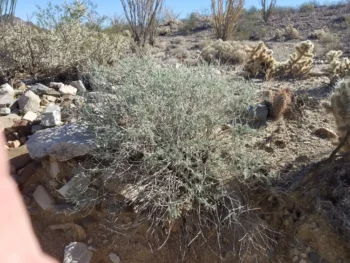
Burrobush has a subtle, understated beauty that grows on you. The plant features silvery-green foliage with a medium texture that provides nice contrast in desert gardens. In late winter, it produces small, inconspicuous yellow flowers that may not be showy but serve an important ecological function. The overall growth form is semi-erect with a single crown, creating a neat, rounded appearance.
Perfect Garden Settings for Burrobush
This plant shines in:
- Xeriscaped yards and water-wise gardens
- Natural desert landscapes
- Background plantings where you need reliable, low-maintenance coverage
- Erosion-prone slopes and challenging sites
- Native plant gardens focused on regional flora
Growing Conditions and Care
Burrobush is refreshingly easy to please once you understand its preferences:
Climate: Hardy in USDA zones 8-10, this plant needs at least 250 frost-free days and can tolerate temperatures down to -11°F.
Soil: Prefers coarse to medium-textured, well-draining soils. It’s highly tolerant of alkaline conditions (pH 7.0-8.5) and has medium salt tolerance. Avoid fine, heavy soils that retain moisture.
Water: Low water use once established. This plant has high drought tolerance and actually prefers lean conditions.
Sun: Full sun only – this plant is completely intolerant of shade.
Fertilizer: None needed! In fact, burrobush prefers low fertility conditions.
Planting and Propagation Tips
Getting started with burrobush is straightforward:
- Seeds are readily available (about 78,821 seeds per pound!) and germinate well
- Can be grown from bare root or container plants
- Plant 100 plants per acre for natural coverage
- Seeds should be planted with at least 12 inches of root depth available
- Spring and summer are the active growing periods
Note that commercial availability is limited to field collections only, so you may need to source seeds or plants from native plant specialists.
Is Burrobush Right for Your Garden?
Burrobush isn’t for everyone, and that’s perfectly fine! Consider this plant if you:
- Live in an arid climate within its native range
- Want to support native ecosystems and wildlife
- Need plants for challenging, dry locations
- Appreciate subtle, natural beauty over flashy flowers
- Want truly low-maintenance landscaping
Skip burrobush if you prefer lush, tropical-looking gardens, need plants for shady areas, or want showy flowering displays. This plant is all about function and subtle charm rather than dramatic visual impact.
The Bottom Line
Burrobush may not be the star of your garden, but it’s exactly the kind of reliable, native workhorse that makes water-wise landscaping possible in desert regions. If you’re gardening in its native range and looking for plants that truly belong in your local ecosystem, burrobush deserves serious consideration. It’s proof that sometimes the most valuable plants are the ones that quietly do their job while asking for almost nothing in return.