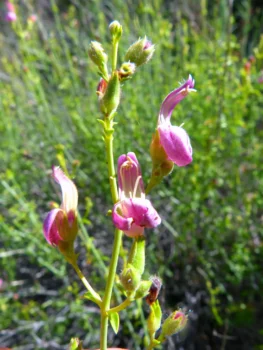
Bush Beardtongue: A Drought-Smart Native Shrub That Hummingbirds Adore
If you’re looking for a tough-as-nails native plant that can handle dry conditions while providing a spectacular show for both you and your local hummingbirds, let me introduce you to the bush beardtongue (Keckiella breviflora breviflora). This charming California and Nevada native is like the reliable friend who always shows up when you need them – low maintenance, beautiful, and incredibly dependable.
Meet the Bush Beardtongue
Bush beardtongue is a perennial shrub that knows how to make a statement without being high-maintenance. You might also see it listed under its former scientific names, including Penstemon breviflorus, but don’t let the name changes fool you – it’s the same wonderful plant that’s been thriving in the American West for centuries.
This multi-stemmed woody shrub typically stays compact, rarely growing taller than 13-16 feet, making it perfect for gardens where you want impact without overwhelming your space. Its growth habit is naturally tidy, so you won’t be constantly wrestling with an unruly plant.
Where Bush Beardtongue Calls Home
As a true native of the lower 48 states, bush beardtongue has made its home primarily in California and Nevada. It’s perfectly adapted to the challenging conditions of these regions, which is exactly why it makes such a smart choice for water-conscious gardeners.
- Species observed
- No observations
Why Your Garden (and Local Wildlife) Will Love It
Here’s where bush beardtongue really shines – those gorgeous tubular flowers that appear from spring through summer are like magnets for hummingbirds. The red to orange-red blooms are perfectly shaped for these tiny aerial acrobats, and you’ll be amazed at how quickly they discover this new addition to your garden.
Native bees are also big fans, making this plant a fantastic choice for supporting local pollinators. When you plant bush beardtongue, you’re not just adding beauty to your landscape – you’re creating a wildlife habitat right in your backyard.
Perfect for Water-Wise Gardens
If you’re tired of plants that demand constant attention and gallons of water, bush beardtongue is about to become your new best friend. This shrub is:
- Exceptionally drought-tolerant once established
- Perfect for xeriscaping and Mediterranean-style gardens
- Ideal for native plant landscapes and rock gardens
- A natural choice for slopes and areas with challenging growing conditions
Growing Conditions and Care
Bush beardtongue thrives in USDA hardiness zones 8-10, making it suitable for much of California, Nevada, and similar climates. Here’s what it needs to be happy:
Light: Full sun to partial shade – it’s quite adaptable but performs best with plenty of sunshine.
Soil: Well-draining soil is absolutely essential. This plant cannot tolerate wet feet, so avoid heavy clay or areas where water pools.
Water: Once established (usually after the first year), bush beardtongue needs minimal supplemental watering. It’s designed to thrive on natural rainfall and occasional deep watering during extended dry periods.
Planting and Care Tips
Getting your bush beardtongue off to a good start is surprisingly simple:
- Best planting time: Fall is ideal, giving the plant time to establish roots before the growing season
- Spacing: Allow adequate room for the mature size – typically 3-4 feet between plants
- Initial care: Water regularly the first year while roots establish, then gradually reduce frequency
- Pruning: Light pruning after flowering helps maintain shape, but heavy pruning isn’t necessary
- Fertilizer: Generally not needed – this plant prefers lean soil conditions
Is Bush Beardtongue Right for Your Garden?
Bush beardtongue is an excellent choice if you:
- Want to create a water-wise landscape
- Love attracting hummingbirds and native pollinators
- Prefer low-maintenance plants
- Are interested in supporting native plant communities
- Need a reliable shrub for challenging growing conditions
However, you might want to consider other options if you’re gardening in climates much colder than zone 8, or if you have heavy clay soil with poor drainage that you can’t amend.
A Plant That Gives Back
When you choose bush beardtongue for your garden, you’re making a choice that benefits everyone – you get a beautiful, low-maintenance shrub that brings color and structure to your landscape, while local wildlife gets essential nectar sources and habitat. It’s one of those wonderful win-win situations that makes native plant gardening so rewarding.
Plus, there’s something deeply satisfying about growing a plant that’s perfectly suited to your local environment. Bush beardtongue doesn’t fight against nature – it works with it, creating a garden that feels both beautiful and sustainable.