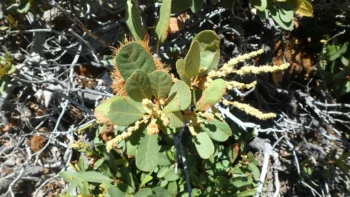
Bush Chinquapin: A Tough Native Shrub for Western Gardens
Meet bush chinquapin (Chrysolepis sempervirens), a resilient evergreen shrub that’s been quietly thriving in the American West for millennia. If you’re looking for a low-maintenance native plant that can handle tough conditions while supporting local ecosystems, this unassuming shrub might just be your new garden hero.
What is Bush Chinquapin?
Bush chinquapin is a perennial, multi-stemmed evergreen shrub native to the lower 48 states. Don’t let the name fool you – while it’s related to chestnuts, this tough customer has adapted to life in some pretty challenging environments. You might also see it listed under its former scientific name, Castanopsis sempervirens, but Chrysolepis sempervirens is the current accepted name.
This slow-growing shrub typically reaches about 7 feet tall and wide at maturity (around 20 years), making it a perfect fit for medium-sized garden spaces. Its dense, coarse-textured foliage stays green year-round, providing reliable structure to your landscape.
Where Does Bush Chinquapin Call Home?
Bush chinquapin is a true westerner, naturally occurring in California, Nevada, and Oregon. You’ll find it thriving in chaparral communities and mixed evergreen forests, where it’s learned to make the most of Mediterranean-style climates.
- Species observed
- No observations
Why Choose Bush Chinquapin for Your Garden?
There are several compelling reasons to consider adding this native shrub to your landscape:
- Drought tolerance: Once established, bush chinquapin can handle dry conditions like a champ
- Low maintenance: This shrub has minimal fertility requirements and doesn’t need pampering
- Fire adaptation: With medium fire tolerance and the ability to resprout after damage, it’s well-suited for fire-prone areas
- Erosion control: Its root system (minimum 20 inches deep) helps stabilize slopes
- Wildlife value: The brown nuts provide food for various animals
- Native authenticity: Supporting local ecosystems with plants that belong there
Perfect Garden Settings
Bush chinquapin shines in several garden styles:
- Native plant gardens
- Mediterranean-style landscapes
- Xeriscapes and drought-tolerant gardens
- Wildlife habitat gardens
- Naturalized hillside plantings
- Fire-safe landscaping
Growing Conditions and Care
Bush chinquapin is surprisingly adaptable, but it does have some preferences:
Climate: Thrives in USDA zones 7-9, handling temperatures down to -8°F. It needs at least 160 frost-free days and prefers areas with 35-80 inches of annual precipitation.
Soil: Adaptable to coarse and medium-textured soils but struggles with heavy clay. It prefers slightly acidic to neutral pH (5.0-7.0) and has low tolerance for alkaline conditions.
Sun exposure: Quite shade tolerant, making it versatile for various light conditions in your garden.
Water needs: Low moisture requirements once established, though regular watering during the first few years helps establishment.
Planting and Establishment Tips
Growing bush chinquapin requires some patience, but the results are worth it:
- Start small: Container plants are your best bet, as this species has low commercial availability
- Plant spacing: Allow 300-700 plants per acre for naturalized plantings, or space individual shrubs 6-8 feet apart
- Establishment period: With slow growth and low seedling vigor, give your plants 2-3 years to really get going
- Mulching: A layer of organic mulch helps retain moisture during establishment
- Pruning: Minimal pruning needed, but it responds well to coppicing if needed
Seasonal Interest and Characteristics
Bush chinquapin offers subtle but consistent garden appeal:
- Spring and summer: Active growing season with dense green foliage
- Mid-summer: Small, inconspicuous green flowers appear (wind-pollinated)
- Summer to fall: Conspicuous brown nuts develop, providing wildlife food
- Winter: Evergreen foliage provides year-round structure
Propagation Notes
If you’re interested in growing bush chinquapin from seed, you’ll need patience and proper technique. Seeds require cold stratification and have low abundance, with about 1,200 seeds per pound. The slow seed spread rate means natural establishment takes time, but successful germination can yield plants that will thrive for decades.
The Bottom Line
Bush chinquapin isn’t the flashiest shrub in the garden center, but for western gardeners seeking authentic, low-maintenance native plants, it’s a solid choice. Its drought tolerance, wildlife value, and ability to thrive in challenging conditions make it particularly valuable in today’s climate-conscious gardening world. While it may take a few years to establish, once settled in, bush chinquapin will be a reliable, eco-friendly member of your landscape team for years to come.