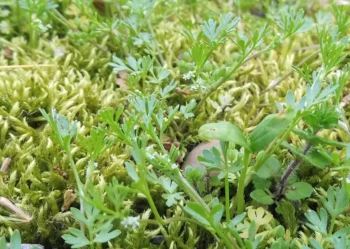
Butler’s Sandparsley: A Hidden Gem for Native Plant Enthusiasts
If you’re looking to add some native diversity to your wildflower garden, Butler’s sandparsley (Ammoselinum butleri) might just be the unsung hero you never knew you needed. This charming little annual belongs to the carrot family and brings a delicate touch to natural landscapes across the American South and Midwest.
What Makes Butler’s Sandparsley Special?
Butler’s sandparsley is a true native of the lower 48 states, making it an excellent choice for gardeners who want to support local ecosystems. As an annual forb, this plant completes its entire life cycle in one growing season, producing delicate white flowers that add subtle beauty to any native plant collection.
Unlike woody shrubs or trees, Butler’s sandparsley is a herbaceous plant that lacks significant woody tissue. It’s what botanists call a forb – basically a fancy term for a non-grassy flowering plant that dies back to the ground each year.
Where Does It Call Home?
Butler’s sandparsley has made itself at home across a impressive swath of the American landscape. You’ll find this native beauty growing naturally in Arkansas, Kansas, Louisiana, Mississippi, Missouri, North Carolina, Oklahoma, Tennessee, and Texas. That’s quite a range for such a little-known plant!
- Species observed
- No observations
Garden Potential and Landscape Role
While Butler’s sandparsley might not be the showstopper of your garden, it serves as an excellent supporting player in native plant communities. Here’s why you might want to consider adding it to your landscape:
- Perfect for wildflower gardens and prairie restorations
- Adds delicate texture with its fine foliage and small white flower clusters
- Fills in gaps between larger native perennials
- Supports local wildlife as part of the native food web
Growing Conditions and Care
Butler’s sandparsley is quite the adaptable little plant. Its wetland status is listed as facultative across multiple regions, which means it’s equally happy in both wet and dry conditions. Talk about easy-going!
Based on its natural range, this native annual likely thrives in USDA hardiness zones 6 through 9. While specific growing requirements aren’t well-documented (this plant prefers to keep a low profile!), here are some general guidelines:
- Prefers well-drained soils but can tolerate various moisture levels
- Likely performs well in partial shade to full sun
- As an annual, it will need to reseed itself or be replanted each year
- Best suited for naturalistic plantings rather than formal gardens
Planting and Propagation Tips
Since specific cultivation information for Butler’s sandparsley is limited, here are some educated approaches based on similar native annuals:
- Try direct seeding in fall for natural spring germination
- Scatter seeds in areas where you want a naturalistic look
- Allow some plants to go to seed to ensure future generations
- Plant alongside other native wildflowers for a diverse ecosystem
Wildlife and Pollinator Benefits
While specific wildlife benefits aren’t well-documented, Butler’s sandparsley belongs to the carrot family (Apiaceae), which is known for attracting beneficial insects. The small white flowers likely provide nectar and pollen for tiny native bees, beneficial wasps, and other pollinating insects that might overlook showier blooms.
The Bottom Line
Butler’s sandparsley might not be the most famous native plant, but that’s part of its charm. It’s a quiet contributor to native plant communities, perfect for gardeners who appreciate subtle beauty and want to support lesser-known native species. While growing information is limited, its adaptable nature and wide natural range suggest it’s probably easier to grow than its mysterious reputation might suggest.
If you’re creating a native wildflower garden or prairie restoration, consider giving Butler’s sandparsley a try. Sometimes the most rewarding plants are the ones that don’t demand the spotlight – they just quietly do their job of supporting local ecosystems while adding their own special touch to the landscape.