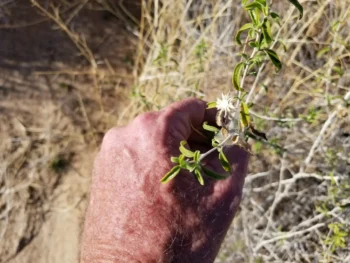
Button Brittlebush: The Golden Star of Desert Gardens
If you’re looking for a cheerful, low-maintenance native plant that practically grows itself, meet the button brittlebush (Encelia frutescens). This delightful desert dweller brings sunshine to your garden with its bright yellow blooms while asking for almost nothing in return. It’s like having that reliable friend who always shows up with a smile and never complains!
What is Button Brittlebush?
Button brittlebush is a perennial shrub that’s native to the southwestern United States. This multi-stemmed woody plant typically reaches 3 to 5 feet in height and width, though it can occasionally grow taller under ideal conditions. The plant produces clusters of bright yellow, daisy-like flowers that bloom primarily in spring, creating a spectacular display against its silvery-gray foliage.
You might also see this plant listed under its synonyms Encelia frutescens var. frutescens or Simsia frutescens in older gardening references, but they’re all the same wonderful plant.
Where Does Button Brittlebush Grow Naturally?
This hardy native calls Arizona, California, and Nevada home, where it thrives in desert environments and rocky slopes. It’s perfectly adapted to the challenging conditions of the American Southwest, making it an ideal choice for gardeners in these regions who want to work with nature rather than against it.
- Species observed
- No observations
Why Choose Button Brittlebush for Your Garden?
There are plenty of reasons to fall in love with this desert beauty:
- Drought tolerance: Once established, it needs minimal supplemental watering
- Pollinator magnet: Bees, butterflies, and other beneficial insects adore the abundant flowers
- Year-round interest: Attractive silvery foliage provides structure even when not in bloom
- Low maintenance: Requires little care once established
- Native benefits: Supports local ecosystems and wildlife
- Erosion control: Excellent for stabilizing slopes and banks
Perfect Garden Settings
Button brittlebush shines brightest in:
- Desert and xeriscape gardens
- Native plant landscapes
- Low-water Mediterranean-style gardens
- Naturalized areas and wildflower meadows
- Background plantings in mixed borders
- Rock gardens and slopes needing erosion control
Growing Conditions and Care
Button brittlebush is wonderfully adaptable, but it does have some preferences:
Sunlight: Loves full sun and won’t be happy in shade
Soil: Well-draining soil is essential – it can’t tolerate wet feet
Water: Drought tolerant once established, but appreciates occasional deep watering during extremely dry periods
Climate: Hardy in USDA zones 8-11
Planting and Care Tips
When to plant: Fall or early spring are ideal planting times, giving roots time to establish before extreme weather.
Planting process: Dig a hole twice as wide as the root ball but no deeper. Backfill with native soil – no need for amendments in most cases. Water thoroughly after planting.
Ongoing care: The beauty of button brittlebush lies in its simplicity. Water deeply but infrequently during the first year to encourage deep root growth. Once established, natural rainfall should be sufficient in most areas. Prune lightly after flowering to maintain shape and encourage bushier growth.
Potential challenges: Overwatering is the biggest threat to this plant. It’s adapted to dry conditions and can develop root rot in soggy soil. Also, it may struggle in humid climates outside its natural range.
The Bottom Line
Button brittlebush is a fantastic choice for gardeners in the Southwest who want a beautiful, low-maintenance native plant. It offers bright seasonal color, supports local pollinators, and requires minimal resources once established. While it’s not suitable for every climate, in its preferred zones it’s hard to beat for reliable performance and ecological benefits.
If you’re ready to embrace water-wise gardening and support native ecosystems, button brittlebush deserves a spot in your landscape. Your local pollinators will thank you, and you’ll love watching this cheerful plant light up your garden each spring with its golden blooms!