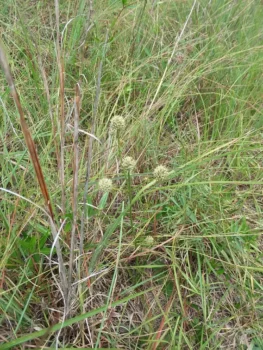
Button Eryngo: A Unique Native Wildflower for Southern Gardens
If you’re looking to add some distinctive texture and native charm to your garden, button eryngo (Eryngium yuccifolium var. synchaetum) might just be the perfect plant for you. This fascinating native wildflower brings an unusual architectural quality to landscapes while supporting local ecosystems.
What is Button Eryngo?
Button eryngo is a native perennial forb that belongs to the carrot family. As a herbaceous plant, it lacks woody stems but returns year after year from its root system. You might also see it listed under its synonym Eryngium synchaetum in some plant references, but they’re the same delightful plant.
What makes this plant special is its unique appearance that sets it apart from typical garden flowers. The button in its name gives you a hint about its distinctive flower heads, which add wonderful textural interest to any planting.
Where Does Button Eryngo Come From?
This native wildflower calls the southeastern United States home, naturally occurring across a wide range that includes Alabama, Arkansas, Florida, Georgia, Louisiana, Mississippi, North Carolina, Oklahoma, South Carolina, and Texas. Being native to such a broad area means it’s well-adapted to various growing conditions throughout the region.
- Species observed
- No observations
Why Grow Button Eryngo in Your Garden?
There are several compelling reasons to consider adding button eryngo to your landscape:
- Native plant benefits: As a native species, it supports local wildlife and requires less maintenance once established
- Unique texture: Its distinctive appearance adds architectural interest and contrast to softer, more traditional flowers
- Perennial reliability: Once established, this hardy perennial returns year after year
- Regional adaptation: Perfectly suited to southeastern growing conditions
Garden Design and Landscape Use
Button eryngo works wonderfully in several garden styles and situations. Its unique form makes it an excellent choice for native plant gardens, prairie restorations, and naturalized areas. The plant’s interesting texture also makes it valuable in mixed perennial borders where you want to add some structural diversity.
Consider using button eryngo as a focal point in smaller plantings or as part of a larger native wildflower meadow. Its distinctive appearance makes it a great conversation starter and adds educational value to gardens focused on native plants.
Growing Conditions and Care
While specific growing requirements for this variety would benefit from additional research, most plants in the Eryngium family are known for being relatively low-maintenance once established. As a native southeastern plant, button eryngo likely prefers conditions similar to its natural habitat.
Since this plant naturally occurs across multiple states with varying climates, it appears to be quite adaptable. However, gardeners should research specific growing requirements for their particular location to ensure the best success.
Getting Started with Button Eryngo
If you’re interested in adding button eryngo to your garden, look for plants or seeds from reputable native plant nurseries in your area. Local sources are often your best bet, as they’ll carry plants suited to your specific growing conditions.
Before planting, it’s worth consulting with local native plant societies or extension services to learn more about this plant’s specific needs in your area. They can provide valuable insights about timing, care, and companion plants that work well with button eryngo.
The Bottom Line
Button eryngo offers gardeners a chance to grow something truly distinctive while supporting native plant communities. Its unique appearance and native status make it an interesting addition to gardens throughout its natural range. While more research into specific growing requirements would be helpful, this adaptable native perennial shows promise for gardeners looking to add texture and ecological value to their landscapes.
Consider button eryngo if you’re creating a native plant garden, want to add unusual texture to your perennial borders, or simply enjoy growing plants with interesting forms and local connections.