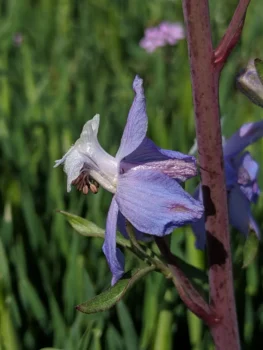
Byron Larkspur: A Rare California Native Worth Protecting in Your Garden
If you’re passionate about California native plants and love the classic beauty of delphiniums, Byron larkspur (Delphinium recurvatum) might just be the perfect addition to your garden. This stunning perennial brings all the charm of traditional larkspurs while supporting local ecosystems—but there’s an important catch every gardener should know about.
What Makes Byron Larkspur Special?
Byron larkspur is a true California original, found nowhere else in the world except within the Golden State’s diverse landscapes. As a perennial forb, this herbaceous beauty lacks woody stems but makes up for it with gorgeous vertical flower spikes that can add dramatic height and color to any native garden design.
The plant produces the classic delphinium flower form—tall spikes adorned with distinctive spurred blooms in shades of blue to purple. These eye-catching flowers don’t just look good; they’re perfectly designed to attract some of California’s most important pollinators, including hummingbirds and specialized long-tongued bees.
Where Byron Larkspur Calls Home
This California endemic has carved out its niche exclusively within state boundaries, typically favoring mountainous regions where it can enjoy the specific climate and soil conditions it has adapted to over thousands of years.
- Species observed
- No observations
A Word of Caution: Conservation Matters
Here’s where every responsible gardener needs to pay attention: Byron larkspur carries a Global Conservation Status of S3, meaning it’s considered vulnerable in the wild. With typically only 21 to 100 known occurrences and between 3,000 to 10,000 individuals remaining, this beautiful native is at risk.
What this means for you: If you choose to grow Byron larkspur, make absolutely sure you source your plants or seeds from reputable native plant nurseries that propagate their stock responsibly. Never collect from wild populations—this could contribute to the species’ decline.
Garden Design and Landscape Role
Byron larkspur shines as a vertical accent plant, perfect for adding height and structure to the back of native plant borders or naturalistic wildflower meadows. Its tall flower spikes create beautiful focal points and work wonderfully in:
- California native plant gardens
- Drought-tolerant landscape designs
- Wildlife-friendly pollinator gardens
- Naturalistic meadow plantings
Growing Conditions and Care
Byron larkspur has adapted to California’s unique climate patterns and prefers conditions that mimic its natural habitat. Based on its wetland status as Facultative Upland, this plant typically thrives in non-wetland conditions but can tolerate occasional moisture.
Ideal growing conditions include:
- Well-draining soil (crucial for preventing root rot)
- Partial shade to full sun exposure
- Moderate water during growing season
- USDA hardiness zones 8-10
Planting and Care Tips
Success with Byron larkspur starts with proper site preparation. Ensure your planting area has excellent drainage—these plants evolved in California’s Mediterranean climate and won’t tolerate soggy conditions.
Care essentials:
- Mulch around plants to conserve moisture and suppress weeds
- Provide moderate water during the growing season
- Allow plants to go naturally dormant during hot summer months
- Avoid overwatering, especially during dormant periods
Supporting Pollinators and Wildlife
One of the most rewarding aspects of growing Byron larkspur is watching it come alive with visiting pollinators. The plant’s distinctive spurred flowers are perfectly shaped for hummingbirds, while various native bees appreciate the nectar source. By growing this native species, you’re providing crucial habitat and food sources for California’s wildlife.
The Bottom Line
Byron larkspur represents both an opportunity and a responsibility for California gardeners. Its beauty, native status, and wildlife benefits make it a wonderful addition to appropriate gardens. However, its vulnerable conservation status means every plant matters.
If you decide to grow Byron larkspur, commit to sourcing it responsibly and caring for it properly. You’ll be rewarded with a unique piece of California’s natural heritage right in your own backyard—and you’ll be doing your part to help preserve this special species for future generations.
Remember: when we choose native plants like Byron larkspur, we’re not just gardening—we’re participating in conservation. And that’s something worth celebrating in any garden.