California Amaranth: A Hardy Native Ground Cover for Western Gardens
If you’re looking for a low-maintenance native plant that can handle tough conditions while providing natural beauty to your landscape, California amaranth (Amaranthus californicus) might be just what you need. This humble yet resilient annual forb has been quietly thriving across western North America for centuries, and it’s ready to bring its understated charm to your garden.
What is California Amaranth?
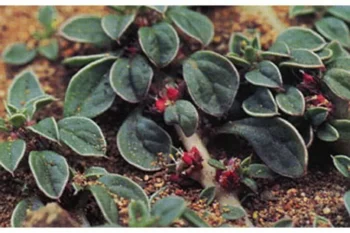
California amaranth is a native annual forb – essentially a non-woody flowering plant that completes its entire life cycle in one growing season. Don’t let its modest appearance fool you; this little powerhouse packs impressive adaptability into its compact, prostrate form. Growing only about one foot tall, it spreads along the ground with multiple stems, creating a fine-textured green carpet dotted with small reddish flowers and seeds.
You might also see this plant listed under its synonyms Amaranthus albomarginatus or Amaranthus microphyllus in older references, but California amaranth is the name that’s stuck.
Where Does California Amaranth Call Home?
This remarkable native species has quite the range! California amaranth naturally occurs across western North America, stretching from the Canadian provinces of Alberta and Saskatchewan down through the western United States. You’ll find it growing wild in California, Idaho, Kansas, Montana, Nebraska, Nevada, Oregon, South Dakota, Texas, Utah, Washington, and Wyoming.
- Species observed
- No observations
Why Consider California Amaranth for Your Garden?
There are several compelling reasons to give this native plant a spot in your landscape:
- True native credentials: Supporting local ecosystems by choosing plants that naturally belong in your region
- Low water needs: Once established, it’s quite drought tolerant, perfect for water-wise gardening
- Rapid establishment: Seeds germinate quickly and plants grow at a moderate pace
- Unique texture: The fine foliage adds interesting textural contrast to garden designs
- Seasonal interest: Active growth through spring, summer, and fall with conspicuous fall color
Garden Design and Landscape Uses
California amaranth shines in naturalistic and native plant gardens where its prostrate, ground-hugging habit makes it an excellent choice for:
- Ground cover in native plant gardens
- Erosion control on slopes
- Restoration projects
- Water-wise landscaping
- Rock gardens and xeriscapes
Its multiple-stem growth form and moderate porosity create a lovely textural element that complements other native perennials and shrubs beautifully.
Growing Conditions and Care
One of California amaranth’s best features is its adaptability to various growing conditions, though it does have some preferences:
Soil Requirements:
- Adapts well to medium and fine-textured soils
- Prefers pH between 5.5 and 7.5
- Moderate fertility needs
- Minimum root depth of 4 inches
Water and Climate Needs:
- Medium moisture use
- Requires 14-24 inches of annual precipitation
- Needs at least 175 frost-free days
- Hardy to temperatures as low as -3°F
- USDA Hardiness Zones 3-9
Light Requirements:
- Full sun – shade intolerant
- Needs bright, direct sunlight for best growth
Planting and Establishment Tips
Growing California amaranth is refreshingly straightforward:
Propagation: This plant is grown exclusively from seed, with an impressive 900,000 seeds per pound! Seeds spread rapidly and have high seedling vigor, meaning they establish quickly once conditions are right.
When to Plant: Direct sow seeds in spring after the last frost date. The plant blooms and produces seeds during summer.
Establishment: Seeds germinate quickly with moderate regrowth rates after any disturbance. Once established, plants require minimal care.
Maintenance: As an annual, California amaranth will complete its life cycle and die back each year, but it often self-seeds for the following season if conditions are favorable.
Special Considerations
California amaranth has an interesting relationship with water. It’s classified as Facultative Wetland across most of its range, meaning it usually grows in wetland areas but can adapt to drier sites. This flexibility makes it particularly valuable for transitional zones in your landscape.
The plant is not fire-resistant and has no known toxic properties, making it safe for gardens with pets and children.
A Perfect Choice for Native Plant Enthusiasts
While California amaranth may not be the showiest plant in your garden, its value lies in its reliability, native credentials, and ecological authenticity. It’s the kind of plant that works quietly behind the scenes, providing ground cover, preventing erosion, and supporting the natural character of western landscapes.
If you’re building a native plant garden, restoration project, or simply want to incorporate more indigenous species into your landscape, California amaranth offers an excellent opportunity to connect your garden with the natural heritage of western North America. Just remember to source your seeds responsibly from reputable native plant suppliers to ensure you’re getting the real deal!