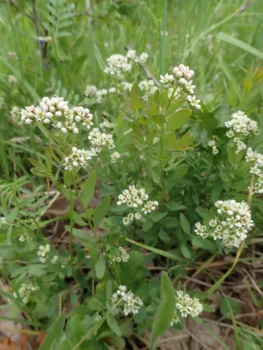
California Bastard Toadflax: A Quirky Native with a Secret Life
With a name like bastard toadflax, you might wonder if this plant has some serious attitude issues. The truth is, Comandra umbellata californica (California bastard toadflax) is actually a fascinating native perennial that’s earned its colorful moniker through some rather sneaky behavior in the plant world.
What Makes This Plant Special?
California bastard toadflax is a native North American perennial herb that belongs to a group of plants with a secret: they’re partial parasites. While they can photosynthesize like other green plants, they also tap into the root systems of nearby plants to steal nutrients. Think of them as the botanical equivalent of that friend who always forgets their wallet at dinner.
This perennial forb lacks significant woody tissue, meaning it dies back to ground level each winter and returns from its roots in spring. Despite its somewhat scandalous lifestyle, it’s a legitimate native species that has been quietly going about its business in western landscapes for millennia.
Where You’ll Find It Growing Wild
California bastard toadflax calls the western regions of North America home, naturally occurring across British Columbia, Arizona, California, Nevada, Oregon, and Washington. It’s adapted to the diverse climates and conditions found throughout these areas, from coastal regions to inland valleys.
- Species observed
- No observations
Garden Appeal and Landscape Role
Let’s be honest – this isn’t a showstopper plant. California bastard toadflax produces small, greenish-white flowers arranged in modest umbrella-like clusters (umbels). The blooms are subtle rather than spectacular, and the overall plant form is fairly inconspicuous. However, what it lacks in flashy beauty, it makes up for in botanical intrigue.
This plant works best in:
- Native plant gardens focused on regional flora
- Educational or demonstration gardens
- Naturalistic landscapes that mimic wild ecosystems
- Xerophytic (dry) gardens with other drought-adapted natives
Growing Conditions and Care
Here’s where things get interesting – and challenging. Because California bastard toadflax is a partial parasite, it’s not as straightforward to grow as your typical garden perennial. The plant forms connections with the roots of host plants, which means it needs compatible neighbors to truly thrive.
Preferred conditions:
- Well-draining soils (clay, loam, or sandy soils)
- Partial shade to full sun exposure
- Dry to moderately moist conditions
- USDA hardiness zones 4-9
- Presence of potential host plants nearby
The Challenge of Cultivation
If you’re thinking about adding California bastard toadflax to your garden, prepare for a bit of an adventure. This plant’s parasitic nature makes it notoriously difficult to establish and maintain in cultivation. It often struggles without its preferred host relationships, which can include various shrubs and herbaceous plants native to its range.
For most home gardeners, this plant is better appreciated in its wild habitat rather than attempted in typical garden settings. However, if you’re an experienced native plant enthusiast with a large, naturalistic landscape that includes diverse native species, you might have better luck.
Wildlife and Pollinator Value
While the small flowers do attract some insects, California bastard toadflax isn’t considered a major pollinator plant. Its ecological value lies more in its role as part of the complex web of native plant communities, where its parasitic relationships contribute to the natural balance of nutrients and plant interactions.
Should You Plant It?
California bastard toadflax is definitely more of a plant nerd special than a mainstream garden choice. If you’re fascinated by unusual native plants and have experience with challenging species, it could be an interesting addition to a large, diverse native landscape. However, for most gardeners, there are easier native alternatives that will provide better garden performance and wildlife value.
Consider these more garden-friendly western natives instead:
- Native buckwheats (Eriogonum species)
- Penstemon varieties
- Native asters and goldenrods
- Regional wildflower mixes
If you do encounter California bastard toadflax in the wild, take a moment to appreciate this quirky native and its clever survival strategy. Sometimes the most interesting plants are the ones that keep their secrets hidden beneath the surface.