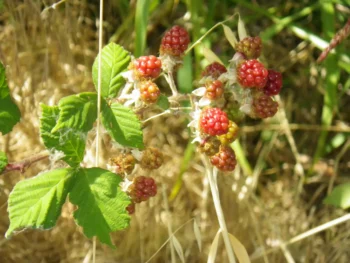
California Blackberry: A Native Treasure for Your Garden
If you’re looking for a native plant that delivers both beauty and function, meet the California blackberry (Rubus ursinus macropetalus). This charming perennial shrub might just become your new favorite addition to the garden – especially if you love the idea of homegrown berries and happy pollinators!
What Makes California Blackberry Special?
California blackberry is a true native gem, naturally occurring across the Pacific Northwest and western regions of North America. This low-growing shrub typically stays under 1.5 feet tall and never exceeds 3 feet at maturity, making it perfect for gardeners who want native beauty without overwhelming size.
You might also see this plant listed under its botanical synonyms, including Rubus macropetalus or Rubus ursinus var. macropetalus, but they’re all referring to the same delightful species.
Where Does It Grow Naturally?
This native beauty calls home to British Columbia, California, Idaho, Montana, Oregon, and Washington. Its widespread natural distribution across both Canada and the lower 48 states speaks to its adaptability and resilience.
- Species observed
- No observations
Why Your Garden (and Local Wildlife) Will Love It
California blackberry isn’t just a pretty face – it’s a hardworking garden performer that offers multiple benefits:
- Delicate white to pink flowers in spring attract bees, butterflies, and other beneficial pollinators
- Produces edible dark purple-black berries that you (and the birds) can enjoy
- Attractive three-leaflet compound leaves provide year-round visual interest
- Excellent for erosion control on slopes or challenging areas
- Creates valuable wildlife habitat for various creatures
Perfect Garden Roles
This versatile native works beautifully in several garden settings:
- Native plant gardens: A natural choice for authentic regional landscaping
- Wildlife gardens: Provides food and shelter for pollinators and birds
- Naturalistic landscapes: Creates that effortless, wild look
- Restoration projects: Helps re-establish native plant communities
- Groundcover areas: Low-growing habit makes excellent living mulch
Growing California Blackberry Successfully
The good news? California blackberry is refreshingly low-maintenance once established. Here’s what you need to know:
Ideal Growing Conditions
- Light: Partial shade to full sun (quite adaptable!)
- Soil: Moist to moderately dry soils
- Climate: Hardy in USDA zones 6-9
- Water: Drought-tolerant once established, but appreciates consistent moisture
Planting and Care Tips
- Plant in spring or fall for best establishment
- Space plants 3-4 feet apart to allow for natural spreading
- Water regularly the first year while roots establish
- Minimal fertilizer needed – native soils are usually perfect
- Light pruning after fruiting can help maintain shape
- Be aware it can spread via runners, so plan accordingly
Any Drawbacks to Consider?
California blackberry is generally well-behaved, but like many berry plants, it can spread via underground runners. This makes it fantastic for filling in naturalized areas, but you might want to give it defined boundaries in more formal gardens. Think of it as enthusiastic rather than aggressive!
The Bottom Line
California blackberry offers an unbeatable combination of native authenticity, pollinator support, wildlife value, and edible rewards. It’s an excellent choice for gardeners who want to support local ecosystems while enjoying low-maintenance beauty and homegrown treats. Whether you’re creating a native plant haven or simply want to add some wild charm to your landscape, this native treasure delivers on all fronts.
Ready to welcome some native magic into your garden? California blackberry might just be the perfect place to start your native plant journey!