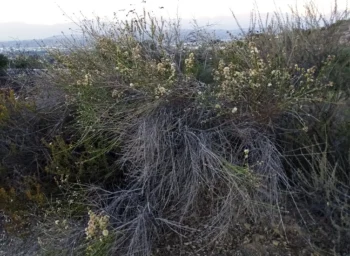
California Broomsage: A Drought-Tolerant Native Gem for Desert Gardens
If you’re looking for a resilient, low-maintenance shrub that thrives in challenging conditions, California broomsage (Lepidospartum squamatum) might just be your new gardening best friend. This unassuming native perennial shrub has quietly been surviving and thriving in the harsh landscapes of the American Southwest for centuries, and it’s ready to bring that same tenacity to your garden.
What is California Broomsage?
California broomsage is a perennial shrub native to the lower 48 states, specifically Arizona and California. As a multi-stemmed woody plant, it typically grows less than 13-16 feet in height, with several stems arising from or near the ground. Don’t let its modest appearance fool you – this plant is built for survival in some pretty tough conditions.
Where Does It Grow Naturally?
You’ll find California broomsage flourishing in the wild across Arizona and California, where it has adapted to the region’s challenging climate and soil conditions. This native shrub knows how to make the most of limited water resources and intense sun exposure.
- Species observed
- No observations
Why Choose California Broomsage for Your Garden?
Here’s where this plant really shines – it’s practically the definition of low-maintenance gardening:
- Drought tolerance: Once established, this shrub can handle extended dry periods like a champ
- Native benefits: Supporting local ecosystems by choosing plants that naturally belong in your region
- Pollinator support: Late-season yellow flowers provide nectar when many other plants have finished blooming
- Low water needs: Perfect for xeriscaping and water-wise gardens
- Year-round structure: Provides consistent form and texture in the landscape
Perfect Garden Settings
California broomsage is ideally suited for:
- Desert and xeric gardens
- Native plant landscapes
- Drought-tolerant garden designs
- Natural or wildland-style plantings
- Areas with challenging growing conditions
Growing Conditions and Care
The beauty of California broomsage lies in its simplicity. This plant thrives in USDA hardiness zones 8-10 and has some specific preferences that align perfectly with its native habitat:
- Sunlight: Full sun exposure – the more, the better
- Soil: Well-draining soils are essential; it won’t tolerate soggy conditions
- Water: Minimal watering once established – this plant actually prefers to stay on the dry side
- Wetland status: Classified as Facultative Upland, meaning it usually occurs in non-wetland areas but can occasionally tolerate some moisture
Planting and Care Tips
Getting started with California broomsage is refreshingly straightforward:
- Plant in fall or early spring when temperatures are moderate
- Ensure excellent drainage – amend heavy clay soils with sand or gravel if needed
- Water regularly during the first growing season to help establish roots
- Once established, reduce watering significantly – this plant thrives on neglect
- Minimal pruning needed; remove dead or damaged growth as necessary
- No fertilizer required – too much nutrition can actually harm desert natives
Wildlife and Pollinator Benefits
While California broomsage might look understated, it plays an important role in supporting local wildlife. Its late-season yellow flowers provide valuable nectar for butterflies and other beneficial insects when many other food sources have disappeared. This makes it an excellent choice for gardeners interested in creating habitat and supporting biodiversity.
Is California Broomsage Right for Your Garden?
California broomsage is perfect for gardeners who want maximum impact with minimal effort, especially in arid climates. If you live in zones 8-10, have access to full sun, and want a plant that won’t demand constant attention, this native shrub could be exactly what you’re looking for.
However, if you’re in a region outside its natural range, have consistently moist soil conditions, or prefer plants that need regular care and feeding, you might want to explore other options that are better suited to your specific conditions.
The bottom line? California broomsage is a stellar choice for the right garden in the right location. It’s proof that sometimes the best plants are the ones that ask for the least while giving back the most to the local ecosystem.