Native Plants

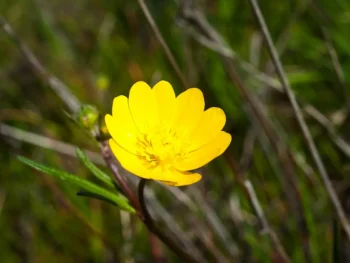
California Buttercup

Ranunculus californicus

USDA symbol: RACA2

perennial forb

Canada: native
Lower 48 states: native

If you’re looking to add a splash of sunshine to your native garden, the California buttercup (Ranunculus californicus) might just be the perfect choice. This delightful perennial wildflower brings bright yellow blooms to the landscape when most other plants are still waking up from winter’s slumber. California buttercup is a ...

California Buttercup: A Cheerful Native Wildflower for Your Garden

If you’re looking to add a splash of sunshine to your native garden, the California buttercup (Ranunculus californicus) might just be the perfect choice. This delightful perennial wildflower brings bright yellow blooms to the landscape when most other plants are still waking up from winter’s slumber.

What is California Buttercup?

California buttercup is a native perennial forb that belongs to the buttercup family. Unlike plants with woody stems, this charming wildflower stays herbaceous throughout its life, growing from buds located at or below ground level. Don’t let its delicate appearance fool you – this hardy native has been thriving in Pacific Coast ecosystems for thousands of years.

Where Does It Grow Naturally?

This native beauty calls the Pacific Coast home, naturally occurring in British Columbia, California, Oregon, and Washington. It’s truly a regional treasure that has adapted perfectly to the unique climate patterns of the western coast.

  • Species observed
  • No observations

Why Choose California Buttercup for Your Garden?

There are plenty of reasons to fall in love with this native gem:

  • Provides early spring color when few other plants are blooming
  • Supports native pollinators including bees, flies, and beetles
  • Low maintenance once established
  • Excellent for naturalizing areas
  • Authentic to regional ecosystems
  • Attractive glossy yellow flowers with five petals
  • Interesting deeply lobed, palmate leaves add texture

Perfect Garden Settings

California buttercup shines brightest in:

  • Native plant gardens
  • Woodland gardens
  • Naturalized meadows
  • Rain gardens
  • Areas where you want authentic regional character

This versatile native works beautifully as a ground cover in naturalized settings, where it can spread and create drifts of golden blooms.

Growing Conditions and Care

The wonderful thing about native plants is that they’re already adapted to local conditions. California buttercup thrives in USDA hardiness zones 7-10 and appreciates:

  • Moist to moderately dry, well-draining soils
  • Partial shade to full sun exposure
  • Winter moisture (it’s naturally drought-dormant in summer)
  • Various soil types, though it prefers good drainage

Planting and Care Tips

Getting started with California buttercup is refreshingly straightforward:

  • Plant in fall to allow establishment before spring growth
  • Provide regular water during the growing season
  • Allow the plant to go naturally dormant during hot summer months
  • Minimal care needed once established – let it follow natural seasonal patterns
  • Works well in both wetland and upland conditions, making it quite adaptable

Supporting Local Wildlife

By planting California buttercup, you’re creating a valuable resource for local wildlife. Early spring pollinators especially appreciate the nectar and pollen when few other food sources are available. This timing makes it a crucial component in supporting healthy pollinator populations throughout the growing season.

The Bottom Line

California buttercup offers gardeners a chance to grow something both beautiful and meaningful. Its bright blooms provide early season interest, while its native status means you’re supporting local ecosystems and wildlife. Plus, its low-maintenance nature makes it perfect for gardeners who want maximum impact with minimal fuss. If you’re ready to embrace authentic regional gardening, this cheerful native wildflower deserves a spot in your landscape.

Ranunculus californicus is also known as...

Often we refer to plants by their common names. When shopping for plants the scientific name is the best way to positively identify the plant species you desire. But some plants have more than one name! While it doesn't happen often, nurseries might display one name while you're searching for another. Ranunculus californicus is also known as:

Ranunculus californicus var. austromontanus | USDA symbol: RACAA
Ranunculus californicus var. cuneatus | USDA symbol: RACAC
Ranunculus californicus var. gratus | USDA symbol: RACAG
Ranunculus californicus var. rugulosus | USDA symbol: RACAR
Ranunculus californicus var. typicus | USDA symbol: RACAT
Ranunculus rugulosus | USDA symbol: RARU2

Why do some plants have more than one name? Over time plant species may be renamed for a few reasons:

  1. Botanists in different regions named the same plant without knowing it had already been classified.
  2. A species was reclassified after scientific advances in, for example, DNA analysis.
  3. Slight variations within a species are sometimes mistakenly identified as entirely new species.

Wetland Status

The rule of seasoned gardeners and landscapers is to choose the "right plant for the right place" — matching plants to their ideal growing conditions, so they'll thrive with less care and fewer inputs. But the simplicity of this catchphrase conceals how tricky plant selection can be if you don't have the right information. While tags on nursery plants list watering requirements, there's more to the story.

Knowing a plant's wetland status can simplify the process by revealing the interaction between plants, water, and soil. You might be surprised to learn that popular landscape plants are wetland species! And what may be a wetland plant in one area, in another it might thrive in drier conditions. The table below gives insight into the preferred growing conditions of this plant throughout its geographical distribution.

Region
Preferred Habitat

Arid West (AZ, CA, CO, ID, MT, NV, NM, OR, TX, UT, WA, WY)

Facultative Upland

Western Mountains, Valleys, and Coast (AZ, CA, CO, ID, MT, NV, NM, OR, SD, UT, WA, WY)

Facultative
Wetland Glossary
Obligate Wetland
Facultative Wetland
Facultative
Facultative Upland
Obligate Upland
Almost always occurs in wetlands
Usually occurs in wetlands but may occur in non-wetlands
Can occur in wetlands and non-wetlands
Usually occurs in non-wetlands but may occur in wetlands
Almost never occurs in wetlands

Classification

Group: Dicot
Kingdom: Plantae - Plants
Subkingdom: Tracheobionta - Vascular plants
Superdivision: Spermatophyta - Seed plants
Division: Magnoliophyta - Flowering plants
Class: Magnoliopsida - Dicotyledons
Subclass: Magnoliidae
Order: Ranunculales
Family: Ranunculaceae Juss. - Buttercup family
Genus: Ranunculus L. - buttercup

Species: Ranunculus californicus Benth. - California buttercup

Plant data source: USDA, NRCS 2025. The PLANTS Database. https://plants.usda.gov,. 2/25/2025. National Plant Data Team, Greensboro, NC USA