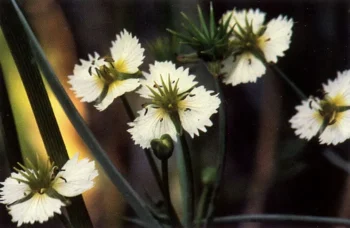
California Damsonium: A Hidden Gem for Wetland Gardens
If you’re looking to create an authentic wetland garden with truly native plants, let me introduce you to a lesser-known beauty: California damsonium (Damasonium californicum). This charming little perennial might not be on every gardener’s radar, but it deserves serious consideration if you’re working with wet areas in your landscape.
What is California Damsonium?
California damsonium is a native perennial forb that belongs to the water-plantain family. Also known by its synonym Machaerocarpus californicus, this herbaceous plant grows as a rhizomatous perennial, meaning it spreads slowly through underground stems. At maturity, it reaches about 1.5 feet in height with an erect, graceful form.
The plant produces conspicuous white flowers during mid-spring that create a lovely contrast against its medium-textured green foliage. While the brown fruits that follow aren’t particularly showy, the overall effect is quite pleasant in the right setting.
Where Does It Grow Naturally?
This native beauty calls the western United States home, naturally occurring in California, Idaho, Nevada, Oregon, and Washington. It’s perfectly adapted to the unique conditions found in these regions’ wetland areas.
- Species observed
- No observations
Why Consider California Damsonium?
Here are the compelling reasons to include this native in your garden:
- True native status: It’s genuinely native to the western United States, supporting local ecosystems
- Wetland specialist: Perfect for those challenging wet spots where other plants struggle
- Low maintenance: Once established, it requires minimal care
- Moderate growth rate: Won’t overwhelm your space but establishes reasonably well
- Spring interest: Provides early season flowers when many plants are just emerging
The Reality Check: Challenges to Consider
Before you get too excited, there are some important limitations:
- Very specific water needs: This plant is classified as Obligate Wetland, meaning it almost always requires wetland conditions
- Limited availability: Currently, there’s no known commercial source for this plant
- Specialized use: Only suitable for consistently wet areas, not typical garden beds
- Slow establishment: Seedling vigor is low, so patience is required
Perfect Garden Situations
California damsonium thrives in:
- Constructed wetlands and rain gardens
- Bog gardens with consistent moisture
- Pond margins and stream edges
- Natural wetland restoration projects
- Areas with seasonal flooding or standing water
Growing Conditions and Care
USDA Hardiness Zones: Based on its native range and cold tolerance (down to -23°F), this plant should thrive in zones 6-9.
Soil Requirements:
- Adapts to fine and medium-textured soils
- pH range: 5.8 to 7.8 (slightly acidic to slightly alkaline)
- High anaerobic tolerance (can handle waterlogged conditions)
- Low fertility requirements
Water and Light:
- High moisture use – requires consistent wetness
- No drought tolerance whatsoever
- Full sun (shade intolerant)
- Annual precipitation needs: 12-18 inches
Climate Considerations:
- Minimum 120 frost-free days
- Active growing period in spring and summer
- Foliage dies back in winter (no leaf retention)
Planting and Propagation
Here’s where things get tricky – and interesting! Since commercial sources aren’t available, you’ll need to be creative:
From Seed:
- Seeds are produced in medium abundance during summer
- Approximately 360,000 seeds per pound
- No cold stratification required
- Plant 2,700-4,800 plants per acre for restoration projects
- Be patient – seedling vigor is low
Vegetative Propagation:
- Can be propagated by sprigs from the rhizomes
- Vegetative spread rate is slow but steady
- Division of established clumps in early spring works best
Pollinator and Wildlife Value
While specific data on wildlife benefits isn’t available, the spring white flowers likely provide nectar for small native bees and other pollinators during a crucial early-season period. As with most native wetland plants, it probably supports various aquatic insects and provides habitat for wetland wildlife.
The Bottom Line
California damsonium is definitely a niche plant, but if you’re creating a native wetland garden or restoring natural wet areas, it could be exactly what you need. The biggest challenge is obtaining plants, so you might need to connect with native plant societies, botanical gardens, or restoration organizations in your area.
This isn’t a plant for the typical backyard border, but for those special wet spots where you want to showcase true regional natives, California damsonium offers authentic beauty and ecological value. Just remember: wet feet are absolutely non-negotiable for this water-loving native!