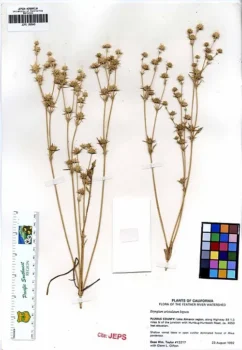
California Eryngo: A Spiky Native Beauty for Your Wetland Garden
If you’re looking for a plant that’s equal parts architectural wonder and native pollinator magnet, meet California eryngo (Eryngium aristulatum). This distinctive native wildflower might just be the conversation starter your wetland garden has been missing – though it definitely comes with some specific requirements that aren’t for every gardener.
What Makes California Eryngo Special
California eryngo is a fascinating native forb that looks like it stepped out of a medieval fantasy novel. With its spiky, thistle-like flower heads surrounded by sharp, decorative bracts, this biennial to perennial plant brings serious visual drama to any garden. The silvery-blue to steel-blue flower heads create stunning architectural interest, while the plant’s overall spiky texture adds a bold contrast to softer wetland plants.
As a herbaceous perennial (sometimes behaving as a biennial), California eryngo lacks woody stems but makes up for it with plenty of personality. It’s the kind of plant that makes visitors stop and ask, What is that amazing spiky thing?
Where California Eryngo Calls Home
This native beauty is exclusively Californian, naturally occurring throughout the Golden State’s coastal regions and inland wetlands. As a true native species, it has deep roots in California’s ecological communities and plays an important role in supporting local wildlife.
- Species observed
- No observations
The Wetland Requirement: Not Negotiable
Here’s where things get interesting (and potentially challenging): California eryngo is classified as an obligate wetland plant in both the Arid West and Western Mountains regions. This means it almost always occurs in wetlands and absolutely requires consistently moist to wet soil conditions to thrive.
If you don’t have a naturally wet area in your garden, or you’re not prepared to create and maintain one, this might not be your plant. But if you do have a bog garden, rain garden, or naturally wet area that needs some native pizzazz, California eryngo could be perfect.
Garden Design and Landscape Role
California eryngo works beautifully in:
- Native plant gardens with adequate moisture
- Wetland restoration projects
- Rain gardens and bioswales
- Pond edges and bog gardens
- Wildlife gardens focused on native pollinators
The plant serves as an excellent architectural accent, providing structural interest and a unique texture that contrasts beautifully with softer wetland plants like sedges and rushes.
Pollinator Paradise
One of the biggest reasons to consider California eryngo is its value to native pollinators. The distinctive flower heads are magnets for bees, butterflies, and other beneficial insects. As a native plant, it has co-evolved with local pollinators and provides exactly the kind of nectar and pollen sources they’ve adapted to use.
Growing Conditions and Care
Successfully growing California eryngo is all about understanding its wetland nature:
Hardiness: Thrives in USDA zones 8-10, making it suitable for most of California’s climate zones.
Light requirements: Prefers full sun to partial shade. More sun typically means more compact, robust growth.
Soil needs: Must have consistently moist to wet soil. Think bog conditions rather than regular garden soil. Clay soils that hold moisture work well, as do areas with seasonal flooding.
Water requirements: High water needs year-round. This is not a drought-tolerant native – it’s adapted to California’s wetland environments.
Planting and Care Tips
Getting California eryngo established requires some planning:
- Choose your location carefully – wet soil is non-negotiable
- Plant in spring when soil is naturally moist
- Consider creating a bog garden or rain garden if you don’t have natural wet areas
- Be patient – establishment can take time as the plant develops its root system
- Avoid fertilizing heavily; native plants typically prefer lean conditions
- Allow plants to self-seed if you want more – they often know best where conditions are right
Should You Plant California Eryngo?
California eryngo is an excellent choice if you have the right conditions and want to support native ecosystems. It’s particularly valuable for gardeners focused on:
- Native plant gardening
- Pollinator support
- Wetland gardening or restoration
- Unique architectural plants
- Water-wise landscaping in naturally wet areas
However, it’s probably not the right choice if you have average garden conditions, limited water access, or prefer low-maintenance plants. The wetland requirement is real and ongoing.
If you love the look but don’t have wetland conditions, consider other native Eryngium species that might be more adaptable to regular garden conditions, or create a dedicated wet area just for this striking native beauty.
California eryngo proves that native plants can be both ecologically valuable and visually stunning – you just need to meet them where they are, quite literally speaking!