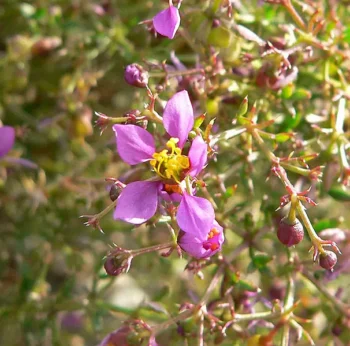
California Fagonbush: A Tough Desert Native for Water-Wise Gardens
If you’re looking for a resilient native plant that laughs in the face of drought and adds delicate beauty to desert landscapes, meet the California fagonbush (Fagonia laevis). This unassuming little shrub might not win any glamour contests, but it’s got the kind of desert toughness that makes it a gardener’s secret weapon in water-wise landscaping.
What is California Fagonbush?
California fagonbush is a native perennial shrub that’s perfectly at home in the harsh conditions of America’s southwestern deserts. As a multi-stemmed woody plant, it typically stays compact—usually under 13-16 feet tall, though most specimens remain much smaller in garden settings. This native beauty has earned its place in the landscape through sheer determination and an impressive ability to thrive where other plants simply give up.
You might also encounter this plant listed under several scientific synonyms, including Fagonia californica var. laevis, reflecting its close relationship with other members of the Fagonia family.
Where Does It Call Home?
This desert dweller is native to four southwestern states: Arizona, California, Nevada, and Utah. It’s particularly well-adapted to the Sonoran and Mojave desert ecosystems, where it has spent millennia perfecting the art of surviving on minimal water and maximum sunshine.
- Species observed
- No observations
Why Choose California Fagonbush for Your Garden?
There are several compelling reasons to consider this native plant for your landscape:
- Water-wise champion: Once established, this plant requires minimal irrigation, making it perfect for drought-prone areas
- Native plant benefits: Supporting local ecosystems by choosing plants that naturally belong in your region
- Pollinator friendly: The small purple to pink flowers attract native bees and other desert pollinators
- Low maintenance: Requires very little care once established in appropriate conditions
- Year-round interest: As a perennial shrub, it provides structure to the garden throughout the seasons
Perfect Garden Settings
California fagonbush shines brightest in:
- Desert and xeriscape gardens
- Rock gardens and succulent displays
- Native plant landscapes
- Water-wise commercial landscaping
- Naturalized desert restoration projects
Growing Conditions and Hardiness
This desert native thrives in USDA hardiness zones 9-11, which aligns perfectly with its natural southwestern distribution. Here’s what California fagonbush craves:
- Sunlight: Full sun exposure—the more, the better
- Soil: Well-draining sandy or rocky soils; avoid heavy clay or moisture-retentive soils
- Water: Drought tolerant once established; actually prefers dry conditions
- Climate: Hot, arid conditions with low humidity
Planting and Care Tips
Growing California fagonbush successfully is all about mimicking its natural desert habitat:
- Timing: Plant in fall or early spring when temperatures are moderate
- Soil preparation: Ensure excellent drainage—consider creating raised beds or adding sand and gravel to heavy soils
- Watering: Water deeply but infrequently during establishment; reduce watering once established
- Fertilizing: Generally unnecessary; these plants are adapted to nutrient-poor soils
- Pruning: Minimal pruning needed; remove dead or damaged branches as necessary
The Bottom Line
California fagonbush might not be the flashiest plant in the nursery, but it’s exactly what water-conscious gardeners in southwestern regions need. This native shrub offers reliable performance, supports local wildlife, and asks for almost nothing in return except well-draining soil and plenty of sunshine. If you’re building a sustainable, region-appropriate landscape, this desert tough guy deserves serious consideration.
Remember, the best gardens work with nature rather than against it—and California fagonbush is nature’s own solution to beautiful, low-water landscaping in the American Southwest.