California Jointfir: The Desert’s Living Architecture
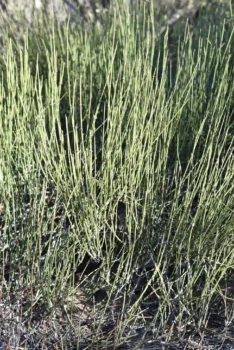
Meet the California jointfir (Ephedra californica), one of nature’s most intriguing minimalists. This native southwestern shrub throws conventional gardening wisdom out the window – who needs leaves when you’ve got style? With its distinctive jointed, green stems and architectural form, this perennial woody plant brings a sculptural quality to water-wise gardens that’s hard to match.
What Makes California Jointfir Special
California jointfir is a true native of the American Southwest, naturally occurring across the desert and chaparral regions of California and Arizona. This hardy perennial shrub typically grows as a multi-stemmed woody plant, usually staying under 13-16 feet tall, though it can occasionally grow taller or develop a single stem depending on growing conditions.
- Species observed
- No observations
What really sets this plant apart is its almost alien appearance. Instead of traditional leaves, California jointfir sports jointed, green photosynthetic stems that give it both its common name and its distinctive look. These segmented branches create an striking architectural form that looks equally at home in a modern desert landscape or a Mediterranean-style garden.
Why Consider Growing California Jointfir
If you’re looking for a drought-tolerant plant that’s both native and conversation-worthy, California jointfir deserves serious consideration. Here’s why:
- Water-wise champion: Once established, this plant thrives on minimal water, making it perfect for xeriscapes
- Year-round interest: The evergreen stems provide consistent color and structure throughout all seasons
- Low maintenance: Requires little care once established in appropriate conditions
- Unique appearance: Adds an otherworldly, sculptural element to garden design
- Native plant benefits: Supports local ecosystems and is adapted to regional conditions
Where California Jointfir Shines
This distinctive shrub works beautifully in several landscape styles:
- Desert and xeriscape gardens
- Mediterranean-style landscapes
- Rock gardens and mineral gardens
- Modern, minimalist designs
- Native plant gardens
- Slope stabilization projects
California jointfir serves as an excellent structural plant, providing backbone and year-round interest while requiring minimal resources.
Growing California Jointfir Successfully
Climate Requirements: California jointfir thrives in USDA hardiness zones 8-10, making it suitable for most of the Southwest and similar climates.
Sun and Soil: This plant demands full sun and excellent drainage. Sandy or rocky soils are ideal – heavy clay or poorly draining soils are a recipe for failure. Think desert conditions: fast-draining and lean.
Watering: While establishing (typically the first year), provide occasional deep watering. Once established, California jointfir is remarkably drought-tolerant and should only need supplemental water during extreme drought conditions.
Planting and Care Tips
- Choose your spot carefully: California jointfir develops a deep taproot and doesn’t like to be moved once established
- Improve drainage: If your soil doesn’t drain well, consider raised beds or mounded planting
- Start small: Young plants establish more easily than large specimens
- Minimal fertilization: These plants prefer lean soils and generally don’t need supplemental feeding
- Pruning: Rarely needed, but if necessary, prune lightly in late winter
Wildlife and Ecological Value
While California jointfir is wind-pollinated (being a gymnosperm) and doesn’t offer nectar to pollinators, it does provide some wildlife benefits. The plant can offer shelter and nesting sites for small birds and may provide food for certain wildlife species.
A Note on Conservation
California jointfir has a conservation status that suggests some populations may be vulnerable. When adding this plant to your garden, make sure to source it from reputable nurseries that propagate their plants rather than wild-collecting them. This helps protect wild populations while still allowing you to enjoy this remarkable plant.
Is California Jointfir Right for Your Garden?
California jointfir isn’t for every gardener or every garden. It requires specific growing conditions and won’t thrive in humid climates or poorly draining soils. However, if you’re gardening in an appropriate climate zone and looking for a water-wise, architecturally interesting native plant that brings something completely different to the landscape, California jointfir might be exactly what your garden needs.
This is definitely a plant for gardeners who appreciate subtle beauty and unique forms over flashy flowers. If you’re ready to embrace the minimalist aesthetic of the desert and want to support native plant communities, California jointfir offers a truly distinctive addition to your water-wise garden palette.