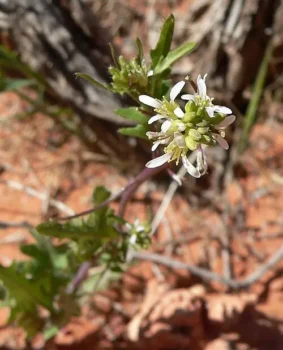
California Mustard: A Native Western Wildflower Worth Knowing
If you’re passionate about native plants and love adding authentic regional character to your garden, you might want to get acquainted with California mustard (Guillenia lasiophylla). This humble annual forb represents the kind of understated beauty that makes western landscapes so distinctive, though it’s definitely more of a specialist’s plant than a mainstream garden star.
What is California Mustard?
California mustard is an annual herbaceous plant – what botanists call a forb – meaning it’s a non-woody flowering plant that completes its entire life cycle in one growing season. Unlike its more familiar garden cousins, this native wildflower tends to fly under the radar, but that doesn’t make it any less interesting for the right gardener.
You might also encounter this plant listed under several historical names in older botanical references, including various Caulanthus and Thelypodium species, as botanical naming has evolved over time.
Where Does It Call Home?
This native beauty has quite an impressive range across the American West. You’ll find California mustard growing naturally throughout:
- Arizona
- California
- Nevada
- New Mexico
- Oregon
- Utah
- Washington
That’s a pretty impressive native range, stretching from the Pacific Coast to the interior Southwest and up into the Pacific Northwest.
- Species observed
- No observations
Should You Grow California Mustard?
Here’s where things get a bit tricky – and honest. California mustard isn’t your typical showy garden plant. As an annual forb, it’s more about ecological authenticity than eye-catching blooms. If you’re someone who appreciates subtle native beauty and wants to support truly regional plant communities, this might appeal to you.
However, if you’re looking for dramatic garden impact, consistent performance, or well-documented growing requirements, you might want to consider some of the more commonly cultivated native alternatives from your region first.
The Growing Challenge
One of the biggest challenges with California mustard is the limited availability of specific growing information. As a less commonly cultivated native, detailed care instructions and specific growing requirements aren’t well-documented in standard gardening resources.
What we do know is that as a native annual, it likely prefers conditions similar to its natural habitat – probably well-draining soils and the climate patterns typical of western regions. But without specific hardiness zone information or detailed care requirements, growing this plant becomes more of an experimental adventure.
Better Native Alternatives?
If you’re drawn to the idea of growing native mustard family plants, you might have better luck with more commonly available and better-documented natives from your specific region. Check with your local native plant society or extension office for well-researched alternatives that will give you that authentic native look with more reliable growing information.
The Bottom Line
California mustard represents the fascinating diversity of our native flora, and its wide western range speaks to its ecological adaptability. However, for most gardeners, the lack of detailed cultivation information and limited availability make it more of a botanical curiosity than a practical garden choice.
If you’re an experienced native plant gardener who enjoys experimenting with lesser-known species and you can source seeds or plants responsibly, it could be an interesting addition to a naturalistic or restoration-style landscape. Just be prepared for some trial and error along the way!
For everyone else, there are plenty of well-documented, readily available native plants that can give you that authentic regional character with much more predictable results. Sometimes the best approach to appreciating plants like California mustard is simply knowing they exist and appreciating them in their natural habitats.