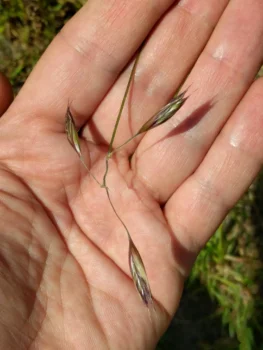
California Oatgrass: A Versatile Native Grass for Western Gardens
Looking for a low-maintenance native grass that can handle both wet springs and dry summers? Meet California oatgrass (Danthonia californica), a hardy perennial that’s been quietly holding down the fort across western North America for millennia. This unassuming bunchgrass might not win any flashy flower contests, but it’s the kind of reliable garden companion that makes other plants look good while asking for very little in return.
What is California Oatgrass?
California oatgrass is a native perennial grass that forms attractive clumps up to 2 feet tall. Despite its common name, this adaptable grass ranges far beyond California’s borders, naturally occurring across a vast territory from British Columbia down to New Mexico and as far east as the Great Plains. You might also encounter it under various scientific synonyms, but Danthonia californica is the name that’s stuck.
This cool-season grass grows actively during fall, winter, and spring, then goes semi-dormant during hot summer months – a smart strategy for surviving in variable climates. Its fine-textured, green foliage creates an elegant, fountain-like appearance that works beautifully as a backdrop for showier native wildflowers.
Where Does California Oatgrass Grow?
California oatgrass has one of the most impressive natural distributions of any North American grass. It thrives across sixteen states and two Canadian provinces: Alberta, British Columbia, Arizona, California, Colorado, Saskatchewan, Idaho, Massachusetts, Montana, Nevada, New Mexico, Oregon, South Dakota, Utah, Washington, and Wyoming. This extensive range speaks to its remarkable adaptability.
- Species observed
- No observations
The grass is hardy in USDA zones 3-9, making it suitable for most temperate regions of North America. Its wetland status varies by region – it can handle both wet and dry conditions, though it typically prefers well-drained sites.
Why Plant California Oatgrass?
Here’s where California oatgrass really shines as a garden plant:
- Drought tolerance: Once established, it handles dry periods with moderate water needs
- Fire resistance: An excellent choice for fire-prone areas
- Erosion control: Its fibrous root system helps stabilize soil
- Wildlife support: Provides nesting material for birds and habitat for beneficial insects
- Low maintenance: Requires minimal fertilizer and care
- Native authenticity: Supports local ecosystems and biodiversity
Garden Design and Landscape Uses
California oatgrass works beautifully in several garden styles:
- Prairie and meadow gardens: Provides structure and texture among wildflowers
- Naturalized landscapes: Perfect for creating that wild look
- Drought-tolerant gardens: Pairs well with other water-wise natives
- Erosion control plantings: Excellent for slopes and disturbed areas
- Wildlife gardens: Offers food and habitat for native fauna
The grass’s moderate growth rate and 2-foot mature height make it ideal as a mid-layer plant. Its fine texture and erect, multi-stemmed growth form create beautiful contrasts with broader-leaved perennials and shrubs.
Growing Conditions
California oatgrass is refreshingly undemanding about its growing conditions:
- Soil: Adapts to medium and fine-textured soils; prefers pH between 6.0-7.0
- Moisture: Medium water needs; handles both seasonal wet and dry periods
- Sun exposure: Full sun (shade intolerant)
- Temperature: Tolerates temperatures down to 17°F
- Precipitation: Thrives with 6-40 inches annual rainfall
- Fertility: Low fertility requirements – actually prefers lean soils
Planting and Care Tips
Getting California oatgrass established is straightforward:
- Propagation: Grow from seed (40,000 seeds per pound) – it’s readily available commercially
- Planting time: Fall or early spring for best establishment
- Spacing: Plant in clusters for natural appearance
- Watering: Water regularly first year, then reduce to occasional deep watering
- Maintenance: Cut back in late winter/early spring before new growth
- Fertilizing: Generally unnecessary – this grass prefers lean conditions
The grass has high seedling vigor and moderate spread rate, so it establishes relatively quickly without becoming aggressive. Seeds are produced in spring and have medium abundance.
Wildlife and Pollinator Benefits
While California oatgrass blooms aren’t particularly showy (they appear in early spring), the plant provides significant ecological value. The seeds feed birds and small mammals, while the grass structure offers nesting sites and shelter. The fine foliage also provides habitat for beneficial insects and serves as host plant for various butterfly and moth larvae.
Is California Oatgrass Right for Your Garden?
California oatgrass is an excellent choice if you’re looking for a low-maintenance native grass that supports local wildlife while providing elegant texture in your landscape. It’s particularly valuable for gardeners in fire-prone areas or those working with challenging sites that experience both wet and dry periods.
However, keep in mind that this is a cool-season grass that goes dormant in hot summers, so it won’t provide year-round green color in all climates. Also, if you’re looking for dramatic flowers or bold architectural presence, you might want to pair it with more conspicuous plants.
For western gardeners especially, California oatgrass represents an opportunity to grow a truly regional native that’s been tested by thousands of years of local climate conditions. Sometimes the best plants are the ones that have been quietly doing their job all along.