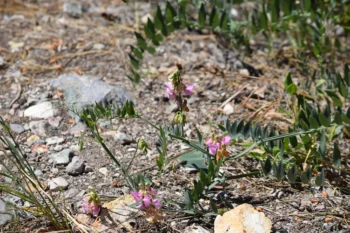
California Pea: A Charming Native Wildflower for Golden State Gardens
If you’re looking to add a touch of delicate beauty to your California native garden, meet the California pea (Lathyrus jepsonii californicus). This lovely perennial wildflower might not be the showiest plant in your garden, but it brings a subtle charm that’s hard to resist – plus, it’s doing important work supporting local wildlife while you’re admiring those sweet little blooms.
What Makes California Pea Special?
California pea is a true Golden State native, found exclusively in California. As a member of the pea family, it produces those characteristic small, pea-like flowers that typically bloom in shades of pink to purple. Don’t expect towering height from this beauty – it’s a forb herb, meaning it lacks woody tissue and stays relatively low to the ground, making it perfect for naturalistic plantings and ground cover situations.
This perennial plant has staying power in your garden, returning year after year once established. It’s also known by the synonym Lathyrus jepsonii Greene var. californicus, so don’t be confused if you see it listed under that name in some references.
Where California Pea Calls Home
California pea is endemic to California, meaning you won’t find it naturally occurring anywhere else in the world. This makes it an extra-special addition to native plant gardens, as you’re literally growing a piece of California’s unique botanical heritage.
- Species observed
- No observations
Why Your Garden (and Local Wildlife) Will Love It
There are several compelling reasons to consider adding California pea to your landscape:
- Native authenticity: As a true California native, it’s perfectly adapted to local conditions and supports indigenous ecosystems
- Pollinator magnet: Those charming flowers aren’t just pretty – they attract native bees and butterflies, supporting local pollinator populations
- Low maintenance: Once established, this plant is relatively drought tolerant and requires minimal care
- Naturalistic beauty: Perfect for wildflower meadows, restoration projects, and gardens with a natural, unmanicured look
Growing California Pea Successfully
The good news is that California pea isn’t particularly fussy about growing conditions, though it does have some preferences:
Climate and Hardiness: This plant thrives in USDA hardiness zones 8-10, which covers most of California’s climate zones perfectly.
Light Requirements: California pea adapts well to both partial shade and full sun conditions, making it versatile for various garden spots.
Soil Needs: Well-draining soil is essential – like many California natives, this plant doesn’t appreciate sitting in waterlogged conditions.
Planting and Care Tips
Getting your California pea established is straightforward if you follow these guidelines:
- Timing: Plant in fall or early winter to take advantage of natural rainfall patterns
- Watering: Provide regular water during the first growing season to establish roots, then reduce watering as the plant becomes drought tolerant
- Maintenance: Minimal pruning needed – simply remove spent flowers if desired, though leaving them may provide seeds for wildlife
- Companion planting: Pairs beautifully with other California natives like poppies, lupines, and native grasses
Perfect Garden Settings
California pea shines brightest in certain garden styles:
- Native plant gardens: An obvious choice for authentic California landscapes
- Wildflower meadows: Adds delicate texture and color to naturalistic plantings
- Wildlife gardens: Supports local pollinators and fits into ecological garden designs
- Restoration projects: Ideal for habitat restoration and erosion control efforts
Is California Pea Right for Your Garden?
California pea is an excellent choice if you’re interested in supporting local ecosystems, enjoy naturalistic garden styles, and appreciate subtle beauty over flashy displays. It’s particularly perfect for gardeners who want low-maintenance plants that provide ecological benefits.
However, if you’re looking for bold, showy flowers or formal garden plants, you might want to consider other options. This is definitely a less is more kind of plant that rewards quiet observation rather than demanding attention from across the yard.
By choosing California pea for your garden, you’re not just adding a pretty wildflower – you’re participating in the preservation of California’s unique botanical heritage while creating habitat for native wildlife. And really, what could be more satisfying than that?