California Pitcherplant: The Pacific Northwest’s Carnivorous Marvel
Meet one of North America’s most fascinating native plants: the California pitcherplant (Darlingtonia californica). This isn’t your typical garden perennial – it’s a carnivorous plant that looks like something straight out of a science fiction movie, with its distinctive cobra-shaped leaves and appetite for insects.
What Makes the California Pitcherplant Special?
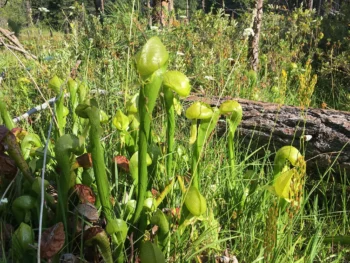
Also known by its scientific name Darlingtonia californica, this remarkable perennial herb creates pitcher-shaped traps that can grow up to 3 feet tall. Each pitcher resembles a cobra ready to strike, complete with a hooded top and a forked, tongue-like appendage that dangles enticingly at the entrance. The green pitchers are beautifully veined with red, creating an otherworldly appearance that’s both beautiful and slightly menacing.
Unlike other carnivorous plants that use sticky surfaces or snap-traps, the California pitcherplant uses a more sophisticated approach. Insects are lured into the pitcher by nectar and visual cues, then become trapped by downward-pointing hairs and the plant’s clever architecture. Once inside, there’s no escape – the insects eventually drown and are digested, providing the plant with essential nutrients.
Where Does It Naturally Grow?
This native plant has a surprisingly limited range for such a charismatic species. You’ll find California pitcherplants growing naturally in parts of Northern California, Southern Oregon, with small populations extending into Washington and British Columbia. It’s truly a Pacific Northwest specialty, adapted to the unique conditions of this coastal region.
- Species observed
- No observations
Should You Grow California Pitcherplant in Your Garden?
Here’s where we need to have an honest conversation. While the California pitcherplant is absolutely stunning and would be the crown jewel of any native plant collection, it’s not a plant for casual gardeners. This species has some serious considerations:
The Challenges:
- Rarity concerns: With a conservation status that indicates potential vulnerability, it’s crucial to only purchase plants from reputable nurseries that use responsibly sourced, propagated material – never wild-collected plants
- Extremely specific growing requirements: This isn’t a plant it and forget it species
- Obligate wetland status: It requires constantly saturated, boggy conditions
- Limited availability: Few nurseries carry this specialized plant
The Rewards:
- Incredible conversation starter and educational opportunity
- Supports native biodiversity when grown responsibly
- Fascinating plant behavior to observe
- Unique addition to specialized bog gardens
Growing Conditions: Not for the Faint of Heart
If you’re still determined to grow this Pacific Northwest native, you’ll need to recreate very specific bog conditions. California pitcherplants are obligate wetland plants, meaning they almost always occur in wetlands in nature.
Essential Requirements:
- Soil: Nutrient-poor, acidic soil mix (typically sphagnum moss and perlite)
- Water: Constant moisture using only distilled or rainwater – never tap water
- Light: Bright, indirect light or partial shade (morning sun, afternoon shade)
- Temperature: Cool conditions, especially around the roots
- Humidity: High humidity levels
- Hardiness: Suitable for USDA zones 7-9
Care Tips for Success
Creating the right environment is just the beginning. Here’s how to keep your California pitcherplant thriving:
- Keep it wet: The soil should never dry out, but shouldn’t be completely submerged either
- Use the tray method: Sit the pot in a tray of distilled water, allowing it to wick up moisture
- Avoid fertilizer: These plants get their nutrients from insects, and fertilizer can actually harm them
- Don’t feed manually: Let the plant catch its own prey naturally
- Provide winter dormancy: Cooler temperatures and reduced watering during winter months
- Be patient: Growth is slow, and it may take several years to reach full size
Is This Plant Right for Your Garden?
The California pitcherplant is best suited for dedicated bog gardens, carnivorous plant collections, or specialized native plant enthusiasts who can provide the intensive care it requires. It’s perfect for educational gardens where its unique adaptations can be appreciated and studied.
If you’re looking for easier Pacific Northwest natives that provide similar visual interest, consider alternatives like Western skunk cabbage or various native iris species that also thrive in wet conditions but are much more forgiving.
However, if you’re up for the challenge and committed to responsible cultivation, the California pitcherplant offers an unparalleled opportunity to grow one of North America’s most extraordinary native plants. Just remember to source your plant responsibly and be prepared for a rewarding but demanding gardening adventure.
The Bottom Line
The California pitcherplant is a botanical treasure that deserves our respect and protection. While it’s not suitable for every garden or gardener, those who can provide the right conditions and commit to responsible cultivation will be rewarded with one of nature’s most fascinating and beautiful carnivorous plants. Just remember – this is definitely a plant that chooses its gardeners, not the other way around!