Calopo: A Vigorous Tropical Groundcover Worth Knowing About
Meet calopo (Calopogonium mucunoides), a perennial leguminous vine that’s been making itself at home in tropical gardens across the Pacific. While this isn’t your typical garden center find, calopo has carved out quite a niche for itself as a hardworking groundcover with some interesting quirks worth exploring.
What Exactly Is Calopo?
Calopo is a herbaceous perennial that belongs to the legume family, which means it’s related to beans, peas, and peanuts. You might also see it listed under its botanical synonym, Calopogonium orthocarpum, but don’t let that confuse you—it’s the same plant with the same vigorous personality.
This plant has a fascinating classification as a forb herb, which is just a fancy way of saying it’s a non-woody plant that stays relatively close to the ground. Think of it as nature’s own living carpet that happens to produce charming little flowers.
Where Does Calopo Call Home?
Originally from Puerto Rico and other parts of tropical America, calopo has established itself in Guam and Palau as well. It’s considered non-native in the Pacific Basin (excluding Hawaii), but it’s proven quite adaptable to these new environments, reproducing and persisting without human intervention.
- Species observed
- No observations
The Good, The Challenging, and The Beautiful
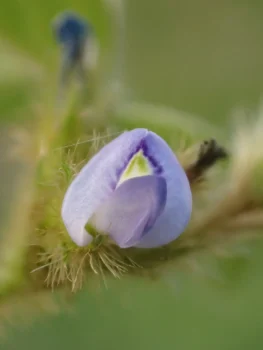
Let’s be honest—calopo isn’t going to win any beauty contests, but it has its charms. The small purple to pink pea-like flowers are delicate and appear in clusters, creating a subtle but pleasant display during blooming periods. The trifoliate leaves (that’s three leaflets per leaf) give it a classic legume appearance that’s both familiar and tidy.
What makes calopo truly special is its work ethic. As a nitrogen-fixing plant, it actually improves soil quality by converting atmospheric nitrogen into a form other plants can use. It’s like having a tiny soil scientist working 24/7 in your garden!
Where Calopo Thrives
This adaptable groundcover is most comfortable in USDA hardiness zones 9-11, where it can avoid frost damage. Calopo has an interesting relationship with water—it’s considered facultative in wetland terms, meaning it’s equally happy in wet or dry conditions. In the Caribbean, it leans toward drier upland areas, while in Hawaii, it’s more flexible about moisture levels.
The plant prefers:
- Full sun to partial shade
- Well-draining to occasionally wet soils
- Warm, frost-free climates
- Areas where it can spread freely
Friend to Pollinators
While small, calopo’s flowers are a hit with bees and other tiny pollinators. The typical pea flower structure makes it easy for the right-sized visitors to access nectar and pollen, contributing to your garden’s pollinator ecosystem.
Should You Grow Calopo?
Here’s where things get interesting. Calopo isn’t necessarily a bad plant, but it’s definitely got some strong opinions about where it wants to live. Once established, it can spread vigorously and may outcompete other plants for space. This makes it excellent for erosion control and soil improvement projects, but potentially challenging in mixed garden borders.
If you’re considering calopo, ask yourself:
- Do you need robust groundcover for a naturalized area?
- Are you dealing with poor soil that could benefit from nitrogen fixation?
- Do you have space where an enthusiastic spreader won’t cause problems?
- Are you in zones 9-11 with minimal frost risk?
Growing and Caring for Calopo
The beauty of calopo lies in its simplicity. Once you get it started, it pretty much takes care of itself. Seeds are the typical propagation method, and the plant establishes quickly in suitable conditions.
Care requirements are minimal:
- Water regularly during establishment, then let nature take over
- No fertilization needed (remember, it makes its own nitrogen!)
- Occasional trimming to control spread if desired
- Watch for overly aggressive expansion
Native Alternatives to Consider
While calopo can certainly earn its keep in the right setting, you might also consider native groundcover options for your area. Native plants typically require less maintenance, support local ecosystems more effectively, and won’t surprise you with unexpected spreading habits.
Research native legumes or groundcovers in your region—you might find options that offer similar benefits while being naturally suited to your local environment.
The Bottom Line
Calopo is one of those plants that’s neither hero nor villain—it’s simply a hardworking member of the plant kingdom with specific talents and tendencies. If you need reliable groundcover for naturalized areas and don’t mind a plant with spreading ambitions, calopo might be worth considering. Just remember to give it space to do its thing and keep an eye on its enthusiasm for expansion.
Whether you choose to grow calopo or opt for native alternatives, the key is understanding what you’re getting into and planning accordingly. After all, the best gardens are those where every plant has a purpose and a proper place to shine.