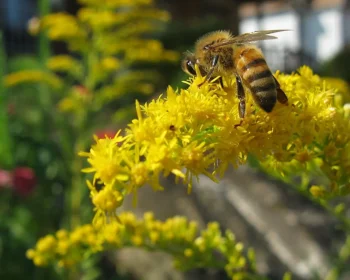
Canada Goldenrod: The Golden Star of Late Summer Gardens
If you’re looking for a native plant that delivers spectacular late-season color while supporting local wildlife, Canada goldenrod (Solidago altissima) might just be your garden’s new best friend. This cheerful perennial brings sunshine to the landscape right when many other plants are calling it quits for the year.
What is Canada Goldenrod?
Canada goldenrod is a native North American perennial that belongs to the sunflower family. Despite what some people think, this isn’t the plant that makes you sneeze during allergy season – that dubious honor goes to ragweed, which blooms at the same time. Canada goldenrod is actually wind-pollinated and produces heavy pollen that doesn’t become airborne easily.
This hardy forb (a non-woody flowering plant) grows as an upright, rhizomatous perennial, meaning it spreads underground through root-like stems to form colonies over time.
Where Does It Grow Naturally?
Canada goldenrod has an impressive native range, naturally occurring throughout most of Canada and the lower 48 United States. You’ll find it thriving from coast to coast, including in Alabama, Arizona, Arkansas, California, Colorado, Connecticut, Delaware, Florida, Georgia, Illinois, Indiana, Iowa, Kansas, Kentucky, Louisiana, Maine, Maryland, Massachusetts, Michigan, Minnesota, Mississippi, Missouri, Montana, Nebraska, New Hampshire, New Jersey, New Mexico, New York, North Carolina, North Dakota, Ohio, Oklahoma, Pennsylvania, Rhode Island, South Carolina, South Dakota, Tennessee, Texas, Vermont, Virginia, West Virginia, and Wisconsin. It’s also native to several Canadian provinces including Manitoba, New Brunswick, Ontario, Prince Edward Island, Quebec, and Saskatchewan.
- Species observed
- No observations
Garden Appeal and Landscape Role
Canada goldenrod really shines (literally!) in late summer and fall when its bright yellow, plume-like flower clusters create stunning golden displays. Growing up to 5 feet tall, it makes an excellent background plant in perennial borders or a show-stopping feature in naturalistic plantings.
This plant works beautifully in:
- Prairie and meadow gardens
- Naturalized landscapes
- Rain gardens (thanks to its medium moisture needs)
- Cottage-style gardens
- Erosion control plantings
- Wildlife habitat gardens
Why Pollinators (and You) Will Love It
Here’s where Canada goldenrod really earns its keep in the garden. As a late-season bloomer, it provides crucial nectar when many other flowers have faded. Bees, butterflies, and beneficial insects flock to its golden blooms, making it an essential plant for pollinator gardens. The timing couldn’t be better – it helps fuel migrating butterflies and gives bees one last major nectar source before winter.
Growing Conditions and Care
One of the best things about Canada goldenrod is how adaptable and low-maintenance it is. This tough native thrives in USDA hardiness zones 3-9, tolerating winter temperatures as low as -28°F.
Ideal Growing Conditions:
- Sunlight: Full sun to partial shade (intermediate shade tolerance)
- Soil: Adaptable to coarse, medium, and fine-textured soils
- pH: Tolerates a range from 5.2 to 7.3
- Moisture: Medium moisture requirements, though drought tolerance is low
- Fertility: Low fertility requirements (it’s not picky!)
Wetland Considerations:
Canada goldenrod typically prefers upland areas and usually occurs in non-wetland sites, though it can occasionally tolerate wetland conditions in most regions.
Planting and Care Tips
Getting Canada goldenrod established in your garden is refreshingly straightforward:
- Planting: Can be grown from seed, bare root plants, or sprigs. Seeds are tiny (about 700,000 per pound!)
- Spacing: Plan for 1,700-2,700 plants per acre for mass plantings
- Growth rate: Rapid growth once established
- Maintenance: Cut back in early spring before new growth emerges
- Spreading: Spreads moderately through rhizomes – give it room or be prepared to divide clumps
A Word of Caution (The Good Kind)
Canada goldenrod’s enthusiastic spreading habit means it can take over if left unchecked. This isn’t necessarily bad – it makes excellent groundcover for naturalized areas – but you’ll want to site it thoughtfully in more formal gardens. Regular division every few years will keep it in bounds.
The Bottom Line
If you want a reliable, native perennial that supports wildlife, requires minimal care, and delivers knockout fall color, Canada goldenrod deserves serious consideration. Just remember to give it space to spread or plan to divide it regularly. Your local pollinators will thank you, and you’ll have golden garden glory from late summer through fall.
Plus, you’ll be supporting biodiversity by growing a plant that’s perfectly adapted to North American conditions – and that’s something worth celebrating!