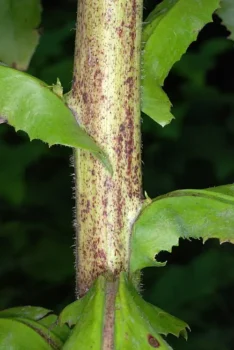
Canada Lettuce: A Towering Native Wildflower for Easy-Care Gardens
If you’re looking for a tall, impressive native wildflower that practically grows itself, meet Canada lettuce (Lactuca canadensis). This unassuming member of the sunflower family might not win any beauty contests up close, but it’s a hardworking native that deserves a spot in naturalized gardens and wildflower meadows across North America.
What is Canada Lettuce?
Canada lettuce is an annual to biennial forb that can tower anywhere from 3 to 10 feet tall when it hits its stride. Don’t let the name fool you – while it’s called Canada lettuce, this native plant is actually found throughout most of North America, from coast to coast and border to border.
As a forb, Canada lettuce lacks the woody stems of shrubs and trees, instead producing soft, herbaceous growth each year. Its deeply lobed lower leaves give way to a spectacular tall flower spike covered in hundreds of small, yellow, daisy-like blooms arranged in loose, airy clusters.
Where Does Canada Lettuce Grow?
Talk about a widespread native! Canada lettuce grows naturally across an impressive range that includes most U.S. states and Canadian provinces: from Alberta to Nova Scotia in Canada, and from coast to coast in the lower 48 states. You’ll find it thriving in states as diverse as Florida and Montana, California and Maine.
- Species observed
- No observations
This extensive native range means Canada lettuce is well-adapted to a huge variety of growing conditions and climates, making it an excellent choice for gardeners in USDA hardiness zones 2 through 9.
Why Grow Canada Lettuce?
While Canada lettuce might not be the showiest plant in your garden, it brings several valuable qualities to the table:
- True native status: This plant has been supporting North American ecosystems for millennia
- Pollinator magnet: Those hundreds of small yellow flowers attract bees, butterflies, and other beneficial insects
- Wildlife food source: While not a primary food source, it does provide sustenance for various wildlife species
- Architectural interest: Its impressive height adds vertical drama to garden designs
- Low maintenance: Once established, it pretty much takes care of itself
- Adaptable: Grows in various soil types and moisture conditions
Perfect Garden Settings
Canada lettuce shines in specific garden situations where its tall, somewhat wild appearance is an asset rather than a liability:
- Wildflower meadows: Provides height and late-season color
- Native plant gardens: A true indigenous species for authentic plantings
- Cottage gardens: Adds informal, naturalized charm
- Background plantings: Creates a natural backdrop for shorter plants
- Naturalized areas: Excellent for transitional zones between cultivated and wild spaces
Growing Conditions and Care
One of Canada lettuce’s best qualities is how easy-going it is about growing conditions. This adaptable native has facultative upland status across all regions, meaning it usually prefers non-wetland sites but can tolerate occasional wet conditions.
Light requirements: Partial shade to full sun
Soil preferences: Adaptable to various soil types, tolerates disturbed soils
Water needs: Moderate; drought tolerant once established
Maintenance: Very low – this is truly a plant it and forget it native
Planting and Propagation Tips
Canada lettuce is refreshingly simple to grow:
- From seed: Direct sow seeds in fall or early spring
- Self-sowing: Once established, plants will self-seed readily for future generations
- Spacing: Give plants room to spread – they can get quite tall and bushy
- Timing: As an annual to biennial, expect flowers in the second year from seed
Wildlife and Pollinator Benefits
While Canada lettuce isn’t a primary food source for large wildlife (providing only 2-5% of diet for large animals, small mammals, and terrestrial birds), it plays a supporting role in the ecosystem. Its real value lies in its pollinator support – those numerous small flowers provide nectar and pollen for bees, butterflies, and other beneficial insects throughout its long blooming period.
Is Canada Lettuce Right for Your Garden?
Canada lettuce is perfect for gardeners who want to support native ecosystems without a lot of fuss. It’s ideal if you have space for taller plants and appreciate the subtle beauty of wildflowers over flashy garden hybrids. However, it might not be the best choice for formal gardens or small spaces where every plant needs to be a showstopper.
Consider Canada lettuce if you’re creating wildlife habitat, establishing a native plant garden, or simply want a reliable, tall native that will return year after year with minimal effort on your part. Sometimes the best garden plants are the ones that simply do their job quietly and well – and Canada lettuce definitely fits that description.