Canadian Serviceberry: A Native Gem That Delivers Year-Round Beauty
If you’re looking for a native shrub that works overtime in your garden, let me introduce you to the Canadian serviceberry (Amelanchier canadensis). This unsung hero of North American landscapes might just become your new favorite plant – and here’s why your local wildlife will thank you for planting it.
What Makes Canadian Serviceberry Special?
Canadian serviceberry is a perennial shrub that typically grows 15-23 feet tall, though it usually stays closer to the 20-foot mark in most garden settings. Don’t let the Canadian in the name fool you – this adaptable native grows throughout much of eastern North America, from the Maritime provinces down to Georgia and west to parts of the Midwest.
Where Does It Call Home?
This versatile shrub has quite the geographic range! You’ll find Canadian serviceberry growing naturally across Canada in New Brunswick, Nova Scotia, Ontario, Prince Edward Island, and Quebec. In the United States, it thrives from Maine down to Georgia and west into states like Tennessee and West Virginia. It’s equally happy in Connecticut backyards and North Carolina woodlands.
- Species observed
- No observations
A Four-Season Performer
Canadian serviceberry truly shines throughout the year, making it a fantastic investment for any landscape:
- Spring: Clusters of white flowers appear before the leaves, creating a stunning early-season display
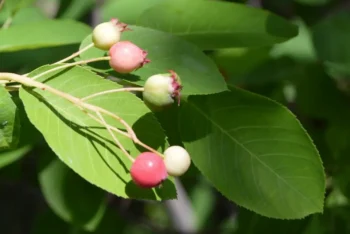
- Summer: Purple berries ripen and provide food for birds (and adventurous gardeners!)
- Fall: Leaves turn brilliant shades of orange and red
- Winter: Attractive bark and branching structure add visual interest
Perfect Garden Roles
This multi-stemmed shrub fits beautifully into several garden styles:
- Woodland and naturalized gardens where it mimics its forest edge habitat
- Wildlife and bird gardens as a key food source
- Rain gardens thanks to its facultative wetland status
- Native plant gardens as an authentic regional species
- Mixed shrub borders where its moderate growth rate won’t overwhelm neighbors
Wildlife and Pollinator Magnet
Canadian serviceberry is like a wildlife diner that’s open for business year-round. The early spring flowers provide crucial nectar when few other plants are blooming, supporting bees, butterflies, and other pollinators. The purple berries that follow are absolute favorites of birds including robins, cedar waxwings, and woodpeckers. Even mammals like chipmunks and squirrels appreciate the fruit.
Growing Conditions and Care
One of the best things about Canadian serviceberry is its easygoing nature. Here’s what it prefers:
- Sunlight: Partial shade to full sun (intermediate shade tolerance)
- Soil: Adaptable to coarse, medium, and fine-textured soils
- pH: 5.5 to 7.5 (quite flexible!)
- Moisture: Medium moisture requirements, though drought tolerance is low
- Hardiness: USDA zones 3-7 (can handle temperatures down to -33°F)
Planting and Care Tips
Canadian serviceberry is refreshingly low-maintenance once established:
- Plant in spring or fall when temperatures are moderate
- Space plants 6-12 feet apart depending on your desired density
- Water regularly the first year to establish a strong root system
- Mulch around the base to retain moisture and suppress weeds
- Minimal pruning needed – just remove dead or damaged branches
- Cold stratification is required for seed propagation, but container plants are routinely available
Special Considerations
Canadian serviceberry has a few quirks worth noting:
- It has low drought tolerance, so consistent moisture is important
- The shrub can resprout if cut back, making it resilient
- It’s fire-resistant, a bonus in fire-prone areas
- Seeds require 110+ frost-free days and cold stratification
The Bottom Line
Canadian serviceberry checks all the boxes for a stellar landscape plant: it’s native, supports wildlife, offers four seasons of interest, and doesn’t demand constant attention. Whether you’re creating a wildlife haven or simply want a beautiful, low-maintenance shrub that connects you to your local ecosystem, Canadian serviceberry delivers. Plus, those edible berries are a sweet bonus – if you can beat the birds to them!
Ready to give this native treasure a spot in your garden? Your local pollinators, birds, and neighbors will all approve of this choice.