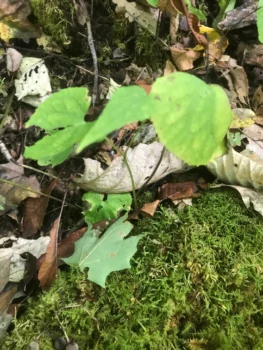
Canadian White Violet: A Charming Native Groundcover for Shade Gardens
If you’re looking for a delicate, low-maintenance groundcover that brings subtle beauty to your shade garden, meet the Canadian white violet (Viola canadensis var. canadensis). This charming native perennial might just be the perfect addition to transform those tricky shaded spots in your landscape into something truly special.
What Makes Canadian White Violet Special?
Canadian white violet is a native North American wildflower that’s been quietly beautifying woodland floors for centuries. As a perennial forb (that’s garden-speak for a non-woody plant that comes back year after year), this little beauty forms spreading colonies of heart-shaped leaves topped with pristine white flowers marked with delicate purple veining.
Don’t let the Canadian in its name fool you – this violet calls much of eastern North America home, thriving from southeastern Canada down through the eastern United States.
Where Does It Grow Naturally?
Canadian white violet has an impressive native range across eastern North America. You’ll find it growing wild in states including Alabama, Arkansas, Connecticut, Georgia, Illinois, Indiana, Kentucky, Maine, Maryland, Massachusetts, Michigan, New Hampshire, New Jersey, New York, North Carolina, Ohio, Pennsylvania, Rhode Island, South Carolina, Tennessee, Vermont, Virginia, West Virginia, and Wisconsin. It also grows naturally in the Canadian provinces of New Brunswick, Nova Scotia, Ontario, and Quebec.
- Species observed
- No observations
Important note: While this plant is widespread, it’s considered rare in some areas. In Arkansas, it has an S2 rarity status, and in New Jersey, it’s listed as endangered with an S1 status. If you live in these areas, only plant Canadian white violet if you can source it from responsible, local native plant suppliers who propagate rather than wild-collect their plants.
Why Gardeners Love This Plant
There’s something irresistibly charming about Canadian white violet’s understated elegance. The small white flowers, typically less than an inch across, appear in late spring and early summer, creating a carpet of gentle color that never overwhelms neighboring plants. The heart-shaped leaves form attractive mounds that persist through the growing season, providing textural interest even when not in bloom.
As a native plant, it’s perfectly adapted to local growing conditions and requires minimal intervention once established. Plus, it’s a magnet for pollinators – small bees, flies, and other beneficial insects appreciate its nectar, while fritillary butterfly caterpillars use violets as host plants.
Perfect Spots for Canadian White Violet
This violet shines in:
- Woodland gardens where it can naturalize under trees
- Shade borders as a delicate groundcover
- Native plant gardens paired with other indigenous species
- Rock gardens in shaded areas
- Naturalized areas where low maintenance is key
Growing Conditions and Care
Canadian white violet is wonderfully adaptable, thriving in USDA hardiness zones 3-8. Here’s what it needs to flourish:
Light: Partial to full shade – think dappled sunlight under trees rather than deep, dark corners
Soil: Moist, well-draining soil rich in organic matter. It appreciates the kind of humusy soil you’d find on a forest floor
Water: Consistent moisture without waterlogging – it doesn’t like to dry out completely but won’t tolerate soggy conditions
Planting and Care Tips
Getting Canadian white violet established is refreshingly straightforward:
- Plant in spring or fall when temperatures are moderate
- Space plants about 6-12 inches apart if you want quicker coverage
- Water regularly during the first growing season to help establish roots
- Apply a thin layer of compost or leaf mold each spring to mimic natural woodland conditions
- Once established, it’s quite drought-tolerant and requires little maintenance
- Allow it to self-seed if you want it to naturalize – it spreads gently without becoming aggressive
The beauty of this native violet lies in its simplicity. It won’t demand constant attention or special treatments – just provide the right growing conditions, and it’ll reward you with years of quiet, consistent beauty.
The Bottom Line
Canadian white violet proves that sometimes the most understated plants make the biggest impact. If you have shaded areas that need a gentle, native groundcover, this charming violet deserves serious consideration. Just remember to source it responsibly, especially if you’re gardening in areas where it’s considered rare. Your local native plant society or responsible nursery can point you toward ethically sourced plants that will help you create a beautiful, ecologically beneficial garden.