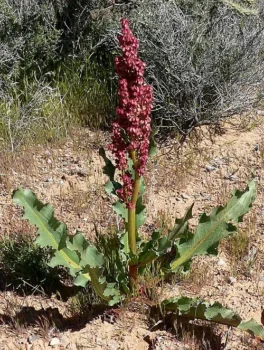
Canaigre Dock: The Desert’s Stately Architectural Wonder
If you’re looking for a native plant that brings both drama and resilience to your landscape, meet canaigre dock (Rumex hymenosepalus). This perennial powerhouse might not win any beauty contests with its showy blooms, but what it lacks in floral flash, it more than makes up for in architectural presence and rock-solid dependability.
What Exactly Is Canaigre Dock?
Canaigre dock is a native perennial forb that calls the American Southwest home. As a member of the buckwheat family, it’s built for survival in some pretty tough conditions. This herbaceous plant develops a substantial taproot system that can dive deep into the soil, making it incredibly drought-tolerant once established.
Where Does It Naturally Grow?
This hardy native has made itself at home across nine western and southwestern states: Arizona, California, Colorado, Nevada, New Mexico, Oklahoma, Texas, Utah, and Wyoming. It thrives in desert and semi-arid regions where many other plants would simply give up and call it quits.
- Species observed
- No observations
Why You Might Want to Grow Canaigre Dock
Here’s where canaigre dock really shines in the garden:
- Drought tolerance: Once established, this plant can handle extended dry periods like a champ
- Low maintenance: It pretty much takes care of itself
- Architectural interest: The tall, reddish-brown seed stalks create striking vertical elements
- Native benefits: Supporting local ecosystems by growing native plants
- Seasonal interest: Large basal leaves provide texture, while seed stalks offer winter interest
The Not-So-Great Parts
Let’s be honest – canaigre dock isn’t for everyone:
- It can spread via underground rhizomes, so it might pop up where you don’t expect it
- The flowers aren’t particularly showy
- It goes dormant in extreme heat or cold, leaving you with bare spots
- Those large leaves can look a bit rough around the edges as they age
Perfect Garden Situations
Canaigre dock works best in:
- Xeriscaping projects: Where water conservation is key
- Native plant gardens: Especially those focused on southwestern species
- Naturalized areas: Where a more wild, untamed look is desired
- Desert-themed landscapes: As an architectural accent plant
Growing Conditions and Care
The beauty of canaigre dock lies in its simplicity. Here’s what it needs to thrive:
- Sun exposure: Full sun is best, though it can tolerate some light shade
- Soil: Well-draining soil is absolutely essential – it hates wet feet
- Water: Drought-tolerant once established, but appreciates occasional deep watering during extended dry spells
- Climate zones: Hardy in USDA zones 4-9
Planting and Establishment Tips
Getting canaigre dock established is pretty straightforward:
- Plant in fall for best establishment before summer heat
- Ensure excellent drainage – amend heavy clay soils with sand or gravel
- Give it space – mature plants can spread 2-3 feet wide
- Water regularly the first growing season, then back off significantly
- Be patient – it may take a year or two to really get going
The Bottom Line
Canaigre dock isn’t going to be the star of your Instagram-worthy garden photos, but it’s the kind of reliable, low-maintenance native that forms the backbone of a sustainable landscape. If you’re gardening in the Southwest and want something that’ll stick around through thick and thin while supporting local ecosystems, this unassuming dock deserves a spot in your garden. Just give it room to spread and don’t fuss over it too much – sometimes the best gardening advice is simply to get out of the way and let nature do its thing.