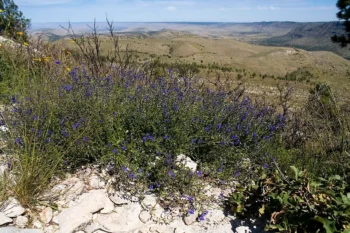
Canyon Sage: A Drought-Loving Native That’ll Make Your Garden Sing
If you’re looking for a tough-as-nails native plant that can handle whatever Mother Nature throws at it, meet Canyon Sage (Salvia lycioides). This scrappy little shrub might not win any beauty contests at first glance, but don’t let its modest appearance fool you – it’s a garden workhorse that delivers big benefits with minimal fuss.
What Exactly is Canyon Sage?
Canyon Sage, scientifically known as Salvia lycioides, is a perennial shrub that’s as American as apple pie. This native plant species calls the lower 48 states home, specifically thriving in the sun-baked landscapes of New Mexico and Texas. You might also see it listed under its botanical synonym, Salvia ramosissima, but don’t let that confuse you – it’s the same hardy plant.
- Species observed
- No observations
As a true shrub, Canyon Sage typically grows as a multi-stemmed woody plant that stays manageable at under 13-16 feet in height, though most specimens remain much smaller in garden settings. Think of it as the perfect right-sized plant for modern landscapes.
Why Your Garden (and Local Wildlife) Will Thank You
Canyon Sage isn’t just another pretty face in the garden – it’s a pollinator magnet. Those small white to pale lavender flowers might look understated, but they’re absolute bee and butterfly magnets. The aromatic gray-green foliage adds year-round interest and releases a pleasant fragrance when brushed against.
Here’s what makes Canyon Sage a smart garden choice:
- Native plant that supports local ecosystems
- Extremely drought tolerant once established
- Attracts beneficial pollinators
- Low maintenance requirements
- Aromatic foliage adds sensory interest
Where Canyon Sage Shines in Your Landscape
This versatile native works beautifully in several garden styles. It’s a natural fit for xeriscaping and water-wise gardens, where its drought tolerance really shines. Canyon Sage also excels in native plant gardens, rock gardens, and desert-themed landscapes. Use it as an accent plant or group several together for a more dramatic effect.
The plant’s compact shrub form makes it perfect for borders, foundation plantings, or anywhere you need a reliable, low-water performer that won’t overwhelm nearby plants.
Growing Canyon Sage Successfully
The beauty of Canyon Sage lies in its simplicity. This plant thrives in USDA hardiness zones 7-10, making it suitable for much of the southern and southwestern United States.
Ideal Growing Conditions
- Sunlight: Full sun (6+ hours of direct sunlight daily)
- Soil: Well-draining soil is absolutely essential
- Water: Drought tolerant once established; minimal irrigation needed
- Soil type: Tolerates poor soils; actually prefers lean conditions
Planting and Care Tips
Getting Canyon Sage established is refreshingly straightforward. Plant in fall or spring when temperatures are moderate. The key to success? Don’t overthink it. This plant has evolved to thrive in challenging conditions, so resist the urge to pamper it.
After planting, water regularly for the first few months until the root system establishes. Once established, you can practically forget about it – Canyon Sage is that independent. A light pruning after flowering helps maintain shape, but even this isn’t strictly necessary.
Understanding Its Water Preferences
Canyon Sage has interesting wetland status variations across regions. In the Arid West and Great Plains, it’s classified as Facultative Upland, meaning it usually grows in non-wetland areas but can occasionally handle wetter conditions. In the Western Mountains, Valleys, and Coast region, it’s Obligate Upland, almost never occurring in wetlands. Translation? This plant definitely prefers the drier side of life.
The Bottom Line
Canyon Sage might not be the flashiest plant in the garden center, but it’s exactly the kind of reliable, beneficial native that modern landscapes need. If you’re gardening in zones 7-10 and want a plant that supports local wildlife while requiring minimal water and care, Canyon Sage deserves serious consideration. Your water bill, the local bees, and your future self will thank you for choosing this desert gem.