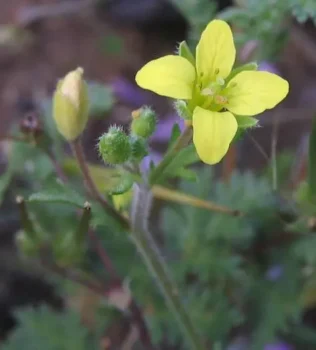
Caperfruit Tropidocarpum: A Critically Rare California Native Worth Protecting
Meet the caperfruit tropidocarpum (Tropidocarpum capparideum), one of California’s most endangered wildflowers. This little-known annual forb might not be on every gardener’s wish list, but its story is both fascinating and concerning for those who care about preserving our native plant heritage.
What Makes This Plant Special
The caperfruit tropidocarpum is an annual herbaceous plant belonging to the mustard family. As a forb, it’s a soft-stemmed flowering plant that completes its entire life cycle in just one growing season. Don’t let its humble appearance fool you – this unassuming wildflower is fighting for survival in the California landscape.
Where You’ll Find It (If You’re Lucky)
This rare gem is endemic to California, meaning it exists nowhere else on Earth. Its distribution is extremely limited within the state, making every single population precious for conservation efforts.
- Species observed
- No observations
The Reality Check: Why This Plant Needs Our Help
Here’s where things get serious. The caperfruit tropidocarpum carries a Global Conservation Status of S1, which translates to Critically Imperiled. This means we’re talking about typically five or fewer known populations, with very few remaining individuals – often fewer than 1,000 plants total. In plant conservation terms, this is a red alert situation.
Should You Grow Caperfruit Tropidocarpum?
This is where responsible gardening meets conservation ethics. While we absolutely encourage growing native plants, critically imperiled species require special consideration:
- Only pursue if you can source responsibly: Never collect seeds or plants from wild populations
- Work with conservation organizations: Connect with botanical gardens, native plant societies, or conservation groups that may have ethical seed sources
- Consider it a conservation mission: Growing this plant isn’t just gardening – it’s participating in species recovery
- Understand the commitment: As an annual, you’ll need to allow it to self-seed or collect seeds responsibly each year
Growing Conditions and Care
Since detailed growing information for this rare species is limited, we can make educated assumptions based on its California native status and annual lifecycle:
- Climate zones: Likely thrives in USDA zones 8-10, matching California’s Mediterranean climate
- Soil preferences: Probably prefers well-draining soils typical of California’s diverse landscapes
- Water needs: As a California annual, likely adapted to seasonal rainfall patterns with dry summers
- Sun exposure: Most California natives prefer full sun to partial shade
Garden Role and Design Ideas
If you’re fortunate enough to grow caperfruit tropidocarpum responsibly, consider these approaches:
- Conservation garden: Create a dedicated space for rare and endangered natives
- Educational display: Use it as a conversation starter about plant conservation
- Pollinator support: Though small, its flowers likely support specialized native pollinators
- Seasonal interest: Enjoy its brief but meaningful presence during its growing season
The Bigger Picture
Growing caperfruit tropidocarpum isn’t really about adding another pretty flower to your garden – it’s about participating in conservation. Every responsibly grown plant represents hope for a species teetering on the edge of extinction.
If you can’t source this rare species ethically, consider supporting its conservation in other ways: donate to native plant conservation organizations, participate in habitat restoration, or choose other California natives that support the same ecosystems.
Sometimes the most meaningful plants in our gardens aren’t the showiest ones, but those that connect us to something larger than ourselves – the intricate web of life that makes California’s landscapes so special.