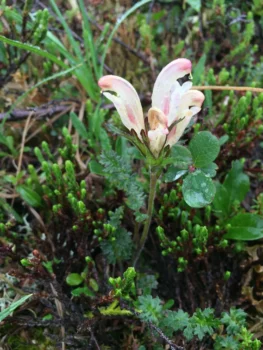
Capitate Lousewort: A Challenging But Rewarding Arctic Native
If you’re looking for a conversation starter in your garden, capitate lousewort (Pedicularis capitata) might just be your plant. This perennial wildflower brings a touch of the Arctic to specialized gardens, though it’s definitely not for the faint of heart when it comes to gardening challenges.
What Is Capitate Lousewort?
Capitate lousewort is a fascinating perennial forb—essentially a non-woody flowering plant—that’s perfectly adapted to some of the world’s harshest growing conditions. Despite its rather unfortunate common name (don’t worry, it has nothing to do with actual lice!), this plant produces charming clusters of purple-pink tubular flowers that sit atop sturdy stems like tiny crowns.
The plant gets its capitate name from the way its flowers cluster together in dense, rounded heads. Each individual flower has the distinctive hooded shape that’s characteristic of the lousewort family, creating an almost orchid-like appearance that’s surprisingly elegant for such a tough little plant.
Where Does It Come From?
This hardy native calls the far north home, naturally occurring across Alaska, northern Canada (including Alberta, British Columbia, Quebec, Yukon, Northwest Territories, and Nunavut), and even Greenland. It’s a true Arctic specialist that thrives in conditions that would send most garden plants running for cover.
- Species observed
- No observations
Should You Grow Capitate Lousewort?
Here’s where things get interesting—and a bit complicated. Capitate lousewort is undeniably unique and would be a stellar addition to the right garden, but it comes with some serious growing challenges.
The Good News:
- Extremely cold hardy (thrives in USDA zones 1-4)
- Unique, attractive flowers that bloom in summer
- Supports cold-adapted pollinators like bumblebees
- Perfect conversation piece for native plant enthusiasts
- Excellent for specialized alpine or arctic-themed gardens
The Challenges:
- Nearly impossible to grow in warm climates
- May have semi-parasitic tendencies, requiring host plants
- Extremely specific growing requirements
- Difficult to establish and maintain
- Limited availability in nurseries
Growing Conditions and Care
If you’re still intrigued and happen to live in an extremely cold climate, here’s what capitate lousewort needs to thrive:
Climate: This plant is only suitable for the coldest regions—think northern Alaska, northern Canada, or similar climates. It simply cannot tolerate warm temperatures and will not survive in temperate zones.
Light: Prefers partial shade to full sun, but appreciates some protection from intense midday sun even in northern climates.
Soil: Needs consistently moist but well-draining soil. Think of the conditions you’d find in Arctic meadows—never bone dry, never waterlogged.
Water: Consistent moisture is key, but good drainage prevents root rot. The plant has a Facultative Upland wetland status, meaning it usually grows in non-wetland areas but can tolerate some wetland conditions.
Garden Design and Landscape Role
In the rare gardens where it can thrive, capitate lousewort works beautifully in:
- Rock gardens designed to mimic alpine conditions
- Native plant collections focusing on Arctic species
- Specialized cold-climate wildflower meadows
- Educational gardens showcasing extreme-climate plants
The Reality Check
Let’s be honest—most gardeners won’t be able to successfully grow capitate lousewort. Its extreme climate requirements mean it’s really only suitable for gardeners in the far north who want to celebrate their local native flora. Even then, it may be semi-parasitic, potentially drawing nutrients from nearby plants, which adds another layer of complexity to cultivation.
If you’re fascinated by unique native wildflowers but live in a more temperate climate, consider exploring native alternatives that are better suited to your region. Your local extension office or native plant society can help you find equally interesting but more manageable native species.
Supporting Northern Pollinators
One of the most compelling reasons to grow capitate lousewort (if you can) is its role in supporting specialized northern pollinators. Bumblebees and other cold-adapted insects rely on plants like this for nectar and pollen in environments where few other flowers can survive.
Final Thoughts
Capitate lousewort represents the fascinating world of extreme-climate gardening. While it’s not a plant for most gardeners, it serves as a wonderful reminder of the incredible diversity of North America’s native flora and the specialized adaptations plants have developed to survive in challenging environments. If you’re lucky enough to garden in its native range and up for a challenge, it could be a truly unique addition to your landscape.