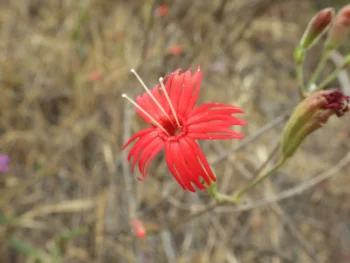
Cardinal Catchfly: A Brilliant Red Native for Southwestern Gardens
If you’re looking to add a splash of vibrant red to your native garden, cardinal catchfly (Silene laciniata) might just be the perfect choice. This charming perennial wildflower brings both beauty and ecological value to landscapes across the American Southwest, making it a wonderful addition for gardeners who want to support local wildlife while enjoying stunning blooms.
What Makes Cardinal Catchfly Special?
Cardinal catchfly is a native forb – essentially a non-woody flowering plant – that produces some of the most eye-catching red flowers you’ll find in the wild. The deeply fringed, scarlet petals create an almost feathery appearance that’s both delicate and dramatic. As a perennial, this plant will return year after year, slowly establishing itself as a reliable garden performer.
Where Does It Grow Naturally?
This beautiful wildflower is native to four southwestern states: Arizona, California, New Mexico, and Texas. In its natural habitat, you’ll typically find it growing in rocky areas, canyon walls, and open woodlands where it has adapted to thrive in challenging conditions.
- Species observed
- No observations
Why Gardeners Love Cardinal Catchfly
There are several compelling reasons to consider adding cardinal catchfly to your landscape:
- Pollinator magnet: Those bright red flowers are like beacons for hummingbirds, butterflies, and native bees
- Drought tolerance: Once established, it requires minimal water – perfect for xeriscaping
- Low maintenance: This native adapts well to local conditions with little fuss
- Unique texture: The fringed petals add interesting texture to garden beds
- Native support: You’re helping preserve regional biodiversity
Perfect Garden Settings
Cardinal catchfly shines in several garden styles:
- Rock gardens where its compact form fits perfectly between stones
- Native plant gardens as part of a regional wildflower collection
- Xeriscaped areas where water conservation is important
- Wildlife gardens designed to attract pollinators
- Naturalized areas that mimic wild meadow settings
Growing Cardinal Catchfly Successfully
The good news is that cardinal catchfly is relatively easy to grow if you can provide the right conditions. Here’s what this southwestern native needs to thrive:
Hardiness: Cardinal catchfly grows well in USDA zones 8-10, making it suitable for warmer climates.
Light requirements: Provide full sun to partial shade. While it can tolerate some shade, you’ll get the best flowering in sunnier locations.
Soil needs: Well-draining soil is absolutely critical. This plant won’t tolerate soggy conditions, so if you have heavy clay soil, consider amending it with sand or gravel, or plant in raised beds.
Water requirements: Water regularly during the first growing season to help establish the root system. Once established, cardinal catchfly is quite drought tolerant and actually prefers to dry out between waterings.
Planting and Care Tips
Spring is the ideal time to plant cardinal catchfly. Here are some tips for success:
- Space plants about 12-18 inches apart to allow for mature spread
- Water deeply but infrequently once established
- Deadhead spent flowers to encourage continued blooming
- Avoid fertilizing – these natives prefer lean soil conditions
- Allow some flowers to go to seed if you want the plant to self-sow
Supporting Wildlife
One of the best reasons to grow cardinal catchfly is its value to wildlife. The tubular red flowers are particularly attractive to hummingbirds, which have co-evolved with many red-flowered plants. You’ll also notice butterflies and native bees visiting the blooms, making your garden a hub of activity during flowering season.
Is Cardinal Catchfly Right for Your Garden?
Cardinal catchfly is an excellent choice if you live in zones 8-10 and want to create a low-water, wildlife-friendly garden. It’s particularly well-suited for gardeners in the Southwest who are working with challenging growing conditions like poor soil, intense sun, and limited water.
However, if you live outside its native range or in areas with heavy, poorly-draining soil and high humidity, you might want to consider other native alternatives that are better adapted to your local conditions.
For southwestern gardeners looking to embrace their regional flora while creating a stunning landscape, cardinal catchfly offers the perfect combination of beauty, ecological value, and easy care. Those brilliant red, fringed flowers will not only catch your eye but also provide essential resources for the hummingbirds and pollinators that call your area home.