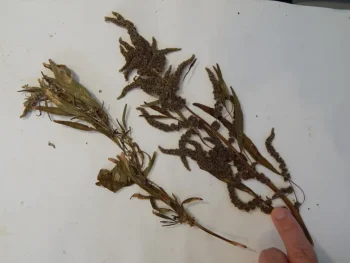
Carelessweed: Understanding This Tenacious Annual
If you’ve ever wondered about that tall, somewhat scraggly plant taking over disturbed areas in your neighborhood, you might be looking at carelessweed (Amaranthus palmeri). While its name suggests a plant that gardeners tend to overlook, this hardy annual has quite a story to tell – though it’s probably not one that will inspire you to add it to your garden wish list.
What Exactly Is Carelessweed?
Carelessweed is an annual forb, which is a fancy way of saying it’s a non-woody plant that completes its entire life cycle in one growing season. As a member of the amaranth family, it shares some characteristics with its more garden-friendly cousins, but carelessweed has earned its reputation as more of a survivor than a showstopper.
This plant is quite the traveler. While it’s native to the southwestern United States, carelessweed has spread far beyond its original home and now grows across a remarkable range of states including Arizona, Arkansas, California, Colorado, Florida, Georgia, Illinois, Kansas, Kentucky, Louisiana, Maryland, Massachusetts, Mississippi, Missouri, Nebraska, Nevada, New Jersey, New Mexico, New York, North Carolina, Ohio, Oklahoma, Pennsylvania, South Carolina, Tennessee, Texas, Utah, Virginia, West Virginia, and Wisconsin. It’s even made its way into Ontario, Canada, where it’s considered a non-native species that reproduces on its own.
- Species observed
- No observations
Why Most Gardeners Skip This One
Let’s be honest – carelessweed isn’t winning any beauty contests. This plant can shoot up to 6-10 feet tall with a rather coarse, weedy appearance. Its reddish stems support dense, greenish to reddish flower spikes that might charitably be called rustic in appearance. While some gardeners appreciate plants with a wild, naturalistic look, carelessweed tends to cross the line from charmingly wild to aggressively weedy.
The plant’s growth habit doesn’t do it any favors in the garden appeal department either. Carelessweed is an opportunist that thrives in disturbed soils and waste places – exactly the kind of spots where most gardeners are trying to establish something more intentional and attractive.
Where You’ll Find It Growing
Carelessweed has a facultative upland wetland status across all regions where it grows, which means it usually prefers non-wetland areas but can tolerate some moisture. You’re most likely to spot it in:
- Agricultural fields and crop margins
- Disturbed soils and construction sites
- Roadsides and waste areas
- Areas with poor or compacted soil
- Hot, dry locations with full sun exposure
Growing Conditions and Care
If you’re dealing with carelessweed on your property (whether by choice or by surprise), here’s what you should know about its preferences:
Climate: This plant thrives in USDA hardiness zones 3-10, though as an annual, it’s more about the growing season than winter survival.
Light and Soil: Carelessweed loves full sun and isn’t picky about soil quality. In fact, it seems to prefer the kind of poor, disturbed soils that make other plants struggle. It’s remarkably drought-tolerant once established.
Propagation: Seeds germinate when soil temperatures reach about 70°F, and the plant grows rapidly during hot summer weather. Fair warning: it self-seeds very readily, so one plant can quickly become many.
Wildlife Value
Here’s where carelessweed redeems itself somewhat. According to wildlife research, this plant provides a modest but consistent food source for various animals. Large animals, small mammals, and terrestrial birds all include carelessweed seeds in about 5-10% of their diets, though they don’t typically use the plant for cover. The seeds are particularly valuable for birds during fall and winter months.
A Better Choice for Your Garden
While carelessweed does offer some wildlife benefits, native gardeners have much better options. If you’re looking for plants that provide similar wildlife value with greater aesthetic appeal and ecological benefit, consider native amaranths like love-lies-bleeding (Amaranthus caudatus) where appropriate, or explore other native seed-producing plants specific to your region.
Native alternatives will provide superior wildlife habitat, integrate better with your local ecosystem, and give you much more control over their appearance and spread in your garden.
The Bottom Line
Carelessweed lives up to its name as a plant that thrives with minimal care – perhaps too minimal for most gardeners’ tastes. While it’s not classified as invasive or noxious, its aggressive self-seeding and weedy appearance make it a poor choice for intentional landscaping. If you encounter it on your property, you’ll find it’s quite easy to manage through regular mowing or pulling before it sets seed.
For gardeners interested in supporting wildlife with seed-producing plants, exploring native options will give you better results with much more aesthetic appeal and ecological benefit.