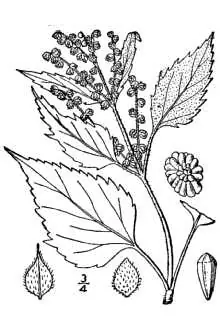
Carelessweed: Understanding This Widespread Annual Forb
If you’ve ever wondered about that tall, weedy-looking plant with coarse leaves popping up in disturbed areas around your property, you might be looking at carelessweed (Cyclachaena xanthiifolia). This annual forb has quite the story to tell, and while it’s not your typical garden centerpiece, understanding this plant can help you make informed decisions about your landscape.
What Exactly is Carelessweed?
Carelessweed is an annual forb – essentially a non-woody plant that completes its entire life cycle in one growing season. Standing anywhere from 3 to 10 feet tall, this robust plant certainly makes its presence known. Its coarse, irregularly lobed leaves and clusters of small, greenish flower heads give it a rather utilitarian appearance that’s more functional than fancy.
You might also see this plant referenced by its botanical synonyms, including Iva xanthifolia, in older gardening or botanical literature.
Where Does Carelessweed Come From?
Here’s where things get interesting from a native gardening perspective. Carelessweed is native to the lower 48 United States, particularly thriving in the central and western regions. However, it’s considered non-native in Canada, where it has established itself as an introduced species that reproduces without human intervention.
Today, you can find carelessweed growing across an impressive range of locations, from Alberta and British Columbia down to Texas and from coast to coast, including Arizona, Colorado, Illinois, New York, Oregon, and many states in between.
- Species observed
- No observations
Should You Plant Carelessweed in Your Garden?
This is where we need to have an honest conversation. While carelessweed isn’t classified as invasive or noxious, it’s not exactly what most gardeners would call a showstopper either. Here’s what you should consider:
The Reality Check
- Carelessweed is primarily wind-pollinated, so it doesn’t offer much in terms of supporting bees, butterflies, or other beneficial pollinators
- Its aesthetic appeal is, let’s say, an acquired taste – it’s more prairie tough than garden pretty
- It tends to thrive in disturbed soils and areas where other plants struggle
- As an annual, it will self-seed readily if conditions are right
Growing Conditions and Care
If carelessweed does find its way into your landscape (and it very well might on its own), here’s what it prefers:
- Sunlight: Full sun exposure
- Soil: Tolerates poor, disturbed soils and is quite drought-tolerant once established
- Water needs: Minimal – this plant is built for tough conditions
- Hardiness: As an annual, it’s adaptable to various temperature zones (typically USDA zones 3-9)
Carelessweed has a facultative wetland status across all regions, meaning it can grow in both wet and dry conditions, making it quite the adaptable survivor.
A Better Path Forward
While there’s nothing inherently wrong with carelessweed, native plant enthusiasts have much better options for creating beautiful, ecologically beneficial landscapes. Instead of actively planting carelessweed, consider these native alternatives that offer similar height and structure but with much greater benefits:
- Wild bergamot (Monarda species) for pollinator magnets
- Native sunflowers (Helianthus species) for birds and pollinators
- Joe Pye weed (Eutrochium species) for butterfly gardens
- Goldenrod (Solidago species) for late-season pollinator support
The Bottom Line
Carelessweed is one of those plants that’s perfectly fine to coexist with, but probably not worth seeking out for your garden. If it appears naturally in disturbed areas of your property, it’s doing its job of stabilizing soil and filling ecological gaps. However, for intentional landscaping, you’ll find much more rewarding options among native plants that support local wildlife while providing greater visual appeal.
Remember, the goal of native gardening isn’t just about avoiding harmful plants – it’s about creating spaces that truly support and celebrate local ecosystems. Carelessweed might be doing its part in the wild, but your garden can do so much more with the right native plant choices.