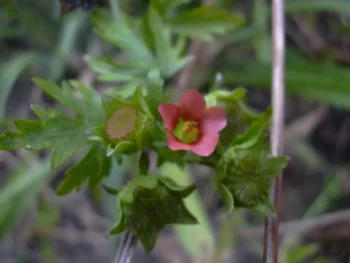
Carolina Bristlemallow: A Humble Native Ground Cover Worth Knowing
Meet Carolina bristlemallow (Modiola caroliniana), a modest little native plant that might not win any beauty contests but has earned its place in the southeastern United States through sheer tenacity and usefulness. This unassuming ground cover has been quietly doing its job in gardens and wild spaces for generations, and it’s time we gave it the recognition it deserves.
What Exactly Is Carolina Bristlemallow?
Carolina bristlemallow is a low-growing annual, biennial, or perennial herb that belongs to the mallow family. Don’t let the fancy botanical name Modiola caroliniana intimidate you – this plant is as down-to-earth as they come. It’s also known by the synonym Modiola multifida, though you’re unlikely to encounter that name in everyday gardening conversations.
This little forb (that’s botanist-speak for a non-woody flowering plant) spreads along the ground in a prostrate manner, creating a living carpet of small, divided leaves topped with tiny orange-red flowers. It’s the kind of plant that grows happily in the cracks of sidewalks and forgotten corners of gardens, asking for nothing and giving back plenty.
Where Does It Call Home?
Carolina bristlemallow is native to the southeastern United States, where it naturally occurs from Virginia down to Florida and west to Texas. However, this adaptable little plant has made itself at home across a much broader range, now growing in Alabama, Arizona, Arkansas, California, Delaware, Florida, Georgia, Kentucky, Louisiana, Maryland, Massachusetts, Mississippi, North Carolina, Oklahoma, Oregon, Pennsylvania, South Carolina, Tennessee, Texas, and Virginia. It’s also established itself in Hawaii, where it’s considered non-native but reproduces freely in the wild.
- Species observed
- No observations
Why Consider Carolina Bristlemallow for Your Garden?
While Carolina bristlemallow won’t stop traffic with showy blooms, it offers several practical benefits that make it worth considering:
- Effortless ground cover: Its spreading habit naturally fills in bare spots without aggressive takeover behavior
- Pollinator support: The small flowers may be modest, but they provide nectar for bees and other small pollinators
- Soil versatility: Thrives in poor soils where other plants struggle
- Low maintenance: Once established, it pretty much takes care of itself
- Native heritage: Supports local ecosystems (in its native range)
Growing Conditions and Care
One of Carolina bristlemallow’s greatest strengths is its adaptability. This plant is suited for USDA hardiness zones 7-10 and tolerates a wide range of growing conditions:
- Sunlight: Performs well in full sun to partial shade
- Soil: Adaptable to various soil types, including poor or disturbed soils
- Moisture: Facultative to facultative upland status means it’s flexible about water – can handle both drier and occasionally wet conditions
- Maintenance: Minimal care required once established
The beauty of growing Carolina bristlemallow lies in its simplicity. This isn’t a plant that demands perfect soil amendments, regular fertilizing, or fussy care routines. It’s more likely to thrive with benign neglect than with too much attention.
Best Uses in the Landscape
Carolina bristlemallow works best in informal, naturalized settings rather than formal garden designs. Consider using it in:
- Wildflower gardens and meadow plantings
- Naturalized areas that need gentle ground cover
- Disturbed sites requiring erosion control
- Low-maintenance areas where you want something living but undemanding
A Word About Native Status
If you’re gardening within Carolina bristlemallow’s native range in the southeastern states, you’re supporting local ecosystems by choosing this plant. However, if you’re gardening outside its native range (like in Hawaii, where it’s naturalized), you might want to consider native alternatives that provide similar ground cover benefits while supporting your local wildlife.
For gardeners in non-native areas, research native ground covers that offer similar low-maintenance characteristics but belong to your local plant community. Your local native plant society or cooperative extension office can point you toward appropriate alternatives.
The Bottom Line
Carolina bristlemallow isn’t going to be the star of your garden, and that’s perfectly okay. Sometimes the best plants are the reliable supporting actors that quietly do their job while letting showier specimens take center stage. If you need an easy-going, adaptable ground cover for informal areas and you’re within its native range, Carolina bristlemallow might just be the humble hero your landscape needs.
In a world of high-maintenance garden divas, there’s something refreshing about a plant that simply grows where you put it, supports local pollinators, and asks for nothing in return. That’s Carolina bristlemallow – unpretentious, reliable, and quietly valuable.