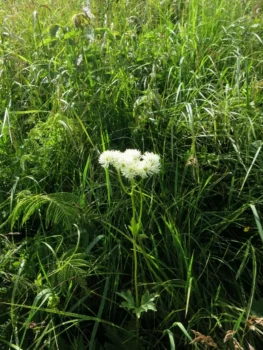
Carolina Bugbane: A Graceful Native for Shady, Moist Gardens
If you’re searching for a native perennial that brings delicate beauty to those tricky shady spots in your garden, meet Carolina bugbane (Trautvetteria caroliniensis). This charming woodland plant might not be the showiest flower in the garden center, but it’s exactly the kind of reliable, low-maintenance native that savvy gardeners treasure.
What Makes Carolina Bugbane Special?
Carolina bugbane is a herbaceous perennial that belongs to the buttercup family. Don’t let the bugbane name fool you – it’s not particularly effective at repelling insects, and in fact, it actually attracts beneficial pollinators! This native beauty produces clusters of fluffy white flowers in late spring to early summer, creating an almost ethereal effect in the dappled light of woodland gardens.
The plant typically grows 2-4 feet tall with distinctive palmate leaves that add lovely texture even when it’s not in bloom. As a forb (basically a fancy term for a non-woody flowering plant), it dies back to the ground each winter and emerges fresh each spring.
Where Does Carolina Bugbane Call Home?
This adaptable native has an impressive range across North America. You’ll find Carolina bugbane naturally growing in states from Alabama to Wyoming, plus parts of Canada including British Columbia. It spans diverse regions including the Eastern Mountains, Great Plains, Western Mountains, and coastal areas – though it’s always seeking out those cool, moist spots that remind it of its preferred mountain forest habitat.
- Species observed
- No observations
Important note: While Carolina bugbane has a wide distribution, it’s considered rare (S1 status) in Arkansas. If you live in Arkansas or other areas where it might be uncommon, please source your plants responsibly from reputable native plant nurseries rather than collecting from the wild.
Perfect Garden Companions and Design Ideas
Carolina bugbane is a natural fit for:
- Woodland gardens and forest edges
- Shade perennial borders
- Native plant gardens
- Rain gardens and bioswales
- Naturalized areas near streams or ponds
It pairs beautifully with other shade-loving natives like wild ginger, mayapple, and various ferns. The delicate white flowers create lovely contrasts with bolder foliage plants, while its somewhat informal growth habit makes it perfect for naturalistic plantings.
Growing Conditions: Keep It Cool and Moist
Carolina bugbane is what botanists call facultative wetland – meaning it usually prefers moist conditions but can adapt to somewhat drier spots if needed. Here’s what it loves most:
- Light: Partial to full shade (morning sun is okay)
- Soil: Rich, organic, consistently moist but well-draining
- Moisture: Prefers consistent moisture, especially during growing season
- pH: Adaptable, but prefers slightly acidic to neutral soils
Hardy in USDA zones 3-8, this perennial can handle cold winters but appreciates protection from hot afternoon sun and drought conditions.
Planting and Care Tips
The good news? Carolina bugbane is refreshingly low-maintenance once you get it established. Here are the key points:
- Planting time: Spring or fall, when temperatures are moderate
- Soil prep: Amend with compost or leaf mold to improve organic content
- Watering: Keep consistently moist the first year; established plants are more drought-tolerant but still prefer steady moisture
- Mulching: A layer of organic mulch helps retain moisture and suppress weeds
- Maintenance: Minimal – just cut back dead stems in late fall or early spring
Wildlife and Pollinator Benefits
While Carolina bugbane might look delicate, it’s actually a valuable addition to wildlife-friendly gardens. The small white flowers attract various pollinators, particularly flies and small native bees that appreciate the accessible nectar. The plant also provides habitat and cover for small woodland creatures.
Should You Plant Carolina Bugbane?
If you have a shady, moist spot that needs a touch of native elegance, Carolina bugbane could be perfect. It’s ideal for gardeners who want to support native ecosystems while enjoying low-maintenance beauty. However, it’s not the right choice if you’re dealing with dry, sunny conditions or looking for bold, show-stopping flowers.
Remember to source plants responsibly, especially if you’re in areas where the species might be rare. Supporting native plant nurseries not only ensures you get healthy plants but also helps preserve wild populations for future generations.
Carolina bugbane proves that sometimes the most rewarding garden plants are the quiet, dependable ones that simply know how to make themselves at home in the right spot. Give it the cool, moist conditions it craves, and it’ll reward you with years of subtle woodland charm.