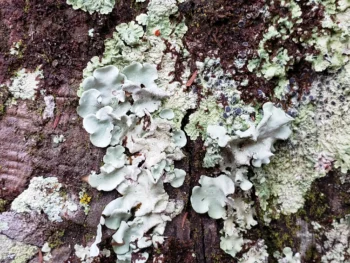
Carolina Canoparmelia Lichen: A Natural Garden Indicator You Can’t Plant (But Should Appreciate)
Have you ever noticed crusty, pale patches growing on the bark of trees in your yard and wondered what they were? You might be looking at Carolina canoparmelia lichen (Canoparmelia caroliniana), a fascinating organism that’s actually doing you and your garden a favor just by being there.
What Exactly Is Carolina Canoparmelia Lichen?
Here’s where things get interesting: lichens aren’t plants at all! They’re actually a partnership between fungi and algae, working together in perfect harmony. The Carolina canoparmelia lichen appears as pale gray-green to whitish crusty patches that spread across tree bark and sometimes rocks. Think of it as nature’s living wallpaper.
This native North American species is also known by its scientific synonyms Parmelia caroliniana and Pseudoparmelia caroliniana, though most of us are perfectly happy calling it by its common name.
Where You’ll Find This Helpful Hitchhiker
Carolina canoparmelia lichen is native to eastern North America, with a particular fondness for the southeastern United States. It’s most commonly spotted in areas with clean air and established trees.
Why This Lichen Is Actually Your Garden’s Friend
Before you start scraping these crusty patches off your trees, consider this: finding Carolina canoparmelia lichen in your garden is actually great news! Here’s why:
- Air quality indicator: Lichens are notoriously picky about air pollution. Their presence means your garden enjoys relatively clean air
- Harmless to trees: Unlike parasites, lichens don’t damage their host trees – they’re just along for the ride
- Natural character: They add an authentic, wild look to mature woodland gardens and naturalistic landscapes
- Low maintenance: They require absolutely zero care from you
How to Identify Carolina Canoparmelia Lichen
Spotting this lichen is fairly straightforward once you know what to look for:
- Pale gray-green to whitish color
- Crusty, patch-like appearance on tree bark
- Typically found on the bark of mature trees
- May occasionally appear on rocks
- Forms irregular, spreading patches rather than distinct shapes
The Growing Truth: You Can’t Plant This
Here’s the thing about lichens – you can’t exactly run down to your local nursery and pick up a flat of Carolina canoparmelia lichen. These organisms establish themselves naturally when conditions are right, which includes:
- Clean air (they’re very sensitive to pollution)
- Appropriate host trees or rocks
- The right moisture and light conditions
- Time – lichens grow incredibly slowly
The best thing you can do to encourage lichens in your garden is to maintain healthy, mature trees and avoid using harsh chemicals that could pollute the air around your property.
Should You Remove Carolina Canoparmelia Lichen?
In short: please don’t! While some gardeners worry that lichens might harm their trees, the opposite is true. Carolina canoparmelia lichen is completely harmless to its host and actually serves as a wonderful indicator that your garden ecosystem is healthy.
If you’re concerned about tree health and notice lichens, the issue likely isn’t the lichen itself but rather underlying tree stress from other factors like drought, disease, or poor soil conditions.
Embracing Your Garden’s Natural Character
Carolina canoparmelia lichen fits beautifully into naturalistic garden designs, woodland gardens, and any landscape where you want to encourage native biodiversity. While it won’t attract pollinators like flowering plants do, it contributes to the overall ecosystem health of your garden.
Rather than viewing these crusty patches as something to remove, consider them a badge of honor – proof that your garden provides clean, healthy growing conditions for even the most sensitive organisms. In a world where air quality is increasingly important, having Carolina canoparmelia lichen choose your trees as home is actually a wonderful compliment to your gardening efforts.