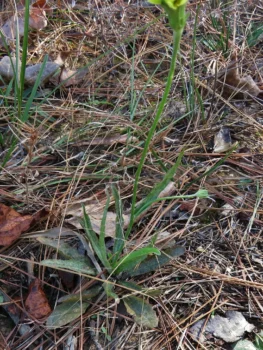
Carolina Desert-Chicory: A Native Wildflower with a Conservation Story
Meet Carolina desert-chicory (Pyrrhopappus carolinianus), a charming native wildflower that’s more complex than its cheerful yellow blooms might suggest. This unassuming annual or biennial forb belongs to a fascinating group of plants that deserve more attention from native gardening enthusiasts – but with some important caveats to consider.
What Exactly is Carolina Desert-Chicory?
Carolina desert-chicory is a native forb that produces bright yellow, dandelion-like flowers. As an annual or biennial, it completes its life cycle in one to two years, making it a relatively short-lived but potentially self-perpetuating addition to naturalized areas. Like other forbs, it lacks significant woody tissue and maintains its growing points at or near ground level.
This plant goes by the scientific name Pyrrhopappus carolinianus, though you might also encounter it listed under several synonyms including Pyrrhopappus georgianus or Sitilias caroliniana in older references.
Where Does Carolina Desert-Chicory Call Home?
This native beauty has quite an impressive range across the lower 48 states, naturally occurring in Alabama, Arkansas, Delaware, District of Columbia, Florida, Georgia, Illinois, Indiana, Iowa, Kansas, Kentucky, Louisiana, Maryland, Mississippi, Missouri, Nebraska, North Carolina, Oklahoma, Pennsylvania, South Carolina, Tennessee, Texas, Virginia, and West Virginia.
- Species observed
- No observations
A Conservation Concern Worth Noting
Here’s where things get interesting – and important. While Carolina desert-chicory has a broad native range, it’s considered endangered in New Jersey, where it’s listed as S1 status in both the Pinelands and Highlands regions. This means if you’re gardening in areas where this plant is rare, you’ll want to source seeds or plants from reputable native plant suppliers rather than collecting from wild populations.
Should You Grow Carolina Desert-Chicory?
The answer depends on what you’re looking for in your garden. Here’s the honest scoop:
The Good News:
- It’s a true native that supports local ecosystems
- Provides early season nectar for bees, butterflies, and other small pollinators
- Thrives in full sun and well-drained soils
- Extremely low maintenance once established
- Tolerates poor soils and drought conditions
- Self-seeds readily for continued presence
The Considerations:
- Limited wildlife value for larger animals (only 2-5% of diet)
- Can be weedy in formal garden settings
- Short-lived individual plants
- May not provide significant visual impact compared to showier natives
Perfect Places for Carolina Desert-Chicory
This plant shines in informal, naturalized settings rather than manicured flower beds. Consider it for:
- Prairie and meadow gardens
- Wildflower mixes for disturbed soil areas
- Pollinator gardens focused on early season blooms
- Areas where you want low-maintenance native groundcover
- Educational gardens showcasing regional flora
Growing Carolina Desert-Chicory Successfully
The beauty of this plant lies in its simplicity. Carolina desert-chicory typically thrives in USDA hardiness zones 6-9, though its extensive native range suggests it’s quite adaptable.
Ideal Growing Conditions:
- Sunlight: Full sun for best performance
- Soil: Well-drained soils; tolerates poor, sandy, or rocky conditions
- Water: Drought tolerant once established; avoid overwatering
- Spacing: Allow natural spacing through self-seeding
Planting and Care Tips:
- Direct seed in fall or early spring when soil can be worked
- Barely cover seeds as they need light to germinate
- Water gently until seedlings establish
- Avoid fertilizing – this plant prefers lean conditions
- Allow plants to self-seed for natural colonies
- Minimal care required once established
The Bottom Line
Carolina desert-chicory won’t win any awards for being the showiest native plant, but it fills an important niche for gardeners interested in supporting complete ecosystems. If you have space for naturalized areas and appreciate the subtle beauty of native wildflowers, this little charmer could be a worthy addition to your landscape.
Just remember to source your seeds or plants responsibly, especially if you’re gardening in areas where populations might be sensitive. Sometimes the most valuable plants are the ones that teach us about conservation while quietly doing their job in the garden ecosystem.